Beautiful borlotti

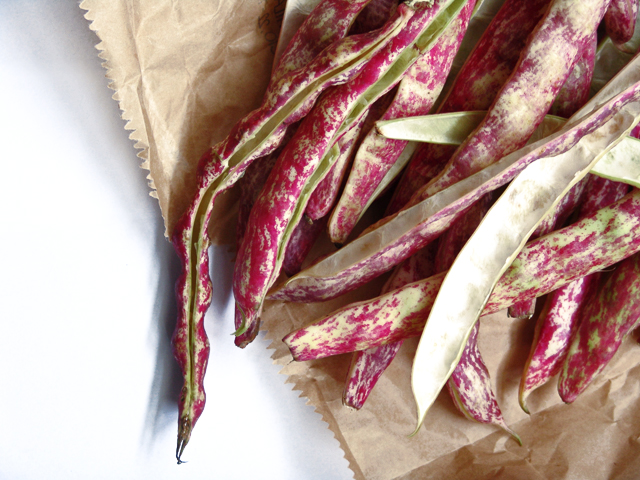
I apologize for continually talking about food, but it’s just too fundamental and gorgeous to ignore. Today I was struck, as I always am when they are available, by the sheer graphic perfection of the fresh borlotti beans. Lines from Gerard Manley Hopkins’ “Pied Beauty” spring to mind: “Glory be to God for dappled things— / For skies of couple-colour as a brinded cow,” and “All things counter, original, spare, strange; / Whatever is fickle, freckled (who knows how?)” These lovely edibles are perennial winners at the Pied Beauty Pageant, and they are as delicious to eat as they are lovely to behold.

And the strange thing is: As a child, I detested beans of all description. I can remember the smell of lunchroom beans at school—something akin to an overcooked sock—and the heavy viscosity of the bacon-infused liquid that engulfed them. In a non-eloquent word: yick. The ability to appreciate beans came with adulthood. My mother, who loved beans, made exquisite mixed-bean minestrone, and this “presentation” began to win me over. But it wasn’t until I came to Italy, and saw fresh, unshelled beans, that I began to really understand and relate to the bean myself.

Now when I eat beans, there is rarely a layer of packaging between me and the dappled delectable. I buy a mezzo chilo (half kilo), which shells down to four portions, leaving behind a pile of gorgeous, streaked magenta pods. Shelling the borlotti is peculiarly satisfying: testing the seam with your thumb, urging it to open which it does willingly, watching the freckled beans spill out. Firm, but not as hard as dried beans. Cool to the touch. Each one clean and imperfectly perfect. Every now and then, there’s an odd man out, as light green as the innards of a Granny Smith apple.
And then, of course, the secret to cooking them, as with most things, is not to over-do it. When you’re not tossing them into soups, you can simply throw them (like Tuscan white beans, or toscanelli) into judiciously salted (yes, that blessed salt) boiling water. Cook ’til tender. Drain. Then toss, tepid, with the best olive oil you can get your hands on, raw thin-sliced red onion, and a sprinkling of fleur de sel. During the boiling, their color changes entirely, shifting from the vivid hot pink streaks of youth to a rather mature, subdued pinky-gray. But the taste is ageless. Teeth and tongue are met with a clean, resistant flesh, spiced by the piquancy of the olive oil and the harmless challenge of the onion. Earthy, satisfying, divine.

NOTE: Fresh borlotti appear in the late spring and reach their full maturation during the summer months. But they are, for some reason, available still. Nevertheless, it is for this reason, I have included them in the “Savoring Italy” category instead of “Now in Season.”

My thanks to Ann Moore for copy-editing this post.

Posted in ITALY, SAVORING | Tagged , , | 1 Comment

Let’s talk

I remember when I first moved to Milan and didn’t speak a word of Italian. Woe was me. There I was in the actual capital of gab, and not only did I not speak the language, but I was not by nature much of a small-talker anyway. I was amazed, simply amazed, at how Italians could live up to their own cliched reputation. The ability of a group of Italians to talk simultaneously and hear each other at the very same time in three or four distinct, contemporaneous conversations boggled my mind then, and continues to boggle it now. But that’s not really the national talent I wish to focus on today. What I want to celebrate today is the ability of Italians (1) to chat one-on-one while avoiding the “small” part of small-talking and (2) to draw me into the chatting myself, which is not always an easy thing to do.

Fare quattro chiacchiere.

To chat (chiacchierare) a little, freely, aimlessly. Here, quattro, literally four, is used to mean “a little.” One also says, for example, fare quattro passi—literally, “to take four steps”—but meaning of course “to take a little walk.” Fare quattro chiacchiere, literally “to exchange four little bits of talking,” means really “to chew the fat.” And it’s perfectly onomatopoeic, like chickens clucking, with the q and the repeated hard c’s. Cluck cluck cluck.

I’m not what I’d call a closed person, but I have some sense of reserve probably inherited from the New England side of my family. I’m ever so slightly shy, though I’ve learned to deal with it over the years. And I’ve never, ever, been inclined to engage comfortably in what I would categorize as true small talk. I, like everyone, have struck up amazing conversations on airplanes, but this isn’t small talk. This is a phenomenon of being trapped 35,000 feet above the ground in a winged shoebox. And yet this is the type of conversation a majority of Italians can bring to life without ever leaving the ground. High-altitude verbal exchange at a mere 0 feet above sea level. Energy, substance, wit, sincerity, sustained performance—all the hallmarks of expertise are there.

It happened to me just this morning. I was leaving the elementary school where I’d left both the children, and all of a sudden, BAM, there I am locked in a chat. The weather never came up once, nor did the emotional state of our children who attend the same class. Before I knew it, I was discussing the nuances of South Carolinian collegiate society in the early 90’s, the global differences between “northerners” and “southerners,” the aftermath of the Bush years, the importance of maintaining tradition, and how one survives the Dutch climate. I felt like a novice jogger attempting the Iron Man. But—and this is the thing—I was doing it! I was dancing the dance, chatting the chat, and all because I had a great partner. My Italian wasn’t perfect, but that didn’t hinder our whirling on the verbal ballroom floor. And then it was over, with sincere smiles, hands on shoulders, and the promise to pick up where we’d left off. Which I’m sure we will. And all this before 8:15 a.m.

I’m exhausted just writing about it. But it was worth it. It took me out of myself, made me smile numerous times, and bound me just a little bit tighter to these people who have been so open and generous with me. No one really asks you for much—just for a tiny bit of yourself. And while participating is sometimes tiring, it’s nothing a caffè scecherato or a pisolino can’t cure. So bring it on, I say. Quattro chiacchiere. Maybe even cinque or sei

My thanks to Ann Moore for copy-editing this post.
Hand gesture image, copyright Bruno Munari, from
Speak Italian.

Posted in ITALY, THEY SAY | Tagged , , , | 1 Comment

Down (halfway) under

Walking through the streets of Milan is endlessly entertaining to me. I find myself inventing errands to run, just to have a reason to step out and see, as Moll Flanders says, “what offers.”

What offers is an intense variety of texture, material, grace and grit—not to mention, architectural flop and flourish—which never cease to amuse the eye. And since my eye is American, it never grows completely accustomed to what it sees, instead finding everything eternally new and thought provoking.

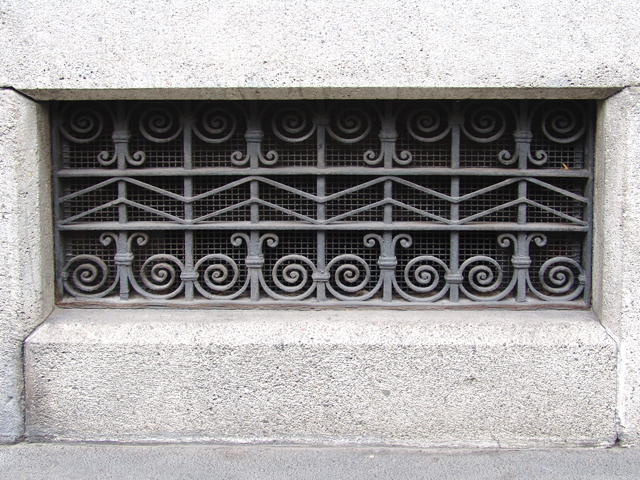
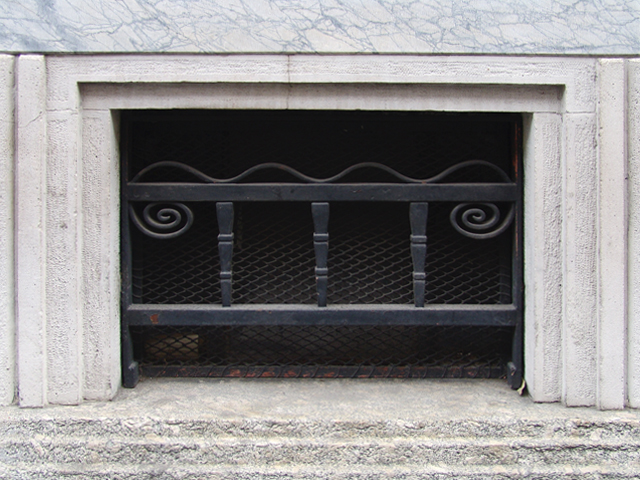
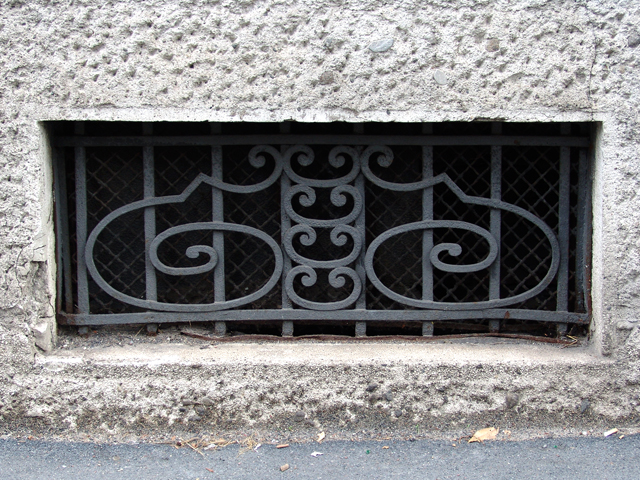
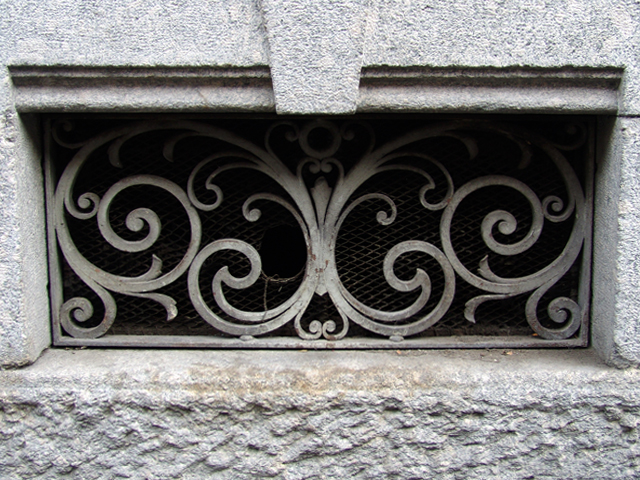
One ubiquitous detail which I’m particularly fond of is the street level grills of the semi-interrati. Semi-interrati are the lower levels of palazzi—half, as their name suggests, under ground, half above ground. They house storage, office spaces or apartments. Some of their grills are well-maintained, while others are encrusted with urban grime. But despite their state of wear, they are often ornate reminders of the building’s architectural heritage and always invitations to imagine what’s happening down under, in the nether regions of the building.

These iron-clad openings into the semi-interrati reveal glimpses into other lives, other worlds: the mannequin maker, the jazz sheet music store, the antique restorer, the dog parlor. And at their most mysterious, they reveal nothing at all, visually. Just sound. I’ve encountered the subversive wails of a saxophone, the repeated bars of a practicing concert pianist, and most beautifully, the aria rehearsed by an opera singer—all emissions which arrive from below your feet but which elevate you from the street itself into a more ethereal realm.

My thanks to Ann Moore for copy-editing this post.

[If you enjoyed this post, you might also enjoy “The door within the door” and “Can I come in?”]

Posted in AROUND US, ITALY | Tagged , , , , | 1 Comment

License to be happy

Part of starting a life in a new country is accepting what bureaucracy foists upon you, and in Italy, this can be a considerable load. Walking to the weekly market on Via Vincenzo Monti last Friday, I passed the neighborhood driving school and, seeing myself reflected in the window, a transparent layer superimposed over the empty classroom, I threw the gears of my mind into reverse and traveled 120 kilometers per hour back to a time when I was less integrated here, busy with a newborn baby, and required by the bureaucratic powers-that-be to acquire an Italian driver’s license through specific channels despite having a valid Oregon license already. Welcome to:

As far as I can tell, all driving schools, scuole guide, are the same. When you walk into one and take your seat, you might as well break yourself into pixels and “photoshop” them into a faded image from the 1960’s. Multi-colored seats, the type used in pediatricians’ waiting rooms, sit in loosely organized rows facing an instructor’s desk and a barrage of yellowed posters inartistically displayed around a chalkboard. The visual information is dense and varied: everything from roadside first aid to the inner-workings of an the common engine to the myriad road signs and hand signals used in the European Union. And most impressively of all, there are always—always—the guts of a car mounted on one wall. This is a stylist’s dream, a photographer’s heaven. Never has so much random bad taste, government code, disregard for design, and mechanical trivia looked so perversely mod.

I sat in one of these seats for weeks, my mind preoccupied with rushing home for the next breast-feeding, surrounded by impeccably dressed nonchalant Italian teenagers, sniggering at the instructor and flirting across the aisle. This was at the height of my I’ll-never-fit-in-here period. The language was hard enough, without having to speak of valves, tanks and rearview mirrors in Italian. But I persevered. And the classroom soon led to the in-car portion of the course.

This was at best humiliating. I’d been driving for years in the United States, and considered myself an excellent driver. But I quickly found that learning to drive in Italy was the motorized equivalent of picking up a new language. Driving, like speaking, has a vocabulary, a lilt, a rhythm, a way of being done that makes it more or less recognizable (i.e. safe) in the company of other people (i.e. native drivers). I was, despite myself, starting from scratch in many regards.

My driving teacher was named Domenico. He was Pugliese, about 50, and had—I suspected—a horrible crush on me which he expressed between urgent directives (Frena! Brake!) shouted in an Italian so thickly accented that I only picked up his intentions, not his precise meaning. He used to override my efforts to drive, by using his controls to stop the car in the midst of dizzying traffic circles. He would then explain to me with his peculiar mixture of impatience and infatuation exactly how bad my driving was. How foreign. How American. Then, when we were both sweating profusely—he in his gray suit and I in my embarrassment—he would release the controls, nod and wave a hand toward the road. Si puo andare. You can go now.

The day I took the final driving test, Domenico confirmed my suspicions by kissing me on the lips after passing the driving portion. I was shocked. Non si fa. This is not something one ordinarily does. But then again, he probably did not ordinarily have 38 year-old, lactating, American women as students. I blushed, he blushed. Flustered, I said, “Grazie,” not meaning to refer to the kiss but to the fact that he’d helped me overcome this barrier. He misunderstood. I got my license.

This is what my mind remembers, before throwing itself back into forward gear and racing to the present. I back away from the window and proceed to the market. I feel happy, thankful. Whatever has gone before has brought me here, to this precise moment, and re-visited through the filter of that fact, it only gains in beauty.

My thanks to Ann Moore for copy-editing this post.
Posted in ITALY, WHAT TO DO | Tagged , , , | Leave a comment

Salt

I’ve made some famous culinary blunders since meeting my Italian husband. The first was trying to scrub a truffle clean under running water. The second was peeling the “skin” off a mozzarella di bufala. And the third was neglecting to put sea salt, sale marino, in the pasta water.

Believe me: I stood immediately corrected in every case. I now clean truffles with soft brushes, eat all parts of the mozzarella, and know that sea salt—that deceptively humble product of 70% of the earth’s surface—is to be exalted above all things. Exalted, because that’s what it does to virtually every comestible it touches.


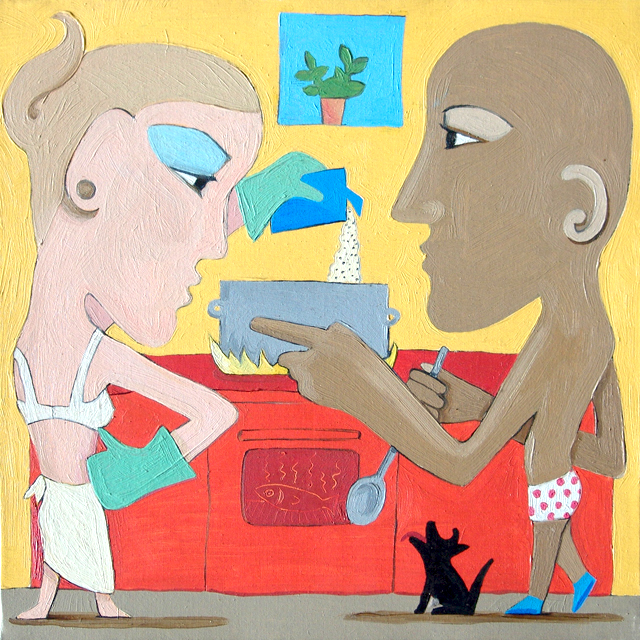
(A painting I did years ago inspired by the importance of salt in the pasta water.)

I grew up in an American household where‚ as in many others, a spoonful of vegetable oil was put in the pasta water to keep the spaghetti from sticking. Probably since my absence, the campaigns of Martha and Nigella have convinced all Americans that this is not the way it’s done. (Pasta is cooked in salted water, then tossed, when al dente, with olive oil). In any case, it isn’t my aim to talk about the correct preparation of pasta. It is rather my desire to sing the praises of sea salt itself. It is an edible jewel. A drug. The most sublime of minerals. And, so, of course, it deserves some redundancy: Sea salt does make a difference. It makes a difference to use sea salt vs. the other kind. It makes a difference which sea salt you use. And it even makes a difference how you sprinkle it.

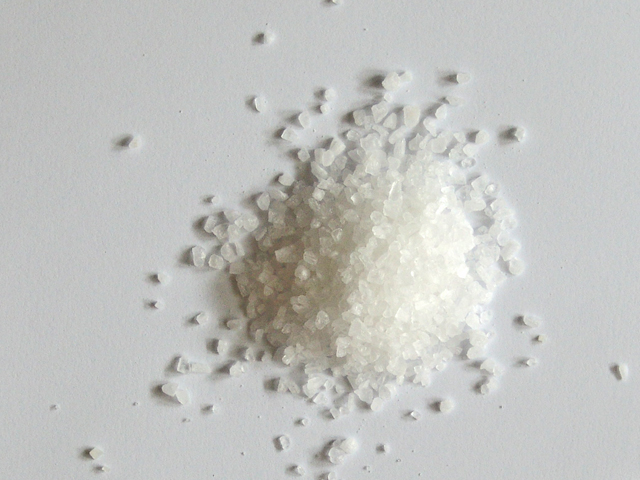
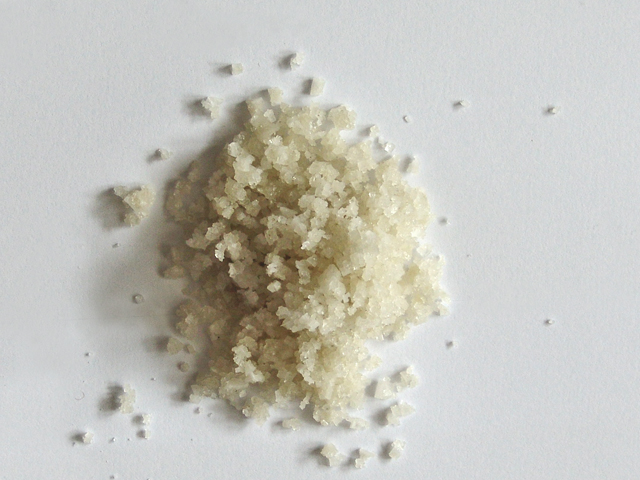
The standards in our kitchen are sale grosso (I use the plain Italian variety for the pasta water), sel gris (which I am partial to putting on grilled meats), and fleur de sel, the delectable white crust which is scraped off the top of the salt beds of Guérande, which I use on salads or cooked fresh vegetables together with extra virgin olive oil. These last two salts are French salts, harvested by hand, using time honored methods and wooden paddles. They are, in a word, sublime. A little goes a terrifically long way, and the flavor of your food is exalted without—perversely— tasting “salty.” Here is a nice site for understanding the differences.


(sale grosso)
(sel gris)
(the beautifully packaged “fleur de sel”)

As for sprinkling, I’m sure you’ve seen the old illustrations of people standing on ladders to sprinkle the salt from on high, or chefs adding salt with a balletic flourish of one raised hand. It may all seem an affectation, but it’s really done simply to spread the salt sparingly and uniformly over the surface of the food. I like to sort of pinch and sprinkle all at the same time, feeling the granules give way, just slightly, under the pressure of my fingertips.

Overblown as it may seem, sea salt is one of the “daily cures” for which I am most grateful. (God is great. / God is good. / Let us thank him for our salted food.) It reminds me day-in-day-out that the simplest of nature’s offerings are truly divine. A fresh tomato. Broccoletti. Grilled asparagus. Con un filo d’olio e un pizzico di sale (with a trace of oil and a pinch of salt). Nothing better.

My thanks to Ann Moore for copy-editing this post.
Posted in FRANCE, ITALY, SAVORING | Tagged , , , , | 6 Comments

Buon weekend

As Aristotle supposedly said, “The purpose of work is to earn free time.” Never one to ignore wisdom when it hears it, “The Daily {French-Italian} Cure” is taking weekends off but will be back Monday morning. Feel free to come on in and browse recent posts (right, or below) if there’s anything you missed. The door is always open. Have a great weekend!

Leave a comment

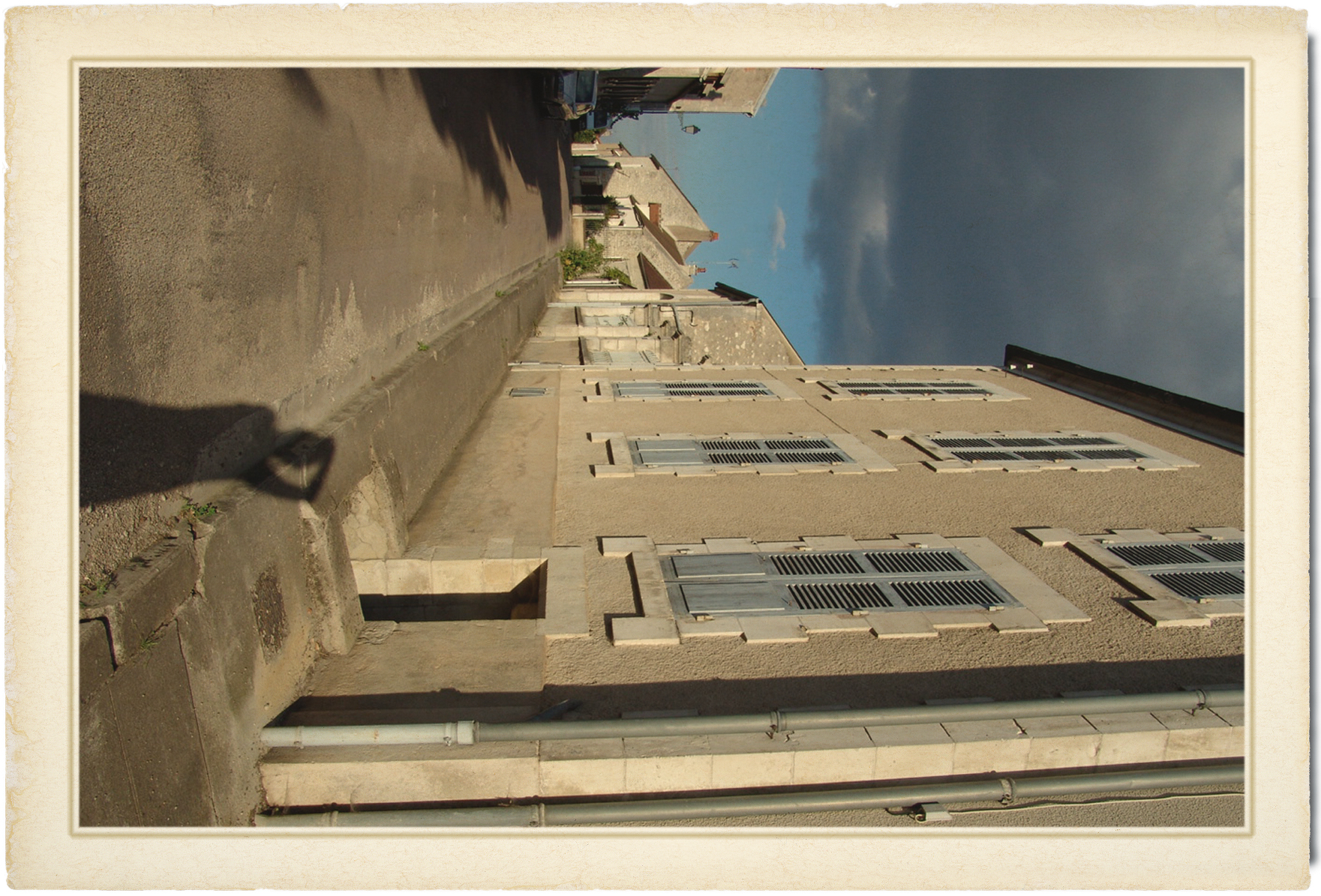
Postcard #4: Missing. Remembering.

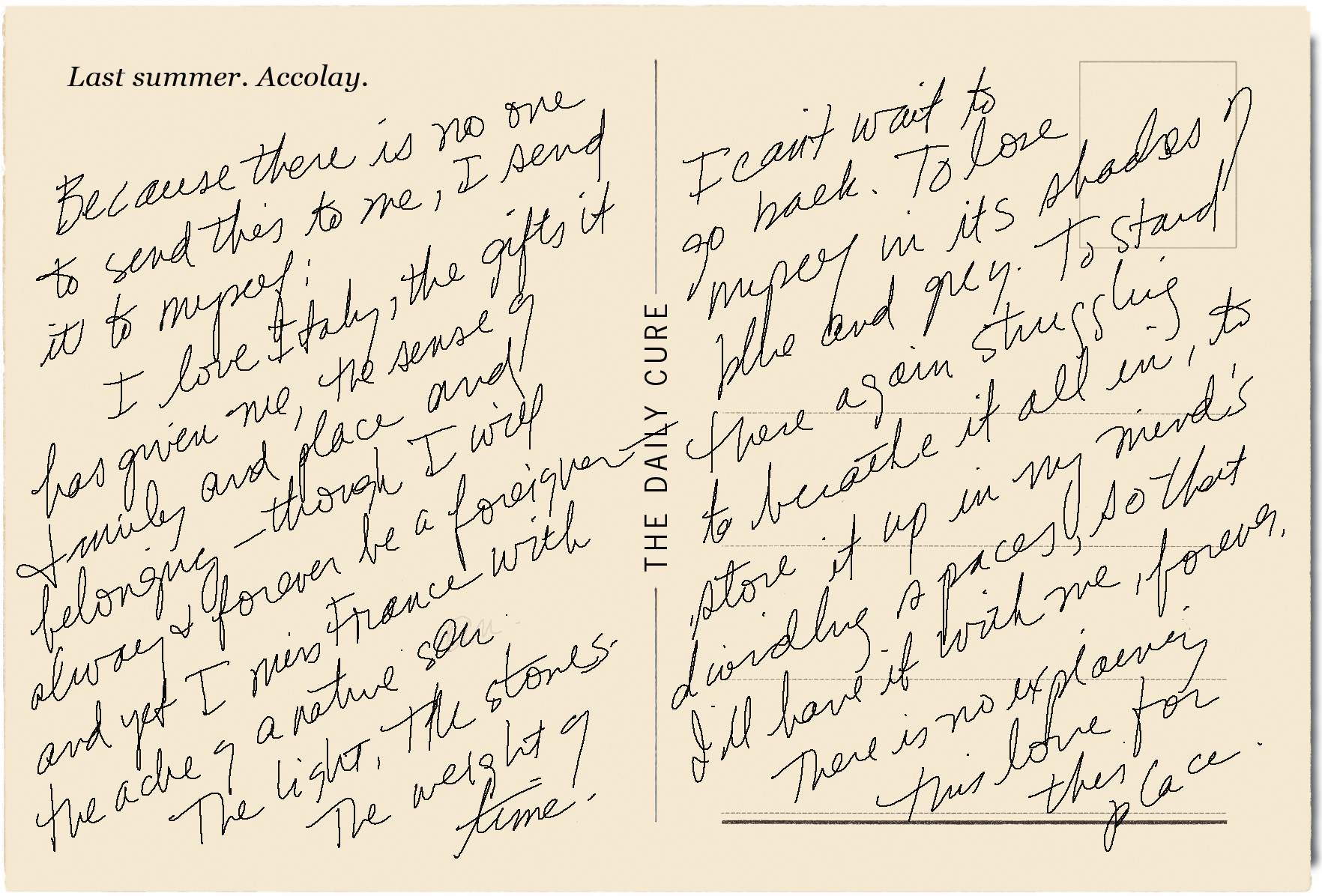
[Because there is no one to send this to me, I send it to myself: I love Italy, the gifts is has given me, the sense of family and place and belonging—though I will always and forever be a foreigner—and yet I miss France with the ache of a native son. The light, the stones. The weight of time. I can’t wait to go back. To lose myself in its shades of blue and gray. To stand there again, struggling to breathe it all in, to store it up in my mind’s dwindling spaces, so that I’ll have it with me, forever. There is no explaining this love for this place.]


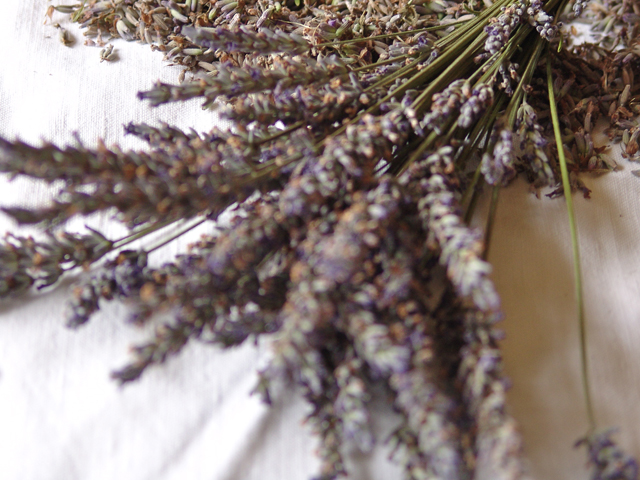
So. What to do with all this longing, all this desire? I remember the bag of lavender we harvested this summer. I will use that, and all its Proustian power, to conjure up some of the France that I miss so badly here in Italy.

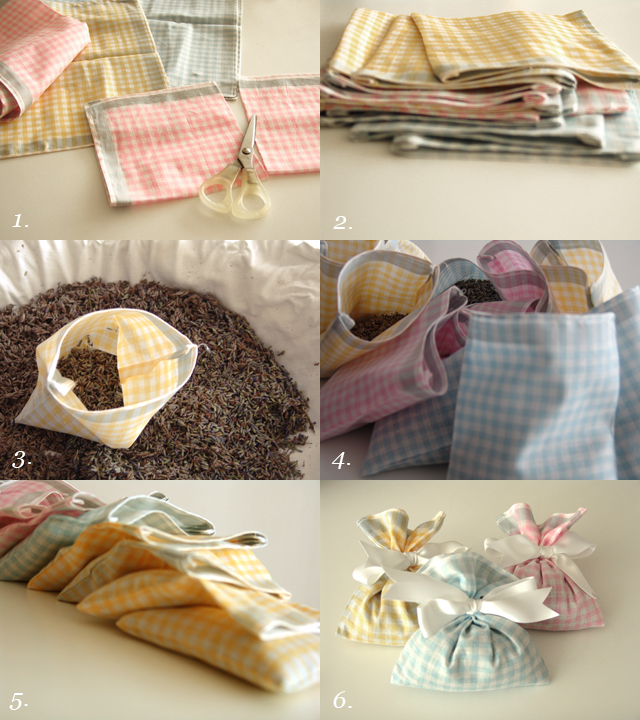
The process is relatively simple. 1. Take the six women’s handkerchiefs carried back from the French supermarket. Cut each in half. 2. Fold each half and sew along the sides. Invert, iron. Voilà: 12 breathable little sacs. 3. One at a time… 4. fill them with lavender. 5. Close by sewing from seamed-side to seamed-side about 3-4 cm from the open edge.6. Tie. Done. Breathe deep, and let the flood of memories come.

[If you liked this post, you might enjoy Postcard #1: Irancy, “The Importance of Blue” or “Ode to linen.”]

Posted in FRANCE, POSTCARDS, WHAT TO DO | Tagged , , , , , , | 2 Comments

Small scale production

NOTE: If you’re vegetarian, and this topic offends you, I’m sorry. But it’s the best way I know to illustrate something about Italian life that I’m extremely grateful for. Small-scale food production. What I’m about to say may not be true of the grocery stores here, and it may not even be possible in countries the size of the U.S. But there’s something here, that should be considered.

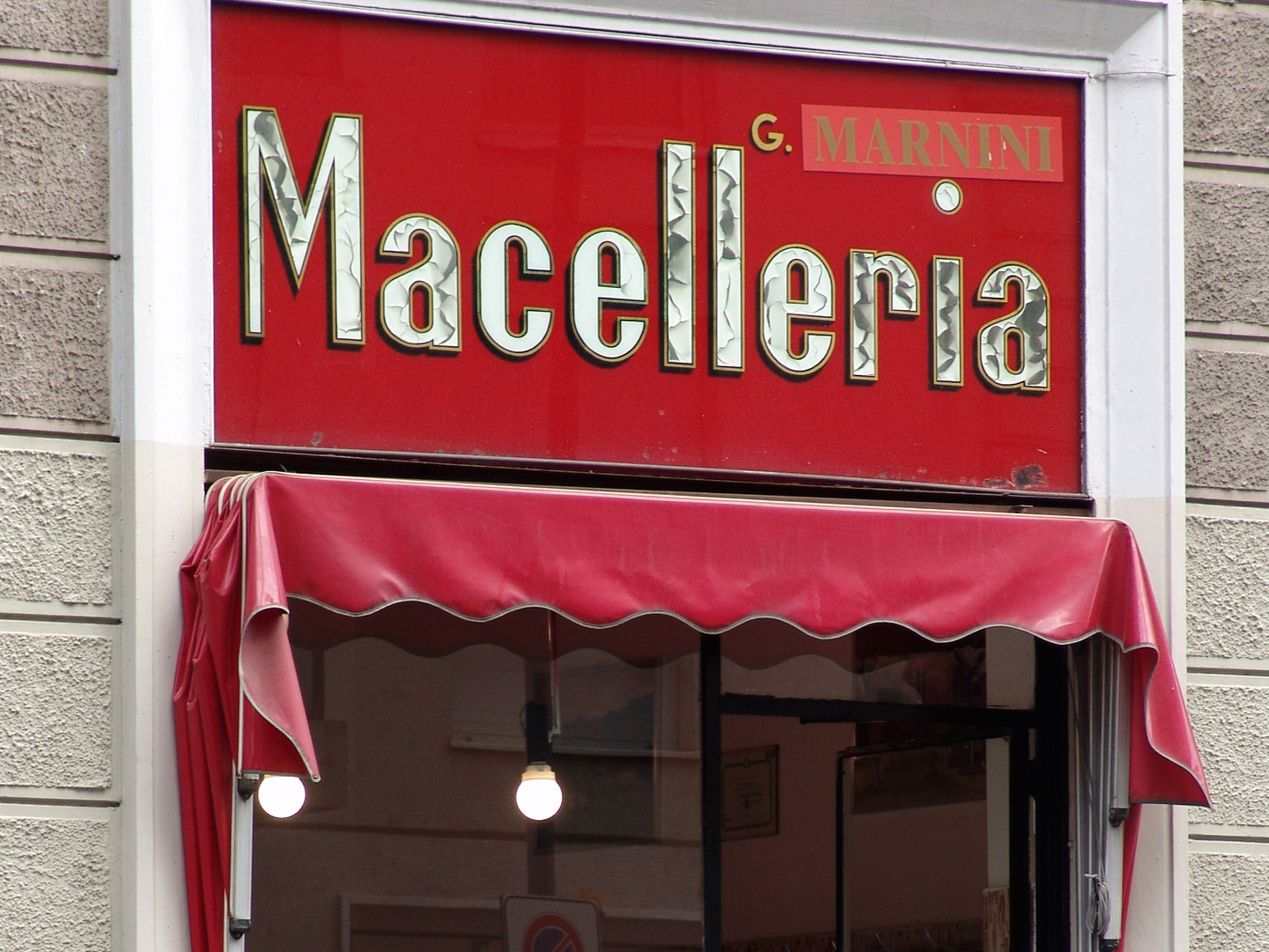
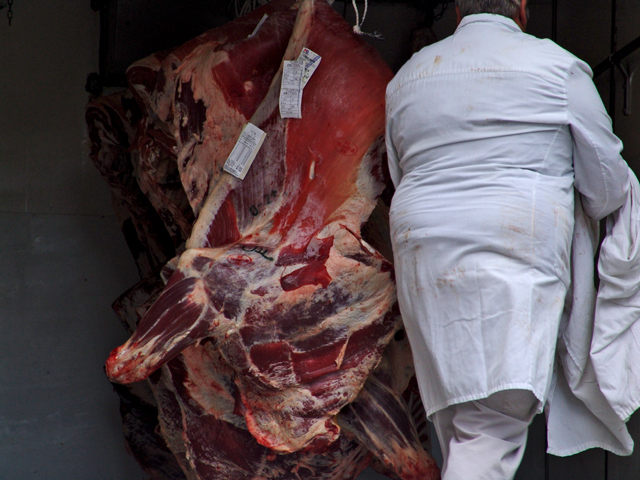
Once a week or more, the neighborhood butcher shop, Marnini, receives a delivery. A white truck pulls up. A portly man in a slightly stained white coverall slides out of the driver’s seat, opens the cargo doors to reveal several sides of beef hanging in a row, throws one over his shoulder, and hauls it into the butcher shop.

Inside the shop, the butchers (a middle-aged man and his father) and perhaps an assistant, begin the process of “processing” by cutting it into pieces that will then be cut—on order—into the different cuts that the Italian household demands. Filetto. Controfiletto. Tagliata. Fiorentina. Etc. (Cuts of meat vary from country to country, cuisine to cuisine.) If one wants filet mignon (filetto), one specifies the thickness and quantity, and it’s cut to order. Ditto for anything ground. How finely ground do you want it? How many times? Do you want it mixed with something else? Do you want it shaped into patties? How much do you need? Your order is prepared, placed in waxed paper, foil, or a decorative wrap, and put in the bag. No sitting between layers of polystyrene and plastic wrap.

You may be squeamish about the topic of butchery, but if you’ve ever seen any films about the mass production of meat products in America—(Linklater’s Fast Food Nation among them)—you’d find this process more clean, more honest, and much more reassuring. From the arrival of the truck to the moment of placing your order, much of the “processing” required to prepare your meat, is the process you see with your own eyes after you’ve placed your order. There are no mammoth, warehouse-filling, bacteria ridden machines, spinning perilously at high speeds, threatening the limbs—in fact, lives—of badly treated illegal aliens.

This is an issue of scale, choice, and cultural preference. This is about keeping things extremely close to home, in their neighborhood. Italians still—and I hope this continues—like to see the people who prepare their food face to face. This isn’t just about chatting, it’s about accountability. It’s about human scale versus corporate scale. And everything about the human scale is much more humane.

Posted in ITALY, SAVORING | Tagged , , , , , | 1 Comment

The door within the door

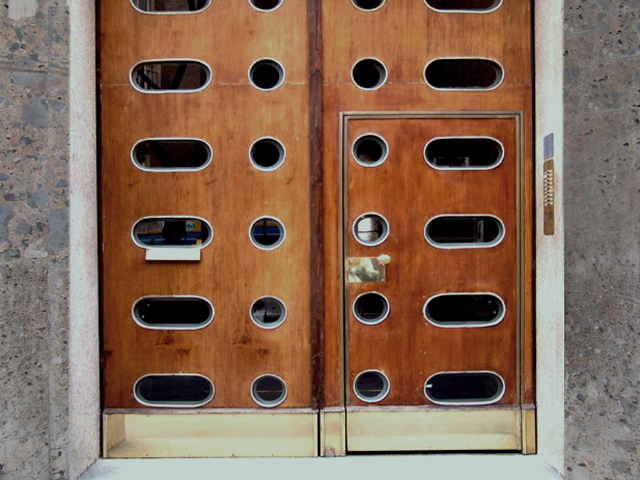
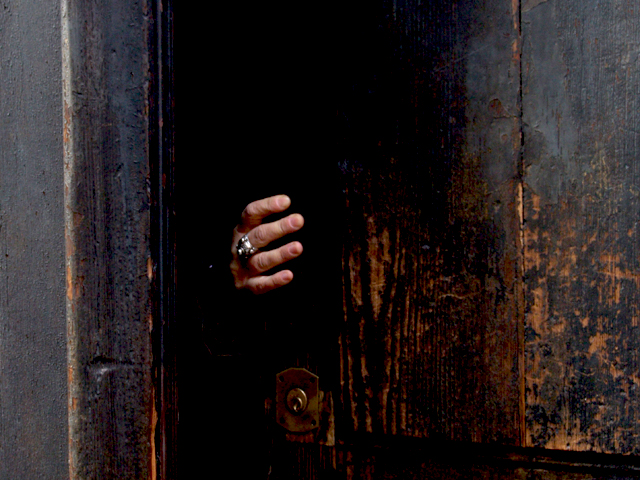
As I was buzzing around town photographing citofoni, I realized there was another common feature of Milanese doors that has always fascinated me. The little door inside the big door.

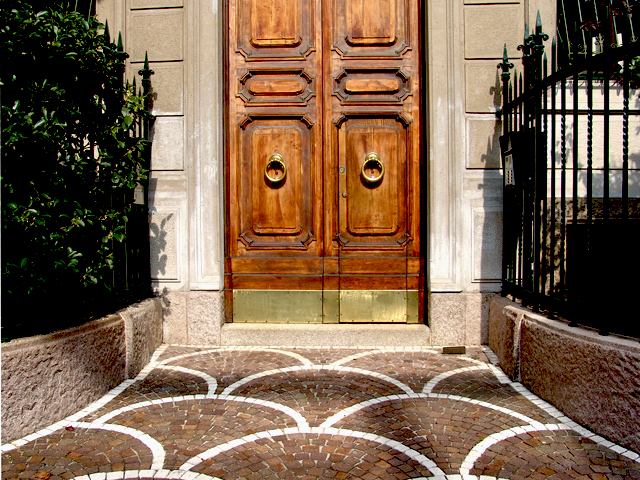
Many of the older palazzi have large double wooden doors, big enough to let a horse-drawn carriage trundle through, into the inner courtyard. Though Medieval in appearance, they are frequently equipped with fisheye mirrors, flashing lights, and the ubiquitous, passo carrabile sign to keep people from parking their cars in front of them. But they also have, if you look closely, the aforementioned small doors designed into the woodwork of the larger doors for people to pass in and out easily on foot.

Some of the portoni, or big doors, are so ornate in design, that their smaller doors are perfectly hidden from view. You can really only detect their presence if you notice their small brass-plated keyholes or the vertical cuts at the bottom.

These are the equivalent of cat doors for people. And in the oldest buildings, they are often much shorter than the average modern man, so that stooping is required to pass through. I love these details. Absurd as it may seem, it’s become a habit of mine to try and find the little doors inside the big doors as quickly as possible. A silly game I play when cruising around Milan on bike or foot. Modern doors have carried on the tradition, and while the game of finding the little doors is not nearly so satisfying, just admiring the architectural flourishes surrounding them is.

But the best of all, is spying someone slipping out through the small door, as if they’re leaving a secret reality in order to slip seamlessly into the one the rest of us inhabit, or traveling through a time warp from some nameless then to the well-known now. There’s something about the little doors themselves that inspires a certain furtive posture, a particular way of trying to enter or exit unnoticed, so that no matter how innocent the errand, one looks suspect. These doors are private. They hold secrets. This is clear.

[If you enjoyed this post, you might also like “Can I come in?”]

Posted in AROUND US, ITALY | Tagged , , , | 4 Comments

Doing the write thing

When I was little, my grandmother who’d been raised in New Orleans and had been heavily influenced by all things French, wrote me letters in a beautiful script that I found utterly illegible and as beautiful as a fairytale. Her hand was unique to her as far as I knew, heavy with romantic connotations, shrouded in some mysterioius past. Where had she learned to write like that? Why wasn’t I taught to add such flourishes to my cursive at elementary school? What did it mean?

Like all American children, I was taught to write on lined paper. Two horizontal lines, with a dashed line between them to help you control the x-height of your alphabet. My first books had pre-printed slanting lines on them as well, indicating the angle of incline that good penmanship would undoubtedly have. My mother had been an English teacher, and like most English teachers, her penmanship was beautiful. It still is. Communication is about being understood. If someone can’t read your writing, how effectively can you communicate with them?

So, I always wrote relatively well, clearly, I thought, even when I switched from cursive to a rapid, all-cap, architectural style of writing that suited me better in my early 20’s. I loved the geometry of it. And there they were: crisp, clean letters that anyone could understand. Right?

Wrong.

I moved to Italy, and suddenly I was an alien on all fronts. My speech was incomprehensible, and my penmanship, so carefully practiced for three+ decades, useless. I never understood why until I had children who began to go to elementary school here. Then it became clear why my writing met with scrunched up noses. Children in Italian schools are taught to write on an architect’s grid. In fact, they work on gridded paper for years. They come out of the box learning to write in all caps—so far so good—but when they switch to cursive (corsivo) things take a turn for—what do you know?—the way my grandmother used to write, minus the Hancock-ian eccentricities that evolved over her many years. They learn to count the squares, place dots at the correct starting points, and off they go, learning method, orderly thinking and penmanship at the same time. (Or so the theory goes.)

Slanting is replaced with uprightness. Abbreviated barbs and hooks are replaced with generous loops. Neatly closed ovals are replaced with open-ended curls. The cross-bars of H’s and the slanting lines of Z’s and 7’s are crossed by non-functional hash marks. The numbers 1 and 4 are utterly foreign to me. I’ve tried to replicate it for you here. Not beautifully executed, but you get the idea. Note the lack of j, k, w, x, and y which don’t exist in the Italian alphabet.

And the row of flowers at the bottom? That is referred to as a “greca” referring, I presume, to the famed Greek wave pattern that you see outlining mosaics and tile flowers. These are repetitive patterns, designed on the grid, that the children use to decorate their school books and, again, to practice learning to count, observe and follow instructions. They start with simple forms, copied from their teachers and from books, and advance to complex Escher-esque designs of their own imagining.

Posted in ITALY, WHAT TO DO | 4 Comments