Milan color story #2: Gray Lady

October is coming to a close, and with it, the gray season is preparing to open. Milan, in all her complex beauty, is about to be revealed to those who love her in her most fitting attire: mist, rain, and cloud. This is her mantle, her signature, her color.
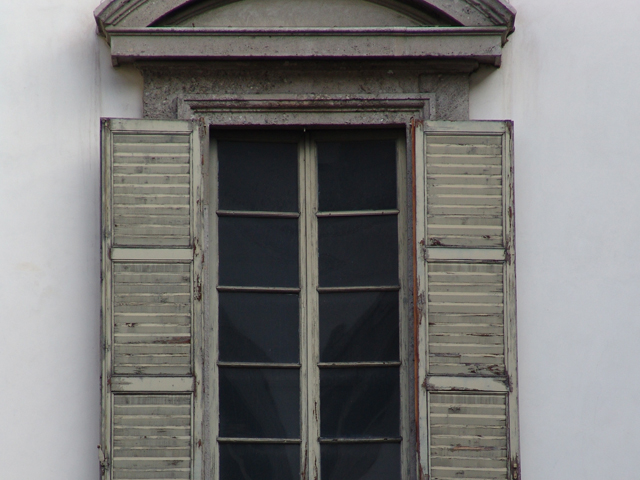
Despite sporting a range of palettes—ochres, olives and beiges—this old lady’s demeanor is reserved and elegant and best represented by that shade existing squarely between black and white. She has not maintained herself with plastic surgery, nor has she colored her fine hoary head. Every line, scar and callous are visible. Every architectural whim exercised during some past decade sits side by side with the whims of decades preceding and following it. But they all meld into the overall grayness of her. Even her shabbiness, her poverty, and her urban grit find their place in this color, her color—gray.
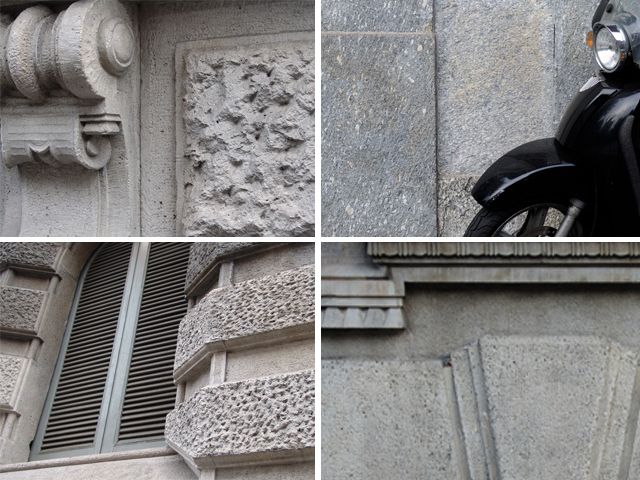
Both warm and cool, perfectly attuned to the uncertain morality of our times and to the natural complexity of things, gray appeals to her philosophical mind, and to her silent eye, which has seen so much: war, immigration, art, fashion, opera, injustice, progress…and the common Italian’s search for a better life.

Her gray, the color of equality if equality had a color, is the blanket that covers us all.

Posted in AROUND US, COLOR, ITALY | Tagged , , | 3 Comments

Trees

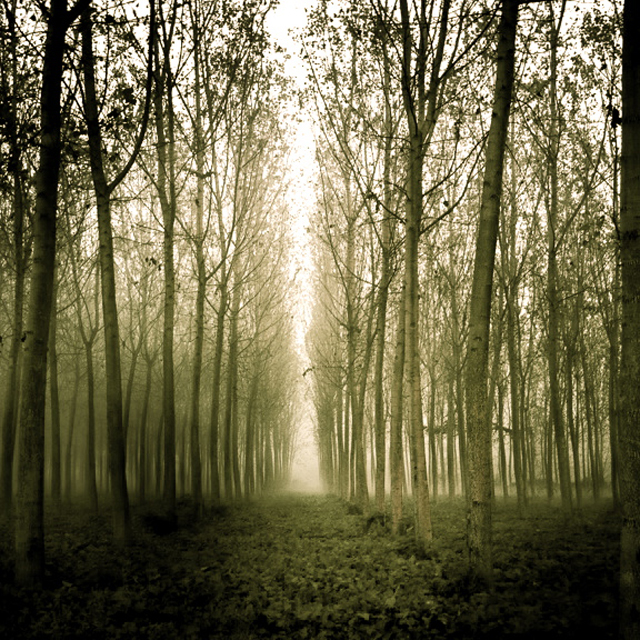
France has its often debated* allées of trees lining the country roads—each white striped trunk standing sentinel. So beautiful. Northern Italy has its plantations. Heading into the countryside this weekend, in the vicinity of the Certosa di Pavia in what’s known as the pianura padana (the plain that characterizes the Lombard region) we passed plot after plot of pioppi, or poplars. They are grown as pulp wood, but before they become the paper of the bad news we read every morning and the great novels we read each night, they are the backdrop to our rare moments of escape.

In both cases, the geometry of the trees (from certain angles obscured, from others revealed), like the structure of a Bach fugue, gives you a sense that all can potentially be right in the world. That man can make things true and meaningful and good. That certain choices can be sustained and that certain functionalities are as beautiful as they are workable.

These trees dot the maps of our lives, saying to us not only “You are here,” but more importantly, “You are supposed to be here. You are on the right road.” Cheerleaders and witnesses to our passage.

Lost

Stand still. The trees ahead and bushes beside you
Are not lost. Wherever you are is called Here,
And you must treat it as a powerful stranger,
Must ask permission to know it and be known.
The forest breathes. Listen. It answers,
I have made this place around you,
If you leave it you may come back again, saying Here.
No two trees are the same to Raven.
No two branches are the same to Wren.
If what a tree or a bush does is lost on you,
You are surely lost. Stand still. The forest knows
Where you are. You must let it find you.

David Wagoner

Thanks to my husband Roberto Badò for the beautiful photographs.

*The debate centers around the opinion that the trees present a hazard to drivers and passengers. Apparently, people have a tendency to drive straight into them. I think this is the fault of the drivers and the wine they drink. Not of the trees.

Posted in AROUND US, ITALY | Tagged , , , , , , | 2 Comments

Next time

I’ve spoken already of the importance of neighborhood in Milanese life, of the way you grow to know those who give you your daily bread, coffee and apple. This morning I was reminded again of how gratifying it is to be enclosed in this circle.

I’d gone into the fruit and vegetable vendor’s first, loading up on things I must write about one day—dolci di Napoli (olives), cachi (persimmons), and puntarelle (a green shoot in the chicory family served in a vinaigrette of anchovy and garlic).

I then stopped at the salumeria to pick up the anchovies, only to become embroiled in a discussion then and there on the differences between the tinned and salted varieties and how, should I be brave enough to chose the latter, they should be cleaned: not washed under running water but scraped free of salt and skin.

Leaving the salumeria, I realized I’d forgotten to buy garlic. So back I went to the fruttivendolo. In five seconds, I was in and out, garlic in hand, having said very little and having paid nothing. The woman who runs the place with her husband, had simply picked the prettiest little garlic in sight, handed it to me and said, “Prossima volta,” meaning “Next time.” You can pay next time.

Credit exactly this hard to get—small and large—is extended all the time. 17 euros at the bakery for four portions of spinach and ricotta ravioli. 2 euros for a cappuccino and a brioche I just had to have, despite being penniless. A rack of lamb. A dry-cleaned coat. We are all as good as our word, and our constant presence is our most valuable collateral. This is a given. If you can’t pay now, you can pay later.

And sometimes, as will probably be the case with this garlic, la prossima volta simply doesn’t ever come to pass. I’ll offer to pay, and it will be waved away, with a wink. Because, after all, one more euro in a vendor’s till isn’t likely to make him or break him. For him, the loss is non-existent. But for me, this tiny gift feels like a huge act of humanity, of respect. It’s the least he can do, in the end, for someone who comes and buys from him again and again and again. And it’s part of the reason I do precisely that.

Thanks to Ann Moore for copy-editing this post.

Posted in ITALY, THEY SAY | Tagged , , , | 2 Comments

Closed for R&R

“The Daily {French-Italian} Cure” is closed for the weekend nursing a head cold but will back in business Monday. You’re welcome to come in and poke around, while I nap. Just close the door behind you on the way out.

1 Comment

The street #1: Via Palermo

Because the city streets are so texturally rich, varied and unpredictable, I’m including a new category of posts called simply “The Street.” These will be small slideshows, the purpose of which is to bring you with me, street level, wherever I happen to be. Pretty stuff, ugly stuff—the mix—all shot from the sidewalk. My favorite in this bunch? The jute mannequin.

This slideshow requires JavaScript.

Posted in ITALY, THE STREET | Tagged , , , | 4 Comments

Pomegranates

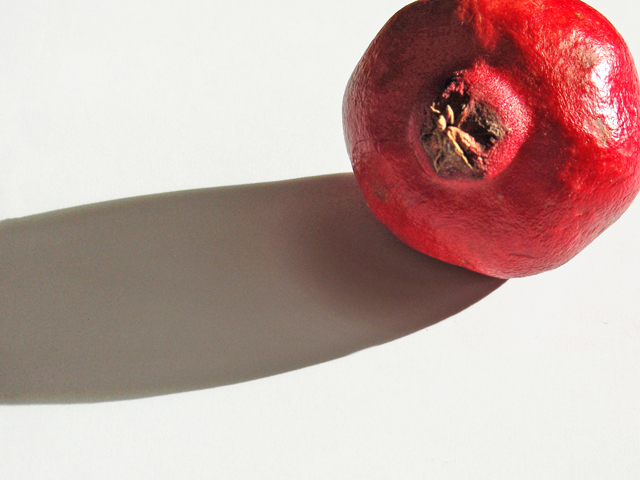
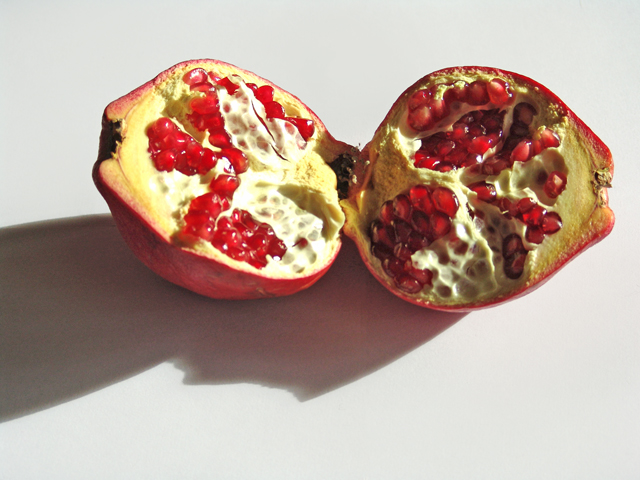
It seems tedious to admit it once again, but until I moved to Italy, I’d never tasted a pomegranate. Despite, or maybe because of, the Bible’s colorful mentions of this bizarre fruit (among them, Song of Solomon 7:12) I thought it belonged in the small type of ancient history, not in the playground of my mouth. I was—need I say it?—mistaken.

“Let us get up early to the vineyards; let us see if the vine flourish, whether the tender grape appear, and the pomegranates bud forth: there will I give thee my loves.”

These symbols of fertility which inspired poetry and amorous advances are delectable. Round like a tennis ball, but ruddy red in color, the pomegranate—melograno in Italian—may be the only fruit I know of that consists almost entirely of seeds. And although these seeds are not easy to liberate from their membraned cells, they are all the more delicious for the difficulty.

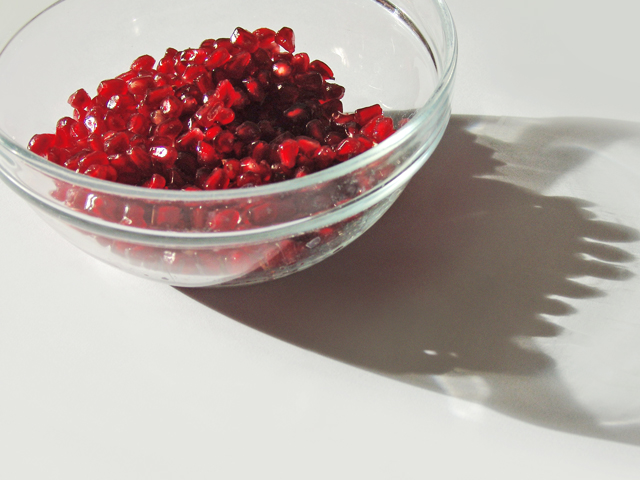
Each of the pomegranate’s hundreds of seeds is enclosed in its own juice filled kernel—jewel-like, ruby red. The flavor, somewhere between wine and a citrus fruit, is complex—sweet, sour, slightly bitter, commanding, other-worldly. Decidedly exotic. Or by shifting one letter, erotic. It’s no wonder they are thought to be the original forbidden fruit.

I throw these seeds into the juicer and imagine garnishing salads with them. But my greatest pleasure is to eat them by the handful, tasting not only their juice but the ancient story of love and desire they carry within them.

My thanks to Ann Moore for copy-editing this post and for patiently explaining to me that pronouns must match their antecedent in gender, where relevant, and in number.

Posted in IN SEASON, ITALY | Tagged , , , | Leave a comment

L’erboristeria

Somewhere between the pharmacy and the health food store, with a dose of monastery thrown in for good measure (Think: monks making elixirs from herbs grown in their cloistered gardens) stands the Italian erboristeria, or herbalist.

These shops dot the urban landscape here and there, flavoring its heavily practical comings and goings with a quasi-mystical aura. I find it hard to pass an erboristeria without actually going inside. Something about it beckons.

Perhaps it’s the handwritten signs affixed to the windows that many of them feature, touting natural cures to everything from bloating to “lack of harmony in marriage.” Perhaps it’s the well-organized bins of herbs and teas, drawers of ointments and tinctures. Perhaps it’s the profusion of heavenly aromas—or do I mean the profusion of positive vibes? It seems, inside the four walls of these comforting places, that no ill is too grave to be cured by the right extract, oil or incense.


Click here to see a complete list of herbs and their purposes (in Italian).

Many herbalists offer the full range of products of the ubiquitous (at least in Italy) brand “l’Erbolario” and sub-brand Erbamea*. But I don’t begrudge them this convenience. The products are high-quality, luscious, beautifully designed, and evocative of an era when we actually did know the names of the plants that would cure us and the spices that came from impossibly far away islands and oceans. Bergamot, rosewood, boswellia…

My thanks to Ann Moore for copy-editing this post.

Posted in AROUND US, ITALY | Tagged , , , , , | 2 Comments

From the heart

Italians are reputedly great lovers. And I believe, perhaps, it’s true. They love—in fact, they seem to experience most emotions—with all their hearts, if one can be permitted to generalize. They are comfortable with being emotional, expressing their feelings, proclaiming them, even, for the whole world to hear or see.

I’ve heard tell of towns where it is still common practice for a young man to serenade his love interest beneath her window before she’ll consent to marry him. I’ve not witnessed this in Milan, but if the opera is missing, the libretto is not. Love is writ large on the streets for all to see.

Sometimes the declarations are generic, written to that person “you know who you are.” Others name names, and use strategic locations. The following message is repeated, facing in the opposite direction, about ten meters down the sidewalk, so that together, the two messages flank the entrance to Via Ferruccio #8. The girl in question, Cristina, regardless of her feelings, will see it coming and going no matter which way she turns. The only way to avoid it is to immediately cross the street.

TI AMO is tame stuff though, compared to what the suffering lover tends to produce. Here’s a perfect example of the typical overblown rhetoric, which I’ve had to enhance in Photoshop, as it’s been fading on the sidewalk for months now. It translates: I BEG YOU. COME BACK TO ME. I CAN’T LIVE WITHOUT YOU. I presume this was written by the same lovelorn kid who’d written this in the same location a few months ago: VIOLA LAST NIGHT CHANGED MY LIFE. (How do you suppose Viola’s father felt upon seeing that public announcement for the first time?)

Some messages are the work of the lover scorned. This one is mild and inoffensive, but it was particularly funny under the nose of my dog. It reads: ZOE STINKS.

The ones that touch me the most, however, are those that express a love which is evidently unrequited to date… The ones that flirt with a different vocabulary, searching to be truer to the emotion…The ones that, you can tell, couldn’t be held inside any longer: I THINK OF YOU ALWAYS. YOU ARE IN MY MIND. I’D LIKE TO BE WITH YOU [space] IRIS.

Whether this is signed by Iris, or written to Iris, I can’t tell. But even that ambiguity is part of its beauty. That, and the heart-shaped “M” of the word mente (mind), as if the writer knows that his (or her) head and heart, for the moment, are one and the same.

My thanks to Ann Moore for copy-editing this post.

Posted in AROUND US, ITALY | Tagged , , , , | 5 Comments

Postcard #5: Wilde posting

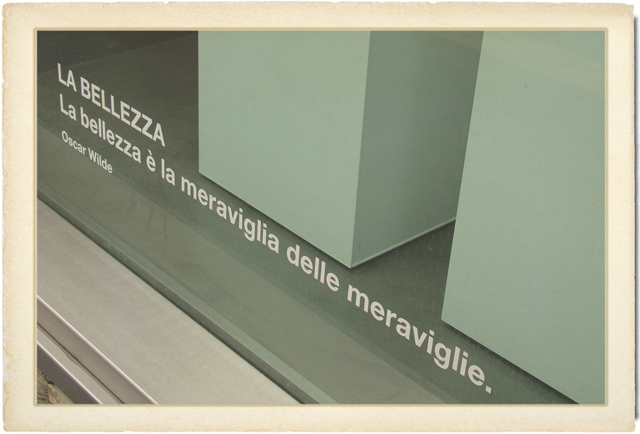
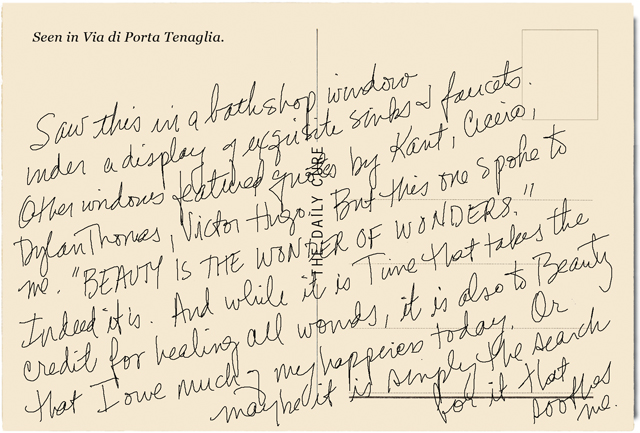
[Saw this in a bath shop window under a display of exquisite sinks and faucets. Other windows featured quotes by Kant, Cicero, Dylan Thomas, Victor Hugo. But this one spoke to me. “Beauty is the wonder of wonders.” Indeed it is. And while it is Time that takes the credit for healing all wounds, it is also to Beauty that I owe much of my happiness today. Or maybe it is simply the search for it that soothes me.]

Posted in ITALY, POSTCARDS | 3 Comments

‘Til Monday

“The Daily {French-Italian} Cure” is putting its feet up for the weekend. Hope you are doing the same!

Leave a comment