PGR

Dear readers and friends (mostly you are one and the same, and I thank you for being there with me on this strange recently interrupted blogging journey),

Today’s post—this 12th day of the New Year (that tells you something, doesn’t it?)—comes in the form of a letter. It seems right after my long absence from this blog to break the barriers of “isn’t life beautiful” with some talk of real life—where I’ve been and why. I’ve been here, at this desk, staring at this computer, but I haven’t been “here,” posting every day about the things that give me joy.

Ironic, isn’t it, that not having the energy or time to seek out the beautiful and to give thanks for it, coincided perfectly with the season that asks us to do exactly that, but which simultaneously traps us in a race of running, spending, and wasting. The upside of my Christmas was that I spent a great deal of time with family, but that was also, truth be told, part of its downside! The stresses of family life are shifting as the years go by, and I don’t find myself living what you’d call a carefree life. Probably none of us do. I know that what I’m experiencing is universal, but that doesn’t render it any easier for any of us, does it?

But the point is this. Between flying back and forth across the ocean, working, doing that Christmas-shopping-thing, making costumes for 75 first graders, helping to take care of a relative with Alzheimers, and dealing with fractured bones and pneumonia, I forgot to do what this blog was designed to do: Take the time to enjoy the abundant small, simple things and be deeply grateful for them.

Years ago, Roberto and I went to Naples. One night, while cruising the old district, we fell upon an antique store full of old ex-votos. Many of them were primitive, hand-painted panels depicting a tragic or potentially tragic event from which the painter was undoubtedly saved. And in the corner were printed the letters PGR. Per grazia ricevuta. The one I remember best depicted a man in mid-fall from an apple tree. Obviously, he survived. I found it heart-breakingly beautiful that a person, no matter their talent or lack thereof in the graphic arts, should express his or her gratitude by attempting to illustrate (and therefore re-live) an event from which they had emerged if not unscathed then at least alive!

Thanks per grazia ricevuta! For grace received. For being delivered. For surviving. For making it safely. For swiftly recovering. For another holiday full of love. For the fact that we are all together. For the boat that didn’t sink, the plane that didn’t fall, the illness that wasn’t fatal…

Even though I am not religious, I had wanted this blog to be a sort ex-voto—an expression of faith and thanks to the universe and to other human beings for all that makes my life rich. And what I forgot this Christmas when I was just too tired to make it to the keyboard, was that giving thanks is an energizing act. Recognizing what enriches your life pulls you closer to it, and makes you even happier. Saying thank you is a sure-fire cure for feeling you have nothing to be thankful for. And a little time does need to be carved out of every single day to do that.

So. PGR. Here’s to a New Year not full of good things, but a New Year in which I am able to see that which is before me which is already so amazingly good and worthy of my thanks.

And that includes you all.

Charlotte
Posted in THEY SAY | 3 Comments

Sicilian—or is that Milanese?—slaw

On occasion, we have lunch at one of my favorite restaurants in Milan, a hole in the wall in the Chinese district called Ottimo Fiore. Excellent flower. It’s Sicilian, and its walls are covered with photos of famous diners, such as the soccer player Paolo Maldini (who seems to appear on the walls of many Milanese restaurants), relief maps of Sicily, tourist photos, and Sicilian artifacts in ceramic. The tables and chairs are squeezed into the small space, and the Mamma and Papà who run the place are, to put it directly, very direct. A typical greeting: “You’ll have to be out of here by 9.” Once you agree to their conditions, they are all smiles and freely offer opinions about what you and your children should eat.

The last time we were there, the aforementioned Mamma recommended as an appetizer the chopped verza salad. Verza, also known as Milanese Cabbage, Lombard Cabbage, or Savoy Cabbage, is a staple in Milanese cooking. Unlike the variety we’re used to eating in the States, verza, when cooked, grounds stews and soups in a lovely earthy sweetness. None of that dirty-sock stuff one remembers from the boiled cabbage of once-upon-a-time.

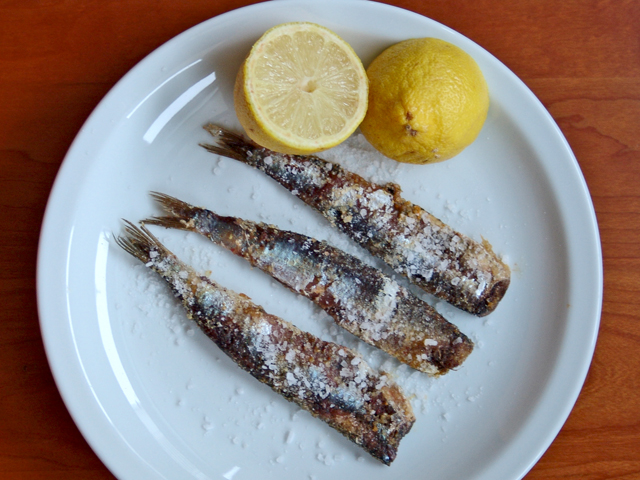
I find verza particularly pleasing sautéed together with chopped onion, carrot, celery and garlic as the basis for a re-vamped “chicken soup with rice.” Here, it is probably best known as the cornerstone of the Lombard specialty, cassoeula , prepared with pork ribs and rinds plus one pig’s foot, sausage, pancetta, a little tomato sauce and the aforementioned sauté ingredients. This gastronomic heavy-weight and my own modest soup constituted my culinary knowledge of verza. I’d never imagined eating it raw. So when Signora Ottimo Fiore told me that she grew the cabbage, organically, in her own garden, and that it was scantily dressed with nothing more than olive oil, lemon juice, anchovy, and a light sprinkling of pepper, I knew I had to try it.*

It was love at first assaggio. What can I say? Fresh, piquant, clean, crunchy. Wintery and summery all at the same time. These taste-experiences are, for me, the ultimate in Italian dining. You know you’re having some kind of peak sensorial experience when every ingredient stands in perfect contrast and simultaneous harmony with its plate-fellows. When the deliciousness of the sum is the exact equivalent of the deliciousness of its parts. And when a chef’s—or a modest cook’s—ego has taken its rightful place behind the natural superiority of nature’s offerings and wouldn’t dare to gild the lily.

* This dish is impossible to photograph well, but you’ll have to trust me. It’s delicious. Try it. That recipe again:

1/3 finely sliced Savoy cabbage
the best olive oil you can get your hands on
chopped anchovy (I use 3-4 fillets)
lemon juice
a sprinkling of fresh-ground pepper

Finely slice, wash and drain the cabbage. Then toss with remaining ingredients to taste. NOTES: I use roughly 1/4 cup oil with the juice of a whole lemon. When it’s convenient to buy them, I use whole, salted Spanish anchovies which I fillet and scrape clean of salt and skin . But otherwise, I use already filleted anchovies (acciughe or alici) preserved in tins or small jars. This salad is best if mixed, covered and placed in the refrigerator for a couple hours before serving.

My thanks to Ann Moore for copy-editing this post.

Posted in IN SEASON, ITALY | Tagged , , , , , , | 4 Comments

“Modern” mash-up

It’s easy to relate to the antiquity in Milan. The “old” in Italy is what we see in romantic films; it’s what we think of when we think of Rome. When we imagine ourselves running down Italian city streets, they are narrow and crooked and cobbled, flanked by ochre, water-stained walls which have seen the centuries come and go. We play hide-and-seek behind fluted columns and zaftig goddesses carved out of marble. This stuff, the ancient and the ornate, is undeniably beautiful. I myself never grow tired of it. But there is much more to Milan.

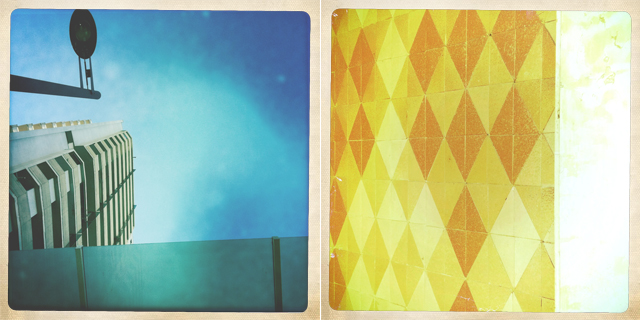
Milan is a mish-mash of architectural styles. It’s taken me years to get used to it, for it’s the relatively “modern” in the Milanese verneer that feels foreign to me, not the old. In the United States, modern tends to feel “new,” clean and relatively functional. In Milan, “modern”—most anything built after World War II—feels funky.

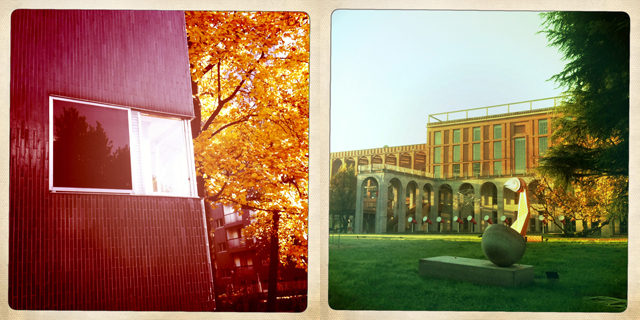
Tile was used excessively to cover the exterior of buildings. Modern materials re-make arches. And curves and odd angles pop up everywhere you look. You won’t find the aggressive, exciting geometry of recent Dutch residential architecture; you’ll see something more inspired by, say, Oscar Niemeyer, though not taken to that extreme. Part George Jetson. Part Lego. Part di Chirico.

I used to see many of these buildings as unfortunate eye-sores. Now I let my eye play with them. I imagine them newly constructed, clean, with all their tiles and panes of glass in place. I imagine their whimsical balconies un-sullied by time, dirty laundry or air conditioning units. They’ve grown on me. I appreciate their attempt at playfulness, even if, in the end, the older buildings seem to be weathering the passage of time with greater resilience.

Final note: I do love—without reservation or qualification—the Triennale contemporary art museum pictured above from behind. The bird sculpture you see, is in fact, part of a larger installation by Giorgio de Chirico entitled “I bagni misteriosi.”

Leave a comment

Postcard #7: The Shoe

[It may not be Milan’s most refined installation, but this pink pump perched atop an old red fiat never ceases to make me smile to myself. It sits there amidst parked cars—just at roof/head level—saying, “Oh come on. Get your priorities straight.” My grandmother would’ve agreed. “I’d spend my last sou on a nice pair of shoes.” Voilà.]

[If you enjoyed this post, you might also like “Postcard #5: Wilde Posting.”]

Posted in ITALY, POSTCARDS | Leave a comment

A day in the office

I could go on and on ad nauseam about the advantages of freelancing, but then I’d be a terrific bore, and what’s the point of that? Suffice it to say that I feel lucky to have choice, right-of-refusal, and the chance to take extended vacations when body and soul seem to require them. The ugly side of the same coin is that sometimes you find yourself up against projects, clients, and financial realities that render the job somewhere on the scale of “thankless” to “mind-numbing.” Throw in a different country, culture and language and the toss of the freelance coin gets even more complex.

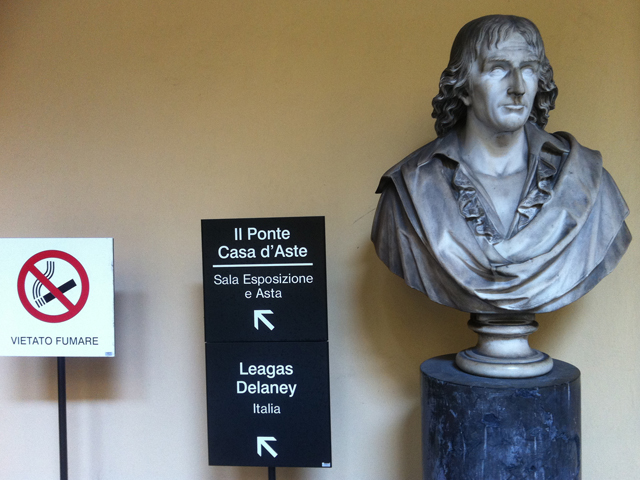
I’ve been really fortunate to have some relationships that have sustained me for a long, long time, and which have given me, in their own way, an anchor in this city. I’m still an American, and work is part of who I am, so knowing that every now and then, I will trod familiar sidewalks to fulfill my DNA’s desire to say “I’m gainfully employed,” is a good thing. Just last week, I had the opportunity to walk, for the umpteenth time, into the agency for which I have done the most work in Milan—the London-headquartered Leagas Delaney.

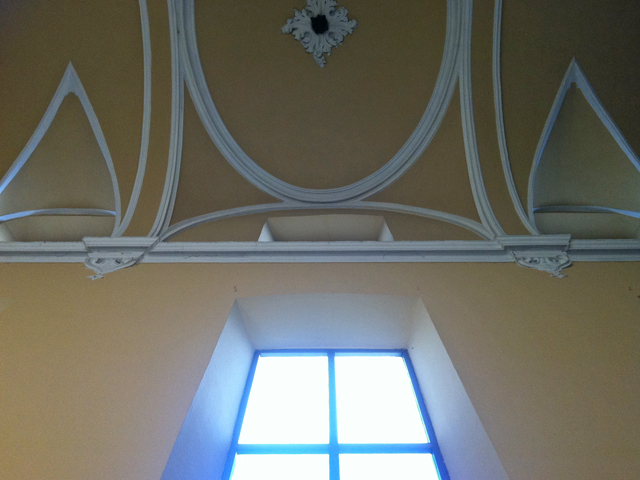
Every time I go to their offices, I feel like I’m striding through the halls of a fairy tale. The work in question may be more or less fulfilling with more or less potential for brilliance (the advertising climate isn’t exactly a joyride right now for anyone), but the 100 steps it takes me to get from the sidewalk to their frosted glass door is almost worth whatever awaits on the other side. They are located in a lovely old Palazzo at Via Pontaccio, 12, and they share the red-carpeted floor with an auction house. One of these days, I’m going to miss my “deadline,” rush down the stairs, losing a crystal slipper, and arrive on the street only to discover that my carriage has turned into a warty old pumpkin.

But until that happens, I’m grateful for the chance, every now and then, to feel exhilarated by surroundings that have nothing to do with me or my upbringing. They may, however, have much to do with who I have—quite without planning it—become. Antiquity isn’t my native milieu, and this agency isn’t my professional “home.” But I am the person who walks through it comfortably, knowing that had I planned my life myself and adhered to that plan, this exact joy would not necessarily have been an integral part of it. Maybe the goal of life is to not obstruct the unfolding of the mystery, to see what will happen if you let it.

Posted in AROUND US, ITALY | Tagged , , , , | Leave a comment

Spadari

It seems that all I talk about lately is food. It’s not really the case, but it is fair to say that with cold weather rolling in, my interest in tucking into yumminess of all descriptions is increasing. I indulge myself not by giving into it, but by pretending. Take yesterday, for example. Yesterday for the singular motive of procuring a tiny box of macarons (a following post will go into more detail on this topic) at Ladurée, I took the tram into the center, to one of my favorite streets: Via Spadari.

This cozy street, one block from the Duomo, is probably best known for Peck, a veritable gastronomical temple. The best-of-the-best in terms of Italian ingredients and preparations are found here. Walking through Peck is like walking through Barney’s in the good old days, except that what greets your eye isn’t designer wear. It’s the food of the gods. Cheeses, salumi, preserved foods, olive oils, vinegars, chocolates, wines and more. You can also stop in for panini or an extended wine-tasting. I’ve photographed just one of the front windows, as photography inside is strictly prohibited. Too many well-guarded secrets, I suppose.

Another favorite stop of mine is the Pescheria Spadari situated in the middle of the Duomo-side of the street, opposite Peck. I love shopping here, though it’s now a bit off my well-beaten path. Customers and servers alike seem to be seized with an urgent passion about seafood. The act of entering and order produce a small adrenalin rush. I saw yesterday that they have added a “lunch service”! The idea delights me: you sit on a high bar stool and and eat inside the actual fish shop, while it’s otherwise closed for lunch business. Wednesday through Friday, 12:30-2:30. Primi piatti (i.e. pasta dishes), secondi (main dishes based on seafood), sushi and crudités.

As I’ve already mentioned, my goal in going to Via Spadari was the Parisian import, Ladurée, a confection of a store filled with pastel colored macarons imported daily from Monte Carlo. What I hadn’t previously realized, is that two doors down from Ladurée is a beautiful old Milanese Pasticceria which also makes macarons (in the photograph). Their multiple display windows are a feast for the eyes, filled, now, for Christmas, with a dizzying array of those spherical glass balls filled with tiny snow-scenes, miniature doll houses and windmills, macarons, and silk Chinese boxes filled with chocolates. It sounds like a horrendous mix, but it’s more like the fantasy of a child trapped in a Francis Hodgson Burnett novel. What you see through the glass is an escape into another world and time, one that existed before earthquakes, pollution, war and pestilence—beautiful, ornate, and whimsical.

[If you’re ever planning a trip to Milan, I highly recommend that you visit this street with an empty stomach, and that you consider staying in the perfectly situated Hotel Spadari.

Posted in ITALY, SAVORING | Tagged , , , , , , | 1 Comment

Just tossing something together

As destiny would have it, the year before I moved to Italy I bought a book called 100 Pasta Sauces. I don’t remember actually making anything out of the book, but I do remember thinking, “A hundred. Hmm. That’s a lot.” And so it is. Though I’m sure the number of sauces used in Italy far outstrips the number in the title. In part, I say that because there are a countless number of traditional and regional sauces. But I also say it, because I know that a good deal of imaginative interpretation is allowed along the way.

There are sauces I’ve heard of, but have never dared to make or taste, among them a sauce based on tuna and beet root. (This does not appeal to me at all.) There are pasta dishes that, beside the pasta itself, are based on practically nothing substantial, but which are full of flavor. I suppose the most famous of these are olio, aglio, peperoncino and puttanesca`—both lovely savory standbys for when you have “nothing” in the cupboard. On the island of Panarea, I had the pleasure of eating a pasta a cinque sapori which I’ve never forgotten, but whose main ingredients I never managed to identify. The mystery of the potent mix only added to its intense appeal.

Eating Sicilian pastas for the first time literally blew my mind. Who would have thought you could make a sauce out of sardines, anchovies, wild fennel, pine nuts, bread crumbs, and raisins? Who? And yet it is divine. Complex and satisfying. Evocative of what you imagine a Mediterranean life to be full of—even if, in reality, it’s not. Sea. Sun. Salt. Satisfaction.

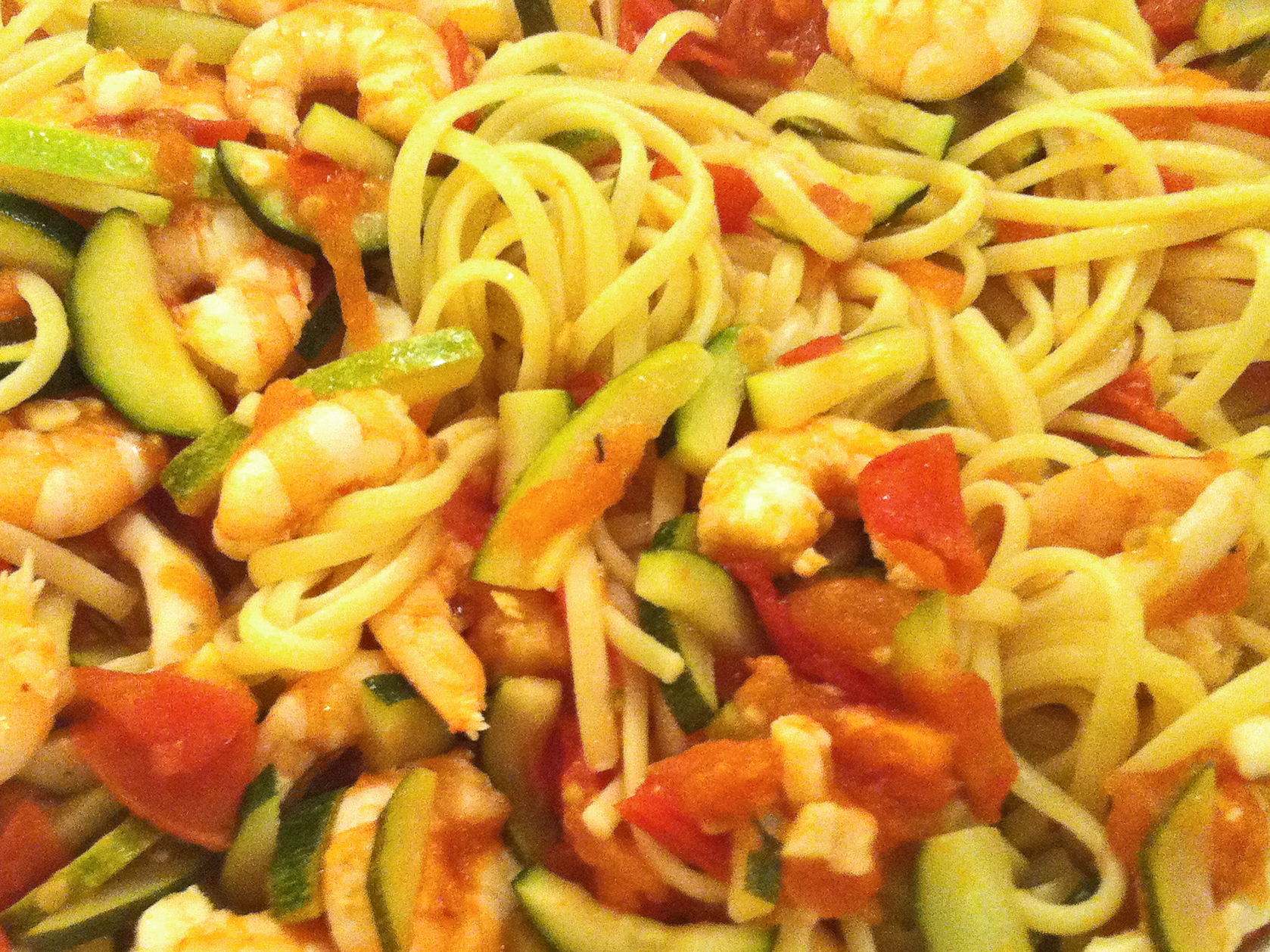
My favorite pasta sauces these days involve ingredients saltati (sautéed) briskly, almost carelessly in a hot pan, in which the extra al dente spaghetti or linguine are added at the last minute for one final taste-melding toss. Case in point, the above: fresh sliced calamari with scampi, garlic, the green of the zucchini cut in slivers, white wine, fresh tomato and an assertive sprinkling of peperoncino. The time it takes to boil the water and cook the spaghetti is more than enough time to make the sauce. Maybe even too much. Fifteen minutes, and your meal is ready. Eat it hot. And marvel at its beauty.

Posted in ITALY, SAVORING | Tagged , , , , , , , | 3 Comments

Tools

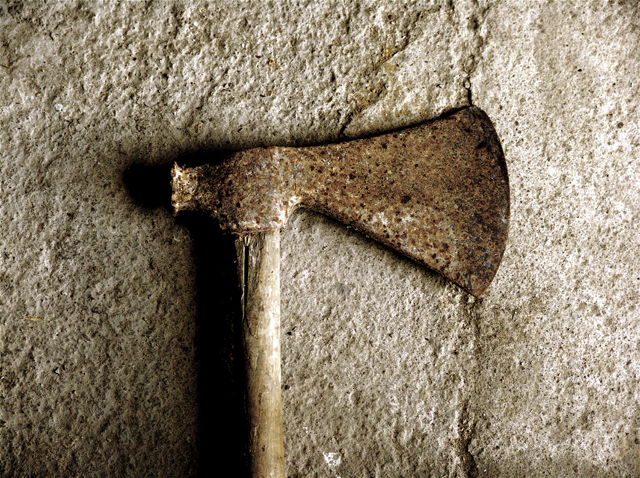
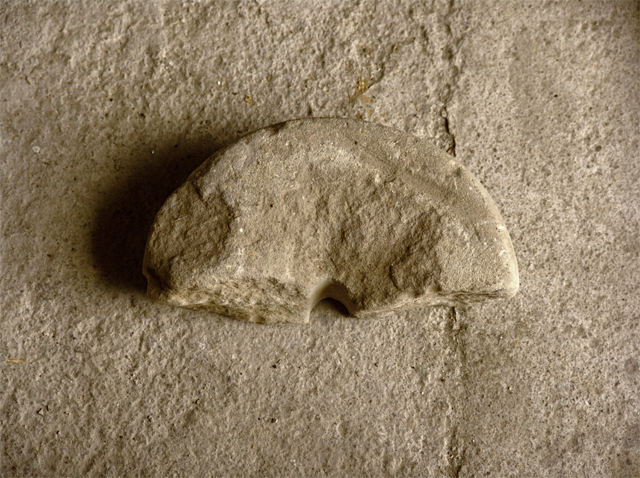
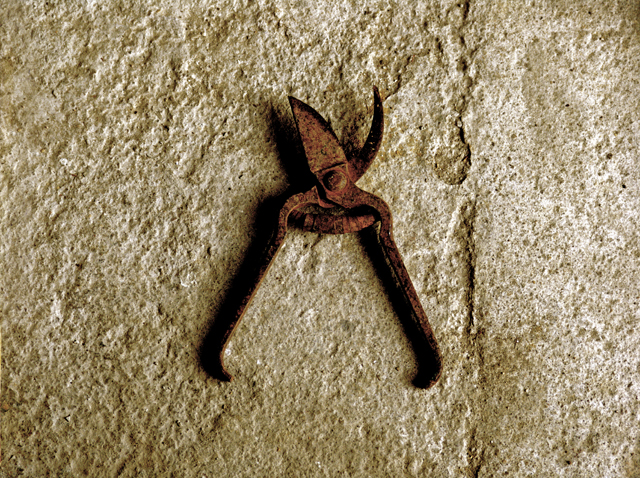
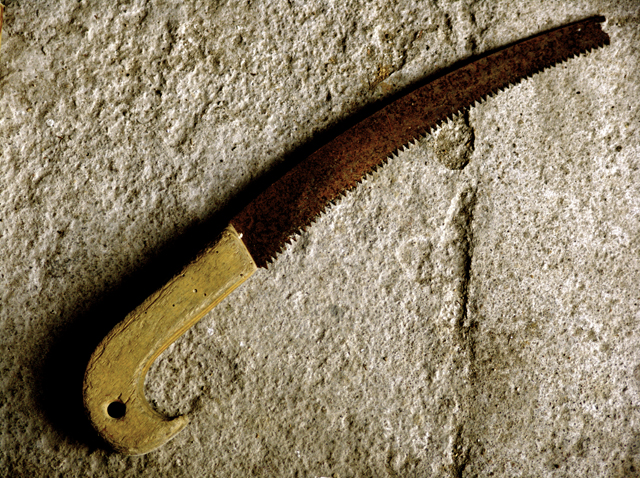
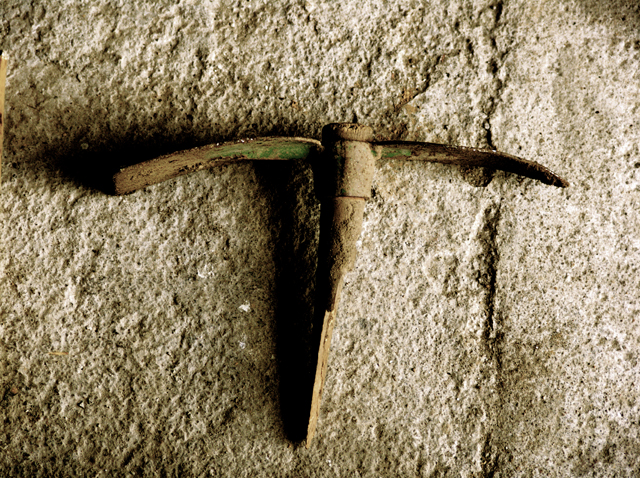
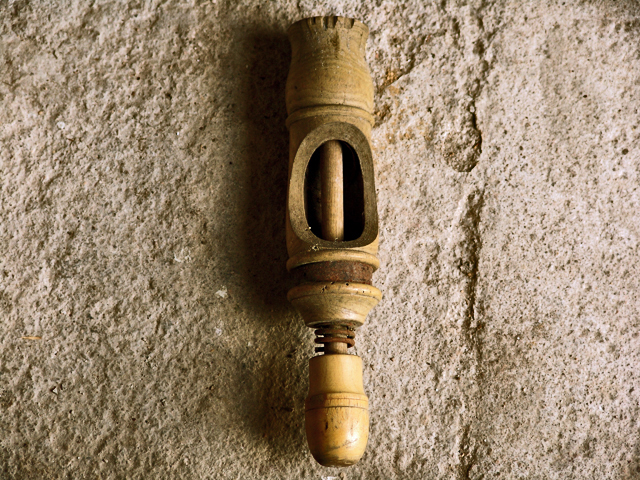
Once again, I’m in Italy, but I’m thinking of France. Or rather, I’m thinking of some things that we have in France. I’d like to lay my hands on them now, as in touching them I’m reminded of what life once was and what it can be if we let it. I’m speaking of a collection of old tools which have been forever in the barn. A whetstone. A level. An ax. A small hand saw. A hammer. Some people finger rosary beads. I would go to these tools right now for spiritual consolation if they were here.


Yesterday, I spent a good part of the day at my computer listening to Jonathan Harris, the digital artist, speak eloquently about—among other things—what technology is doing to our lives. He made so many salient points that it would be impossible to share them all here, but I encourage you to use these links to the talks in question. (AIGA, Flash on the Beach).

But one of the things he said which I must share with you now regarded tools. Once upon a time, our tools were just tools. We used them to further our aims, do our work, perform our tasks, make things. And when we were done, we put the tools aside or left them behind. Today’s technology has changed that. The brilliant design of iPads, iPhones and computers themselves attracts us ever more towards them whether or not we actually need them, so that instead of their existing in service to us, we feel compelled to be in service to them. We want to use them just to use them, but not necessarily to further a thought, tell a story, make something beneficial, create art, or simply do work.

I confess that aside from this blog, my work and my daily communications (isn’t that enough?), I often find myself drifting to the computer as if it will fill a void, give me an answer, get me through a bad moment. When in fact, what I probably should do is turn it off and get a stiff cup of tea. It requires great discipline to use it as a tool. And I am determined to start regarding it as such.

This topic got me thinking about other tools and about their beauty in our lives, about the way they draw us out of ourselves toward a physical world (and physical manifestations of ourselves) instead of further inward toward a deeper isolation. I would like to pick up a hammer today, and drive a nail deep into a piece of wood. I would like to sharpen a blade against a stone. I would like to lay a board plum or straight and measure its truth with a bubble trapped in glass. But chopping an onion will do as well. Or knitting a sweater. Brewing a coffee. Recording a date in an actual datebook. Holding a cup. Writing “I love you” in ink on a piece of real paper and leaving it on my daughter’s pillow. These daily acts, involving the old tools of our lives become sacraments compared to the mindless sitting at the keyboard. They require our presence, not our absence. They keep us real.

Posted in WHAT TO DO | Tagged , , , , | 8 Comments

La nebbia / The fog

This doesn’t belong in any category. Just in my heart—somehow. It’s about Italy, vaguely, but it’s mostly about life. My life. Or maybe anyone’s. Everyone’s. It’s a metaphor, then, about the confounding and beautiful nature of things, and how we exist inside them. And it has all come to mind now because now, now in Milan, the fog is rolling in.

This is the time of the year, with the cold and the gray and the moisture and the alterations in temperature, when the city quite unexpectedly turns into a black and white photo covered by tracing paper. It is the time of year when you walk out into the familiar only to find it transformed into the unfamiliar, and along with it, the familiar in yourself. It is bizarrely liberating not to be able to see what’s around you, where you came from, or where you might be going. I’m exaggerating of course, but sometimes it is in taking things to their narrative logical—or illogical—conclusion that the story becomes the most beautiful version of itself, that the symbol gains its greatest power.

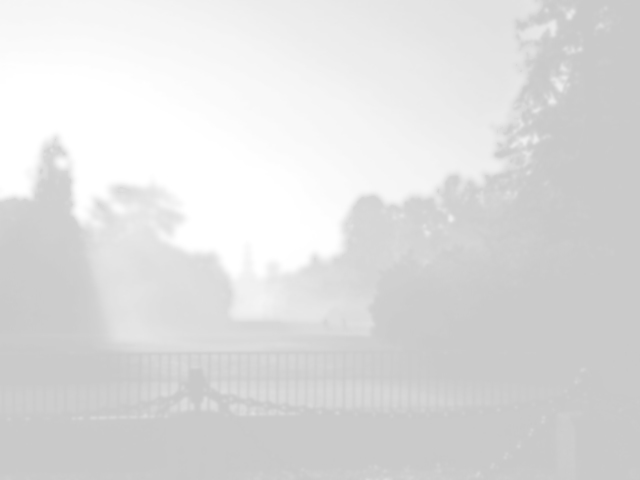
This all came to mind last week when I was taking my early morning walk in Parco Sempione. The park which is beautiful even under normal circumstances, looked like a stage-set hovering under a strong veil of artificial mist. Vapor hung over bush and tree, skidding over the Park’s organic and inorganic surfaces like a spirit form. I could see people walking in the distance, mere black shapes outlined against a 30% cool gray. I wanted to enter the magic realm myself. I wanted, quite frankly, to disappear.

My husband told me once the most beautiful urban (Milanese) legend about a man who left his house on a foggy day, only to return after a day of work to a different house with a different wife, different children, a different loyal dog, and a different collection of books and records. A different life. He left in the morning one man, lost himself in the fog, and came back another.

I often feel that this is what happened in my life. I flew up into the fog at the Portland airport, leaving the ground and my very own life unseen beneath me. And I landed in Milan inside another fog. I left my house under a cloud and walked into a new house in a new cloud.

And that is where I am now. With my husband and my children and my faithful dog, all of whom were quite invisible to me just years ago. And for this surreal life-event, I am so thankful. And yet, and yet, there are times I want to go back. To embrace my old friends, all those people who inhabited that other space and time. But I do not know if you can go back into a fog you have already left. I just don’t know.

    Added a couple hours after the initial post:

I don’t know if what I’m saying makes any sense. It’s just this: life is an act of living the unknown. And sometimes we are reminded that that is precisely what’s happening, and giving ourselves over to it can be the most beautiful experience. Or so it seems to me.

Posted in ITALY | Tagged , | Leave a comment

Pick me up

It’s now official: when I’m working, I’m not blogging, and vice versa. This girl just finds it too difficult to pull off both at the same time, or at least I did this go round. And I must admit that I miss my Daily Cures when I’m not taking them, well, daily. So I’m back, starting small, with the necessities of life: Olives.

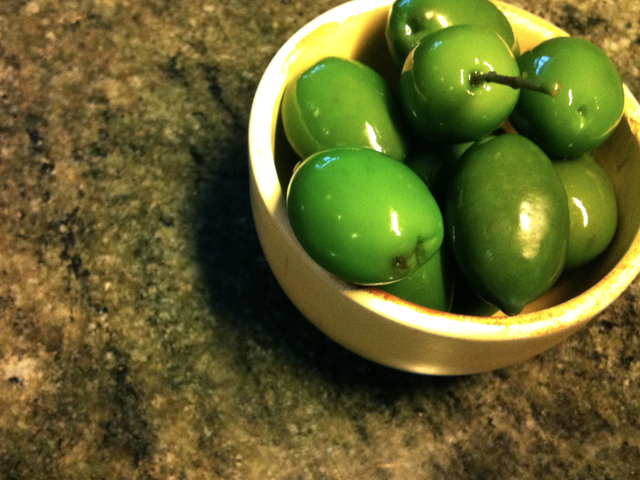
I always liked olives, but until I came to Italy I’d never met an olive that convinced me to compromise my sense of dignity and decorum. I have now, for some years, been well acquainted with that olive. I buy it at the open-air market or at my fruit and veg vendor’s— 2 etti (200 grams) dumped uncerimoniously into a plastic bag. These olives, referred to here as “Dolci di Puglia” (there are also “Dolci di Napoli”) are giant, bright green olives, with a ridiculously abundant amount of flesh which tends toward sweet rather than salty/sour.

Una tira l’altra, as they say—”one pulls the other”—meaning as the Lay’s people claimed so long ago, “No one can eat just one.” I tell myself that they give me eternally, beautiful skin and other age-defying benefits. I know this isn’t true, but what is undoubtedly true is this: they make me happy. They improve my morale. And so I think I’ll eat just one more. That one there with the stem…

Posted in ITALY, SAVORING | Tagged , , , , | 9 Comments