Serious Cirrus and the Cloud Appreciation Society

Last week before the heatwave hit, I ventured out on the bike to clear out the cobwebs and was stunned by the artistic activity on display in the sky. Someone, something, had taken out the giant paint brushes and dabbled in dry-brush technique. Here and there: wide playful swaths of white hanging in isolation against a blue museum wall. No nasty uniformed guards. No red velveteen cords. No signs saying “Don’t touch.” Because this stuff was far out of any school girl’s curious reach.


The school girl in question tried to reproduce the effect when she got home, but it’s not so easy. Beauty is beautiful because not just anyone can whip it out. Even (and especially) when the author of the original masterpiece is none other than Nature herself, with wind and water as her tools. Lesson learned.

The Cloud Collector’s Handbook by Gavin Pretor-Pinney, which I keep on a shelf under the best cloud-viewing window in the house, tells us on page 22:

The most ethereal looking of all the main types, Cirrus clouds are also the highest—composed entirely of ice crystals. These typically fall through the high winds of the upper troposphere to appear as delicate, celestial brush strokes, known as “fallstreaks.” Cirrus often look like white locks of hair (from which the Latin name is derived).


If you love clouds as much as I do, you’ll love the aforementioned book and the associated website, Cloud Appreciation Society. Before I leave for the day, I share the Cloud Collector’s manifesto with you, borrowed from their site and with which I heartily agree:

WE BELIEVE that clouds are unjustly maligned
and that life would be immeasurably poorer without them.

We think that they are Nature’s poetry,
and the most egalitarian of her displays, since
everyone can have a fantastic view of them.

We pledge to fight ‘blue-sky thinking’ wherever we find it.
Life would be dull if we had to look up at
cloudless monotony day after day.

We seek to remind people that clouds are expressions of the
atmosphere’s moods, and can be read like those of
a person’s countenance.

Clouds are so commonplace that their beauty is often overlooked.
They are for dreamers and their contemplation benefits the soul.
Indeed, all who consider the shapes they see in them will save
on psychoanalysis bills.

And so we say to all who’ll listen:
Look up, marvel at the ephemeral beauty, and live life with your head in the clouds!

Posted in AROUND US, FRANCE | Tagged , , , , , , | 4 Comments

The more things change…

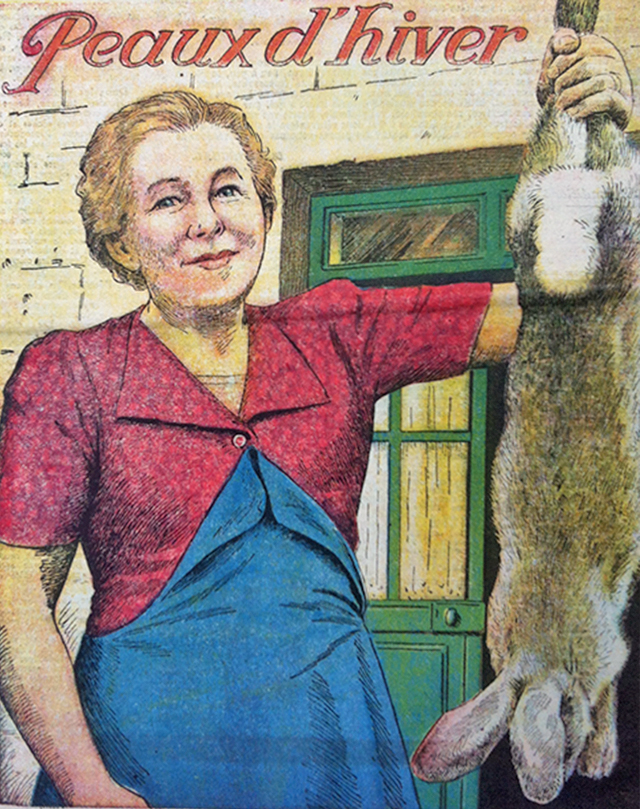
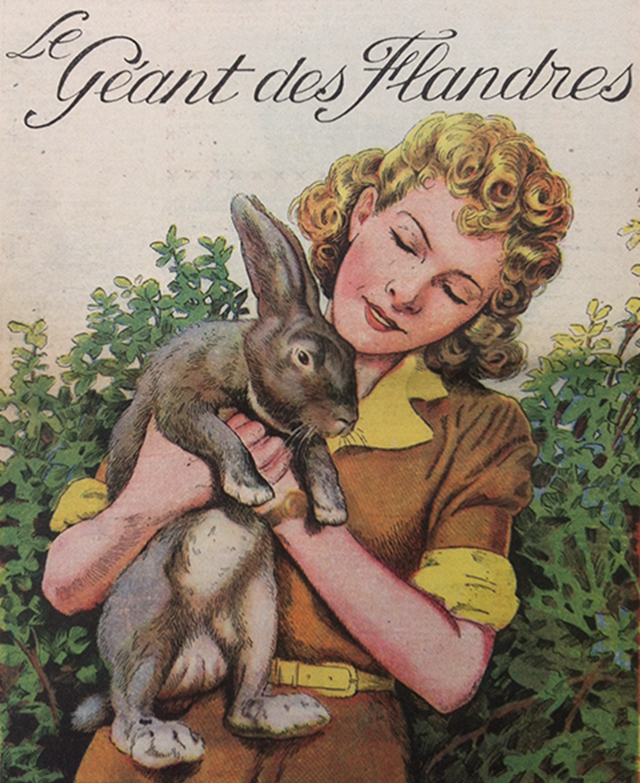
Last week at the vide-grenier of Nitry, I was immediately attracted by these four issues (dating from 1949-1950) of “Rustica: Journal universel de la campagne,” a magazine devoted, as the title suggests, to country living. I thought I was buying them for the cover art but found on reading them that I was fascinated by article after article about gardening, driving fence posts, planning a sundial or converting a run-down vineyard into a successful alfalfa business. When you’ve made a living in the ever more frivolous and mind-boggling advertising business for years, the concrete and practical advice offered in these yellowed pages is an antidote to many frustrating perceptions about “the way things are going.”


Certainly there is much that has changed about French country living, but just as certainly there is as much that has not. How-to basics usually apply. And living off your land (not to mention your wits and skills) takes on new interest, to be sure, when the global economy and the quality of mass-produced edibles and other products are tanking all around us. Not to mention the fact that common sense has changed very little, which is why we all should listen, or should have listened, to our grandparents and parents. I’m going to think about what my grandparents and parents have said to me by way of advice or taught me by example. I’ll let you know what bubbles up. What can you remember? I’d love to hear from you on this topic so that I can compile a list of our collected, inherited wisdom. Thank you.


Posted in FRANCE, SO NOTED | 3 Comments

Tomorrow, in tiny packages

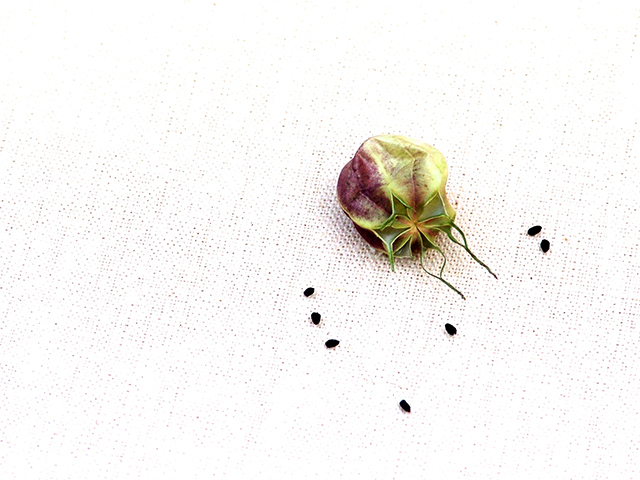
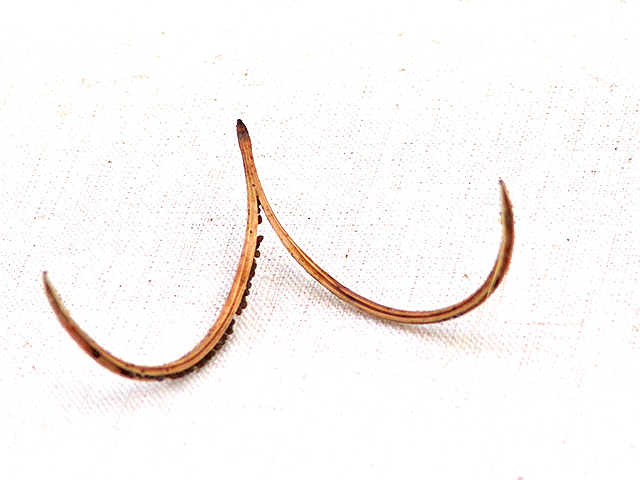
We’re in the midst of a heat wave here in France. Canicule. The temperature doesn’t even drop sufficiently at night for the house to catch a breather. Fortunately, the old walls are thick and well-insulated and, yes, we make it fine in the end even without air conditioning. Dogs lie about like they’re dead. Well-watered shade plants wilt, because even in the coolth of a shadow, it’s a veritable oven. And, still, Nature offers up small gifts and reminders of things to come. Change. I’ve been saving these from our wild-flower patch which I’ll relocate next Spring. Seed pods. Many are varieties of poppy, coquelicots. The others, I can’t name. But I love their space-age packaging and the seeds which, in this heat, fall out of them willingly, some no larger than motes of dust and blacker than coal.


Posted in AROUND US, FRANCE | Tagged , , , , , , , , , | 2 Comments

Closed/Week in review

Monday
“The gentlest architecture”
In appreciation of well-designed housing:
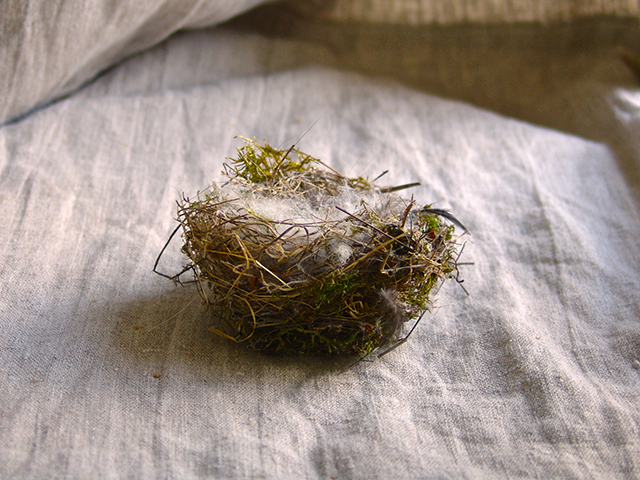
a bird’s nest that fits in the palm of the hand.
(Read this.)

Tuesday
“Object beauty and elbow grease”
A look at the old tools that give a kitchen
functionality and soul. Like always.
(Read this.)

Wednesday
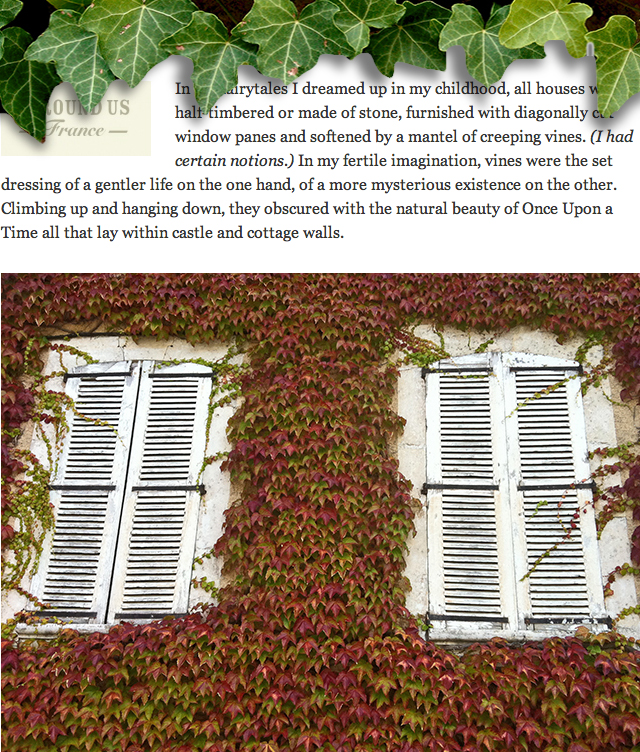
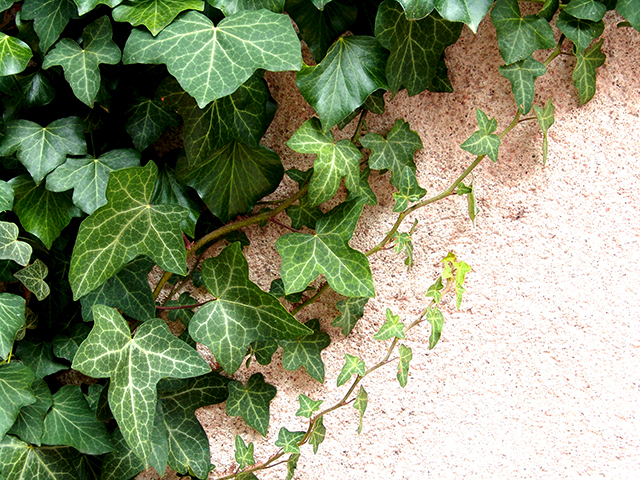
“Of creeping, clinging and climbing things”
On a life-long love affair
with the vine.
(Read this.)

Thursday
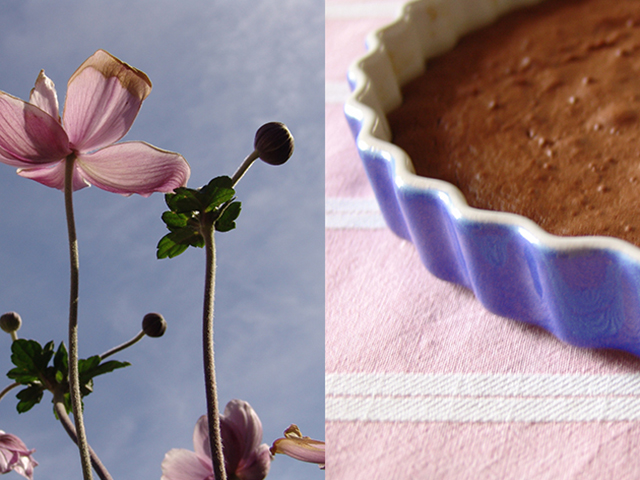
“Child’s play chocolate cake”
On the easiest chocolate
cake in the world. Peut-être.
(Read this.)

Friday
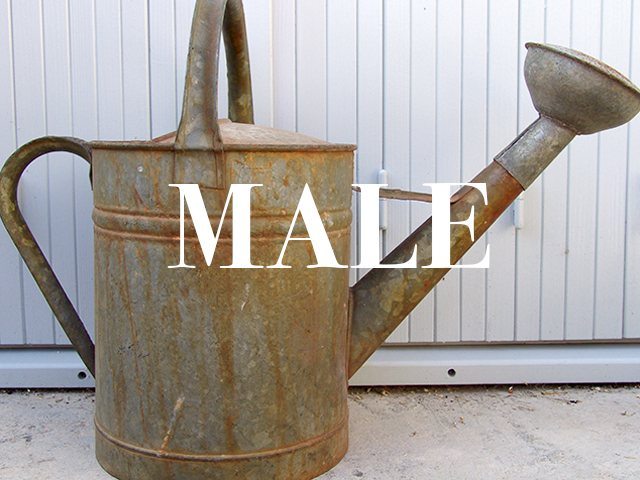
“Thoughts on gender and two watering cans”
On the difficulty of choosing on the one hand,
and the desire for freedom of choice on the other.
(Read this.)

Posted in WEEK IN REVIEW | Leave a comment

Thoughts on gender and two watering cans

I’ve been searching assiduously for an old watering can. The galvanized kind. The kind that’s already lasted forever and still has life in it. New at the gardening store here, they are 60 euros. That’s a pretty strong case to buy a plastic one, but I figured if I just held out, if I just went to enough vide-greniers

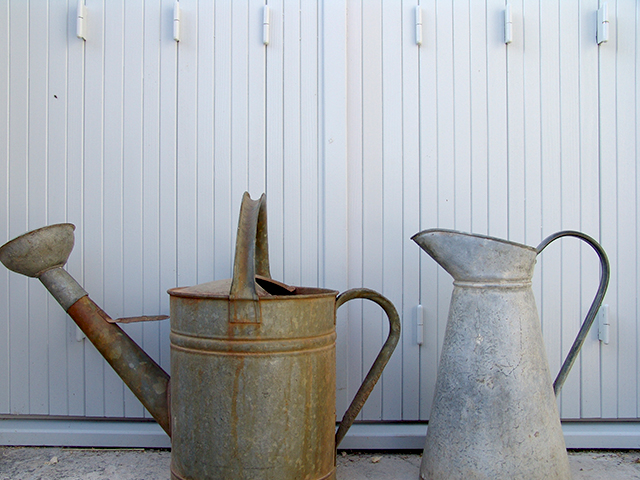
On August 15, at the vide-grenier in Givry, my search came to an end. In duplicate. While browsing the tables at one end of the field, my daughter came running from the other, with a beautiful watering can in each arm. “Look what we found!” Indeed, they were quite a find, and both together for a lovely, low price. Before looking at them well, I thought, “Why two?” but an instant later, I realized why. It would have been hard to choose between them, to separate them.

In French, “watering can” is l’arrosoir. In Italian, it’s l’inaffiatoio (or l’anaffiatoio). Both masculine. So, obviously, in the well-populated world of objects, the watering can—somewhere along the line—was considered to have more testosterone than estrogen. Hmmm. I’ve lived in Europe for over 14 years now, struggling the entire time with language, and my relationship with the gender of words remains uncomfortable at best.  My American DNA requires equality, or at least choice. (I’ve tried to master a rapidly uttered, barely perceptible article that will sound right to any ear that hears it, but guess what…this doesn’t really work.)

In the case of my two watering cans, being a visual person, I am inclined to throw out years and years of linguistic history and declare without hesitation that one of them is decidedly feminine, while the other is unabashedly masculine, and that together they make a beautiful couple. (And if they are both male, as the linguistic laws of both French and Italian insist that they are, they still make a beautiful couple.) It’s obvious, isn’t it?

Perhaps grammatical gender, like human sexual preference, should be assigned personally by the speaker according to his or her whims, instincts and deep inexplicable associations—a more modern way to describe a more modern world. For the linguistically inclined it would probably be a complicated mess (not to mention the beginning of the lawless unraveling of diction, syntax and spelling). But for me, it would simplify matters considerably, and I’d enjoy having the freedom to choose.

Posted in FRANCE, ITALY, THEY SAY | Tagged , , , , | 12 Comments

Child’s-play chocolate cake

When the skies are blue and the days are long and the sun is hot, our sweet tooth needs attention that doesn’t require much time in the kitchen. Something that whisks together quickly, needs little time in the oven and ultimately satisfies the cravings without overly stuffing the stomachs. Several years ago, we found the ticket in, of all places, a French children’s magazine based on the “Juliette” book series. It’s for three year olds, basically, so that tells you something about how easy this cake is. Voilà! 
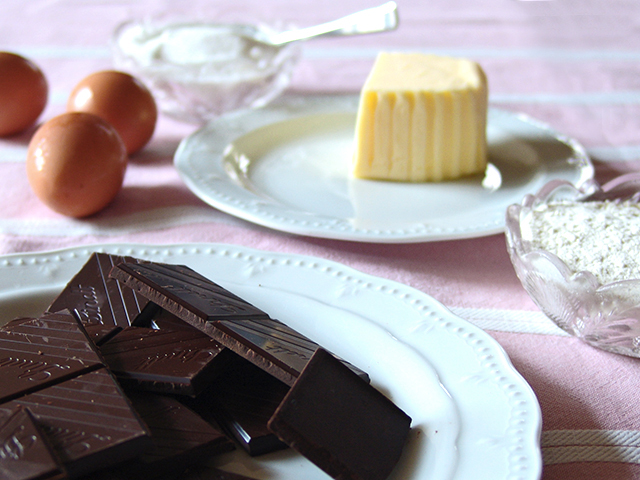
Ingredients:

  • 3 eggs
  • 125 g / half cup sugar
  • 100 g / four-fifths cup all flour
  • 125 g / half cup butter (the recipe calls for half-salted, demi-sel, butter)
  • 200 g / 7 oz. best chocolate (I recommend Lindt 70% dark chocolate)

I’ve done my best to convert the European weight measurements into cups and ounces with the help of the trusty internet, but you might need to experiment a bit to get the amounts of sugar and flour just right. This is not meant to be a cake-y cake, so easy on the flour.

Preheat oven:  Gas mark 7 / 425 degrees F / 220 degrees C.

What you do next: Vigorously mix the eggs with the sugar and the flour with a whisk until the mixture becomes smooth and fluffy-ish. Break the chocolate in pieces and melt it in a double boiler. When the chocolate is melted, add the butter and allow it to melt as well. When chocolate-butter mixture is cool enough not to cook egg mixture, add it gradually to the latter, stirring constantly. Pour batter into a buttered cake pan (I use a tart pan so that I can make sure every piece I cut is the same size. My daughters measure such things to make sure I’m being “fair”). Cook for 10 minutes, during which time you can ponder how your garden grows.

The catch with this cake is to be certain to NOT overcook it. It should be, in the end, what the French call mi-cuit. Half cooked. So that the chocolate interior verges on oozy. As you can imagine, given the lack of leavening, this cake is dense and flat. It’s about flavor, not fluff. It’s excellent alone, delicious accompanied by coffee, and exquisite with a raspberry coulis or a dollop of whipped cream or ice-cream. On a final note, if you can muster a little patience, I think this little beauty is enhanced by sitting a while before eating.

Posted in FRANCE, SAVORING | Tagged , , | 4 Comments

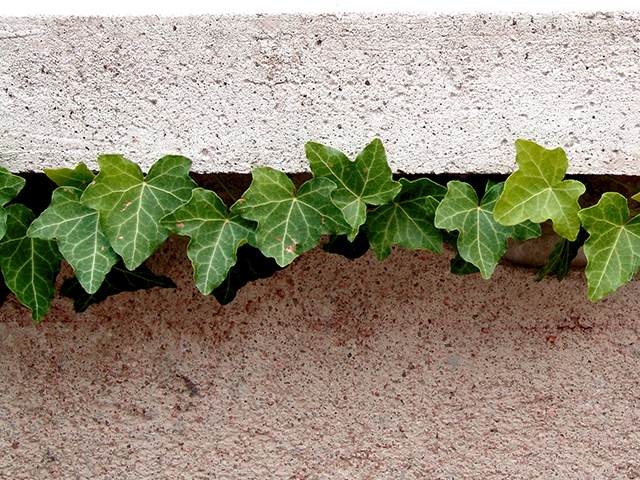
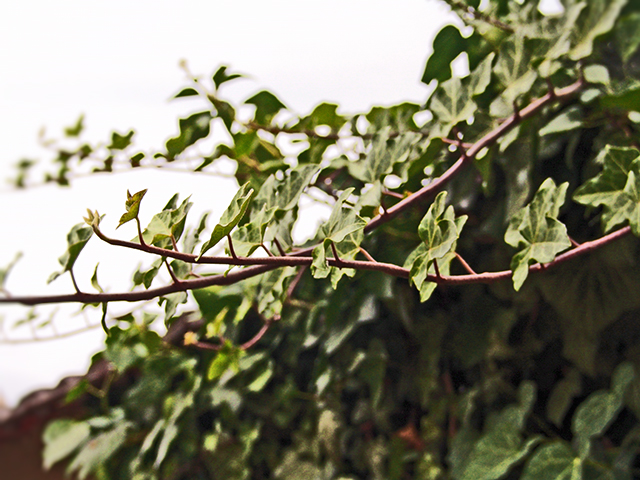
Of creeping, clinging and climbing things

My parents were both professors at a university whose oldest buildings were clad in thick ivy. I loved entering these buildings with their gothic-arched windows and their swags of green leaves, as much a part of them as brick and mortar. I remember sitting in my mother’s large shared corner office (or was it in a turret?), occupying myself with drawing while she worked. The professor she shared the space with, Enid, gave me sugar cubes. She was kind to me, and I loved her for it, even though her coffee-stained mug and her sturdy, orthopedic brogues scared me somewhat. I couldn’t figure out what era she’d been born in. Her spirit and face were youngish; her personal presentation was ancient. The ivy crowded around the windows on these days, shimmying in the breeze, softening the rectangular apertures that framed my view of the world outside academia, itself a sort of dream-world.


It’s no wonder, I suppose, that in my adulthood, despite my dull green thumb, I have sought to surround myself with green things which climb. Up walls. Over pergolas and grilled archways. Along my porch railings. I’ve decorated the various stages and acts of my own life when possible with clematis montana, passion flower, ivy, wisteria, honeysuckle and climbing roses. I’ve learned, too, to call these plants by their names in different languages. Passiflora. Glicine. Edera. Chèvrefeuille.

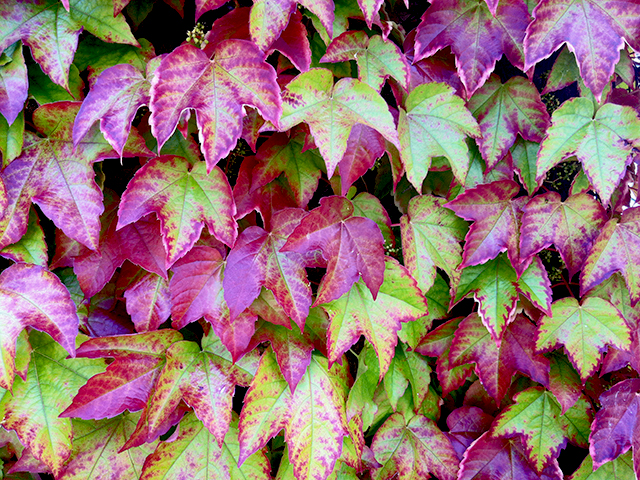
In France, I became acquainted with a new vine, the one I used to draw in pictures of far-away places even though I’d never seen it myself. The one that was draped over the “old house in Paris” in the Madeleine books. La Vigne Vierge. The virgin vine: up-flowing cascades of down-hanging leaves, which call to mind the grape leaf in shape, but which produce no edible fruit.


Luscious, abundant, life-affirming—a cloak for dreams come true and dreams deferred—the vigne vierge clings to the walls of our house in France reminding me that even as I may grouse and grumble about my fears of failure or the economy or “what to do with my life,” many of my most important dreams have come true. The real ones. The ones about love and family and having the chance, often, to walk in the midst of beauty.

And then there’s this. If our lives are filled with symbols of our own choosing—that is, things and images that are profoundly layered with meaning for us—then the vine is certainly one for me. Season in, season out, come light, come dark—it hangs on and on. Grounded, its roots go deep, even as it continues on its journey. Sometimes meandering or crooked, thwarted by obstacles. Sometimes falling. But, in the end, always and forever up.

Posted in AROUND US, FRANCE | Tagged , , , , , , | 5 Comments

Object beauty and elbow grease

It’s no secret that I like old things. But I’m not an indiscriminate lover of antiquity or junk. I like old things I can use with a little effort and no electricity. I keep some of these objects in my kitchen, mixed in with newer ones that, aside from their relative youth, fit the same mechanical and aesthetic bill. Form. Function. And, for me, beauty.

This slideshow requires JavaScript.

[If you liked this post, you might also like “Which is better—the yogurt or the pot?“]

Posted in FRANCE, IN THE HOUSE | Tagged , , , , , , , , | 5 Comments

The gentlest architecture

The weekend passed with little excitement, lots of work, and variable weather. Nothing major happened, which, as we all know is a sort of blessing in disguise. I took long walks with the (younger) dog when time permitted; the old one sleeps her days away. I looked up, down and sideways appreciating whatever there was to see. It was all good. Nature offered up a small gift yesterday morning. Fallen from a tree branch, there on the side of the path, leading between the gardens that back onto Rue Neuve: a tiny nest, the size of my palm.


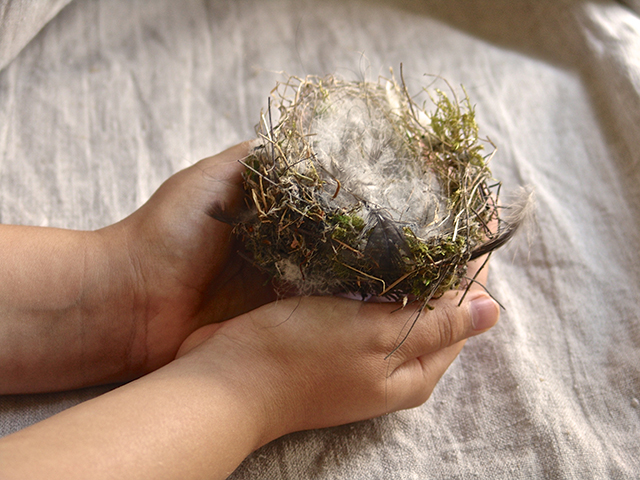
It was brilliantly constructed, I imagine, by a mother to house her babies. It was all love and care and tenderness. A half sphere, delicately constructed of grass and fine hay, cracks filled in with moss. It is bound in places by feathers (her own?) and human hairs. And inside, how touching and right: just softness. Fluff made of animal fur, dust bunnies, what looks like laundry lint and more feathers. My daughter holds it in her hands. Reverently. Like a prayer, or the answer to one. You can’t help but hold it like this.


Love and intelligence are everywhere. We’re not their only masters. Great and small architects abound, often unnoticed.

Posted in AROUND US, FRANCE | Tagged , , , , | 1 Comment

Closed/Week in review

Monday
“Day 9: The heart of the matter”
On the relationship between the word “vacation”
and the state of being “empty”
(Read this.)

Tuesday
“Day 10: A dog’s life”
In which an old dog remembers her old tricks
and swims for possibly the last time.
(Read this.)

Wednesday
“Old thing. New life.”
In which we turn an old ladder
into potting furniture.
(Read this.)

Thursday
“Habituating myself, Jefferson-style”
On the mind-freeing, healing powers
of walking. And walking.
(Read this.)

Friday
“What sign are you?”
On the loveliness of the
French street sign.
(Read this.)

Posted in WEEK IN REVIEW | Leave a comment