Able was I ere I saw Elba

Saturday, June 11. School’s over, and we celebrate by leaving town as fast as our legs, tires and hulls will carry us. A little less than four hours outside Milan we arrive in Piombino, but thanks to bad highway management, poorly timed road maintenance, and several lanes of autostrada reduced to one, we miss our ferry for the Island of Elba.

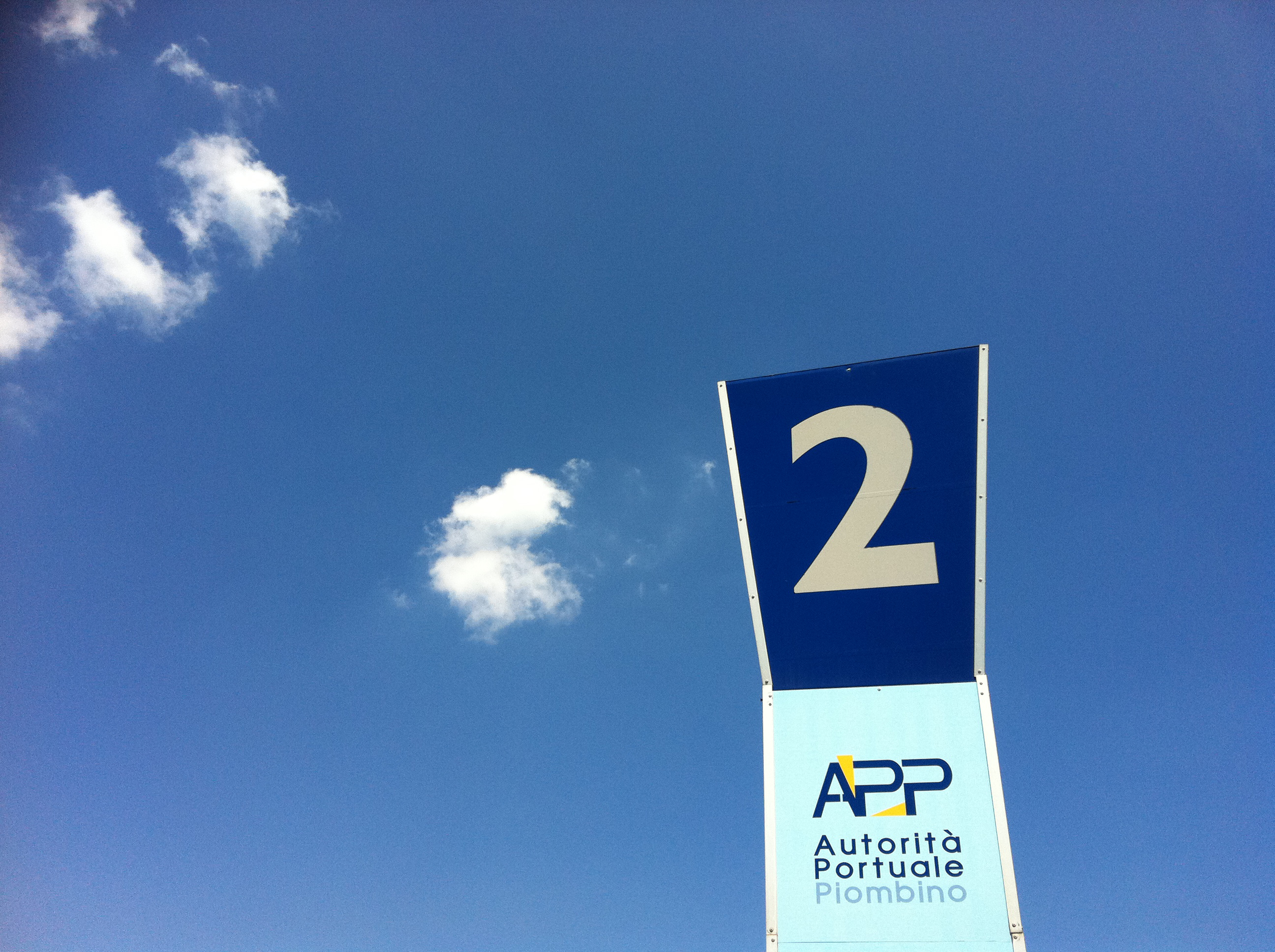
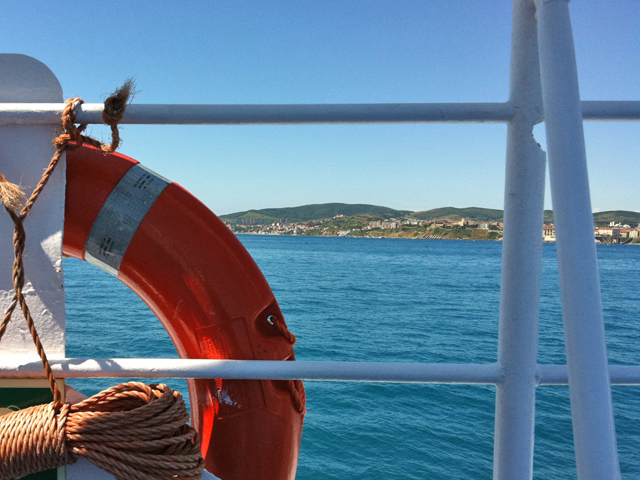
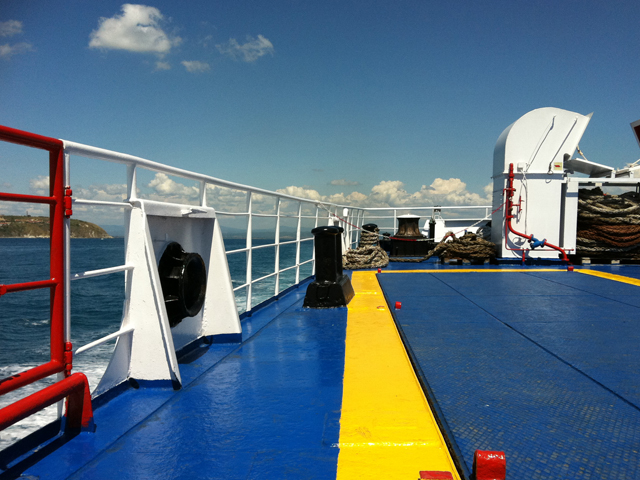
We’re placed on the waiting list, or rather “line,” at molo (dock) no. 2, and the time passes quickly as we watch ferries for various ports of Sardinia, Corsica and Elba ply in and out over the calm blue sea. A mere thirty minutes later, we’re driving into the belly of a “Moby” traghetto headed for Cova, a small port on the north side of Elba.


A ferry is a beautiful thing. A clean break from all that’s been weighing you down. The start of something that must surely have a whiff of adventure about it. That water you cross, it’s the great divide. Between stress and relaxation. Between life as usual and life as unusual. Water water water, oh water. Blue. Spraying. Foaming. Shifting. Carry us away! Carry us away!


FINAL NOTE: I’m going to do my best to blog daily, but the internet connection on the whole island is slow. As the woman here said, “You are truly isolated.” Isolata. From the word isola meaning “island.”

Posted in ITALY, OUT & ABOUT | Tagged , , , , | 2 Comments

Riddle answered

The answer to the riddle:

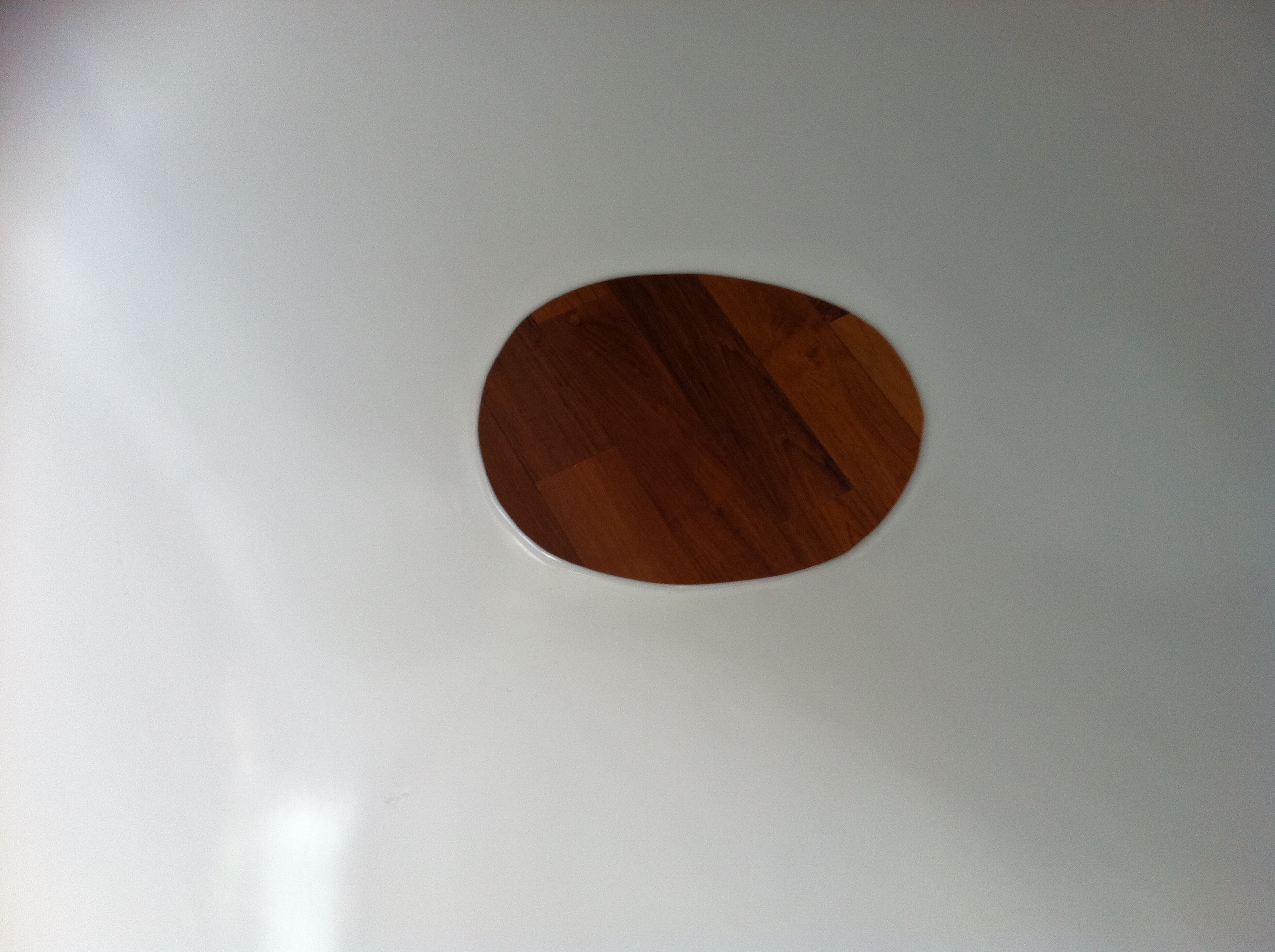
I am “La Chaise Lounge Chair” designed by Charles and Ray Eames in 1948 for a competition held by the Museum of Modern Art. I was inspired by the sculpture “Floating Figure” by Gaston Lachaise. (Credit: stardust.com)

And though I have nothing really to do with Italy or France (as this blog semi-requires), my clean brilliant mid-century American design has made one American woman in Milan, Italy very happy.

P.S. I am very comfortable.

Tagged , , , | 5 Comments

Riddle

I arrived today,
wrapped in enormous quantities of bubble wrap.
Who, or what, am I?

4 Comments

Quit that day job! Interpret dreams instead!

You could try to interpret your dreams to gain self-knowledge. You could look to your dreams for clues about the future. You might ignore your dreams as complete tripe. Or you could, especially if you were Neapolitan, use them to win the lottery. And in order to do this, you would consult the “Neapolitan Smorfia.”

I will never forget walking down the street in Milan with my soon-to-be husband and seeing the following poster affixed to the window of our neighborhood tabaccaio.

“What is that?” I asked, intrigued by the grid of tiny little illustrations paired with numbers from 1 to 90. He went on to explain to me that it was the Neapolitan system for interpreting dreams with the specific objective of choosing winning lottery numbers. I studied them, amazed and amused, greatly amused.

For the patriotic Italian dreamer, 1 (one) might be a number you choose on your lottery ticket. For those who dream of rat infestations, 11 would be important. And for those who dream in living color about the private parts of women, 6 would be your lucky number. But don’t stop there. If you translate the Neapolitan description for the number 6—and this had me in gales of laughter there on the street—you are not dreaming about [your choice of phrase here]. You are dreaming about chella ca garda ‘nterra in Neapolitan, or “The thing that looks at the ground.” Yes, ladies, you heard that right. Our genitalia look at the ground.

I, for example, dream often about my teeth. Specifically, and unfortunately, that they are ALL falling out. Why on earth, therefore, have I never consulted the Neapolitan smorfia? If I go to this handy site, I can use this repetitive and unsettling dream to earn my fortune! I enter the Italian word for teeth, “denti,” and hit send (“invia”). I am then confronted with several possible images of teeth in dreams, and in some cases what they might symbolize: teeth that grow out of your gums (from a small transaction, you stand to gain a windfall), teeth that are being cleaned (it’s necessary every now and then to rein in your altruism), fake teeth, teeth that need drilling, etc. And there, in the middle, what I am looking for: “Denti che cadono,” teeth falling out, which symbolizes a possible death in the family (egads!) or the loss of money or precious objects. Hmmm. That all sounds dire. But it is represented by the number 18! So all I have to do is rush to buy a lottery ticket and lay my faith in the number 18. I’ll win big, and whatever precious objects I’m about to lose will be compensated for by my enormous lottery winnings.

Thus is the Neapolitan way. Or as Spock said, who was surely half-Neapolitan: Live long, pay attention to your dreams, and prosper!

Posted in ITALY, WHAT TO DO | Tagged , , , | 1 Comment

The sum is greater than the itty bitty parts

Being a person entirely too prone to seeing metaphor all around her, and to enthusiastically point it out to friends, family and uninterested by-standers, I have once again stumbled upon something that, well, means something to me. (Doesn’t that sum up modern blogging? “I think it’s significant; therefore it is.” Nothing could be further from the truth, but here we are nonetheless. And if you don’t like what you’re reading, please stop and click elsewhere. Believe me; I’ll understand.)
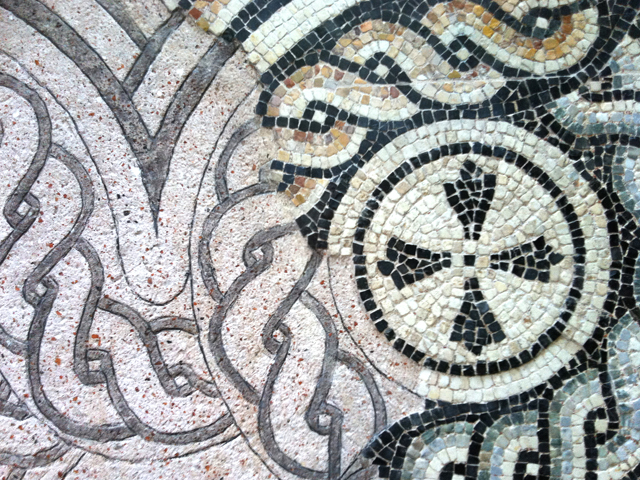
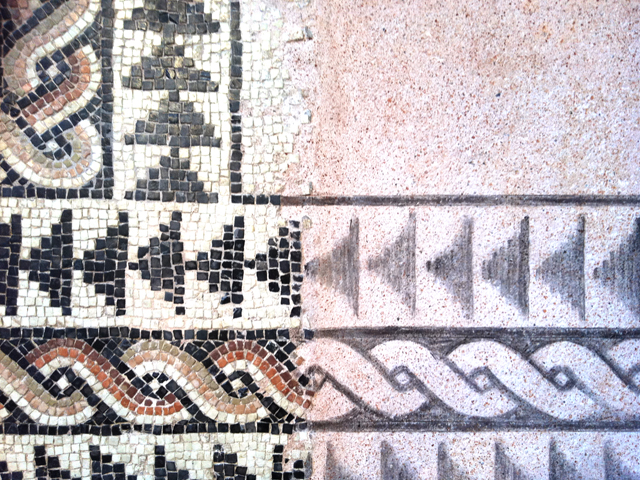
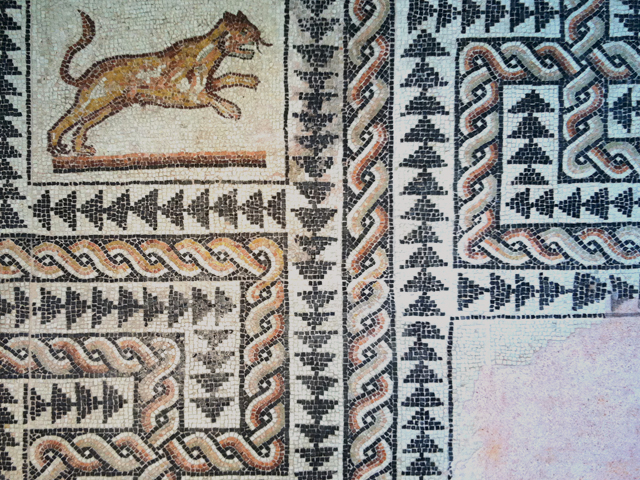
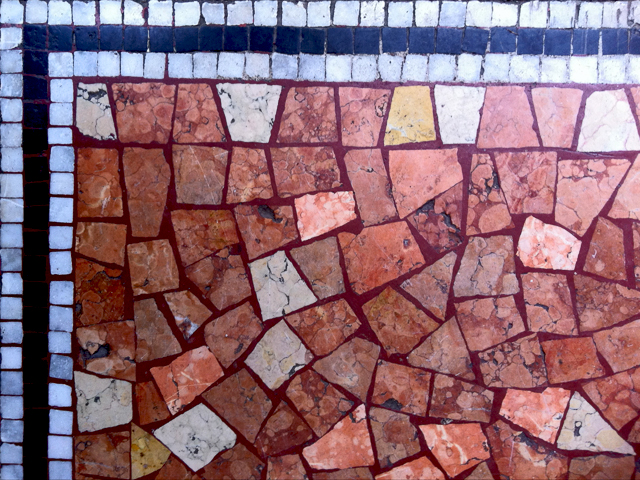
What tickled my metaphorical fancy after the wilting magnolia, was a collection of photos I took last week of Roman ruins here in Milan. Specifically the remains of mosaic tiles found in thermal baths. I am drawn to them for two reasons aside from their raw beauty. First, the fact that they are all partial for some reason. Whether they were left incomplete by their creators, or damaged and sketched in by restorers to show us their original intent, they all speak of “work in progress.” Second, the fact that each beautiful object is as lovely in its incomplete entirety as it is fascinating in the examination of its smallest, most flawed details appeals to the shameless poet in me.

Both “work in progress” and “whole vs. sum of the parts” are useful in terms of personal examination. That we are always works in progress is indisputable. What’s more encouraging perhaps is the idea that there is beauty even in our raw unfinished states. That it is the act of slowly evolving toward some intent or ideal that is itself the work of art. Maybe, really, our continual becoming is more interesting and important than what we ever are.

Each of us, too, is a dizzying combination of characteristics, choices, possibilities—often at odds with each other. Throw in the variable of growth over time, and we are all the sum of a zillion pieces of experience gained, knowledge absorbed, mistakes made, luck had, and genes inherited. And yet dissecting us into that infinite number of details doesn’t begin to get at the soul of us, who we really are.
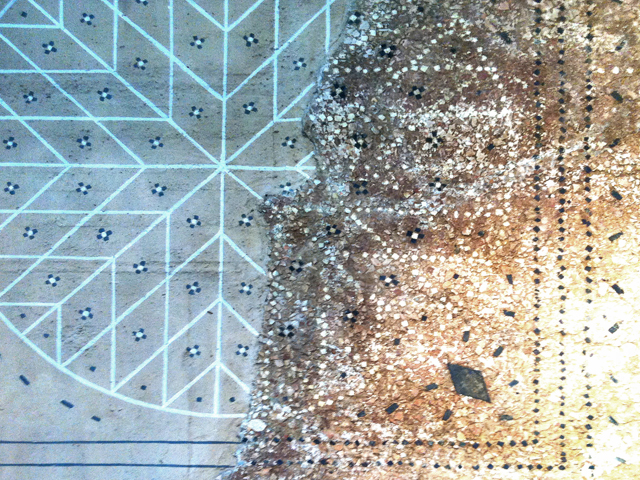
Becoming whole, mature, at peace, balanced, true to ourselves, whatever you want to call it is the great, mysterious unfinished work of our lifetimes. And how we do it, bit by itty bitty bit may be the greatest work of art any of us ever produces. I once worked with a Japanese photographer who over the umpteenth tiny little serving of sake, looked into my eyes and said in Japanese, “The struggle is everything.” His translator told me what he’d said, and I nodded my agreement.

The struggle. The laying of the smallest pieces. The never-quitting. It is everything. And, every thing. And, also, the most beautiful thing.

Posted in AROUND US, ITALY | Tagged , , | 2 Comments

Healed by a single flower

So many of you have been kind enough to write or leave comments saying, “Are you okay? We haven’t heard from you in a while.” And the answer is a resounding yes. I’ve been working. And as my work is in many regards the same as what I do here at The Daily Cure — i.e. work with words and images — that I find it really hard to do both at the same time. The significant difference of course is that work requires creative intensity on a deadline. The key to this blog is the exact opposite: lazy time-out to meditate, write and photograph as inspiration strikes. The work project went well, but enough is enough. Even as it fills pockets, it also scars and exhausts. I’ve missed this. I’ve needed this. And now I’m back, a happier, more relaxed woman.

Relaxation isn’t, at least for me, an immediately achieved state. It’s something that has to creep up on me, soak in, wiggle its way between tense muscles and over-stimulated brain cells. The day after my freelance project was finished, I still felt tightly coiled, unable to connect directly and easily with those things that usually give me instant joy. But the thing that did it, that broke through, was a magnolia wet with rain in an otherwise, grey urban setting.

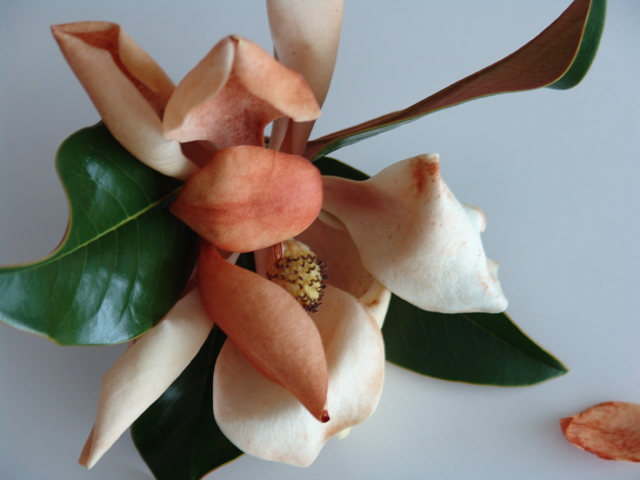
My daughter plucked an enormous past-its-prime bloom from a low branch for me, and I snapped it with my humid telephone, eager to capture and keep that flower that represents the American South, my home, for me. (The photo is not worth reproducing here; it does the flower no justice at all.) I’ve always loved Magnolias with their strong, structural beauty. Their heady perfume. Their deeply colored leaves (waxy green on one side, velvety brown on the other). And their unique evolution into pods bejeweled with with lovely red seeds.

But perhaps what I love even more than perfect flowers, are wilting flowers. Flowers in decline. Leaves furling toward a dry, rigid, infinite sleep. Whites turning first to cream, then ivory, then beige, then brown. I’ve kept the Magnolia flower for two days now, watching it lose the remnants of life, while I’ve regained mine. It has lost its waxy white brilliance and become, in its place, something equally magnificent. Perhaps this is, in the end, a fitting metaphor for my memory of my own past. It is fitting to let the past wilt, to let it mutate from something urgently beguiling to something that requires no more from you than observation, appreciation, and the desire to fill your lungs, every now and then, with its fading perfume.

Posted in AROUND US, ITALY | Tagged | 4 Comments

Administrative item

Just posting today to let you know—if you haven’t noticed yet—that I’ve added a “Food Images” page to my blog. It’s right up there in the menu next to “Home” and “About.” It’s mostly a compilation of images from my food posts here on “The Daily {French-Italian} Cure,” and it came about because an opportunity to pitch myself for the photography of a book on olive oil arose. Fingers crossed!

7 Comments

Savoring the Roman T(heat)er

Today, which was more sweltering than yesterday, I had the unique honor of accompanying my eleven year old’s class on a walking tour of Roman Milan. It was, in a word, fascinating. I could go on and on about the beautiful advances the Roman’s made here and elsewhere, and about my suspicion that a visionary, benevolent dictator is probably better than an economically efficient, committee-run democracy in terms of what he or she contributes to the lasting physical world. But I won’t. It’s too sweat-inducing, even at this late hour, to take up one end of a heated argument. But I will share with you something I learned today—well, no, experienced is a more accurate word—which left me even more in awe of Roman ingenuity than I already was.

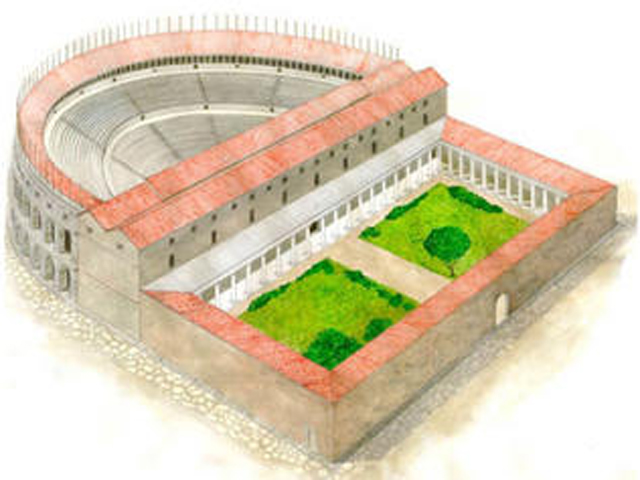
Augustus, the first emperor of the Roman Empire, in his effort to render Milan a beautiful and effective anchor-city with a series of infrastructural and architectural endeavors, had a theater built in its center. He believed strongly in theatrical entertainment as a means of spreading Roman culture and thought, so the theater was free to all. This theater held 7,000 spectators, almost half of the population of the ancient city of Milan, or Mediolanum, as it was called at the time. Theatrical productions often lasted entire days, so audiences overheated by the delight of comedies, tragedies and pantomimes had the opportunity to exit intermittently into an enormous columned arcade, where they could get fresh air, drink wine, or indulge in the food of the day—sheltered, if necessary, from inclement weather or free to roam the green.

The ruins of this enormous theater are under and intermingled with the foundation of Milan’s current Chamber of Commerce. Being a cultural asset, access to the ruins which have been beautifully preserved is free to the public. You descend about three flights into the ground, enter a small hall where some of the original theater walls are laid bare, then wind around into a much larger, cavernous space featuring a glass and steel wire walkway illuminated by fine pin-point lighting. From here, you can observe the remains in a more intense and intimate setting. The place is still, and yet it breaths.

Literally. Upon entering this room, you are instantly struck by a peculiarly pleasing smell, which hangs in the background but which exerts an undeniable influence on your experience of the dark, ancient space. The guide informed the children, that we were smelling a scientific recreation of the odor which scientists and archeologists believe permeated the theater at most times, pumped non-stop into the exhibit space by a series of silent fans. Given the heat and the massive crowd, the Romans found it prudent to continually spray the audience with rose water, simultaneously making its members smell better and protecting them from errant germs with the rose’s antibacterial properties. So rose was the base of the aroma. But what we smelled was more complex than that. Designers and scientists, in order to replicate the literal savor of the place, had added also the scents of saffron (from the food offered at the theater), wine (the beverage of choice) and body odor. How’re those last two words for a punchline?
Posted in ITALY, SAVORING | Tagged , , , | 2 Comments

Bring on the heat

Well. Here we are mid-to-late May, and it feels like summer’s in full swing. At 8:00 this morning, pedestrians were plying the sidewalks, wishing they’d worn less. It’s hot. And in the afternoons, Milan wears its preferred warm weather adjective: afoso. Which is to say: stuffy, steamy, heavy, humidity-laden, no relief in sight. But wait. There is relief. And it comes in a cone, cup or—as my gracious lunch guest last Friday reminded me with her well-chosen gift—a funky styrofoam delivery box (or two).

I try to avoid blogging about the clichés of living in Italy. But there are clichés that deserve endless celebration, and as the thermometer ticks up, gelato is most certainly one of them. Famous among tourists, Italian gelati are no less loved by natives. They are, as the first paragraph implies, a drug that soothes one of the greatest national ills, an icky climate.

My favorite gelaterie have crates of fresh fruit stacked by the door. And their strawberry sorbetto actually tastes like the strawberries you see sitting there. Ditto for melon, mango, fig and grapefruit. Their granite are made fresh (some day I’ll introduce you to the recipe for granita al caffè with cream “over and under”). Their chocolate varieties range in color from dark brown to near-black. And their fior di latte tastes like the very soul of fresh milk, sugar and not much else.

If you are ever in Milan, and some of you will be here very soon, I recommend that you make a visit to Il Massimo del Gelato, at the most unfashionable address of via Castelvetro 18. Don’t be intimidated by the line outside the door; it’s there for the same reason you are: quite possibly some of the most delectable gelati in Milan including, without a doubt, the greatest/longest/most impressive list of chocolate flavors in the city.

Esmeralda (classic chocolate)
Domori (75% dark chocolate)
Oro Puro (100% chocolate served with flakes of gold)
Azteco (chocolate spiced with hot pepper and cinammon)
Gianduia (chocolate with pureed hazelnut)
Wiener Küsschen (a version of Bacio, an Italian flavor named “kiss” which includes chocolate and chopped hazelnut)
Cavour (a re-interpreation of an old Torinese flavor: coffee, cinnamon, chocolate and rose oil)
Fiji (chocolate, Gran Marnier, and candied orange rind)
Jamaica (75% dark chocolate with rum)
•I end the list with a well placed “Etc.” Confusion will be your delight.

NOTE: If you are in a position to bring Italian ice cream home, you’ll notice that it doesn’t live as well in a freezer as American ice-cream might. The freezer is simply too cold. Take it out before eating, and let it soften.

Posted in ITALY, SAVORING | Tagged , , , | 2 Comments

A real palazzo

The word “palazzo” is thrown around loosely here. At the end of the day, it’s used to mean “apartment building.” But there are, in Milan, palazzi which deserve the unavoidable association an English speaker makes with the word “palace.” Here and there, usually on corners, but not always, are truly palatial-looking buildings. Ornate, grand, fairy-tale like, with an architectural vernacular verging—successfully, I’d say—on the brink of kitsch-castle.

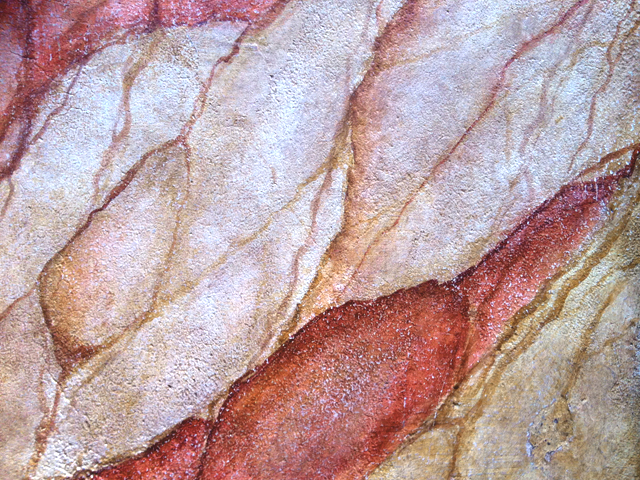
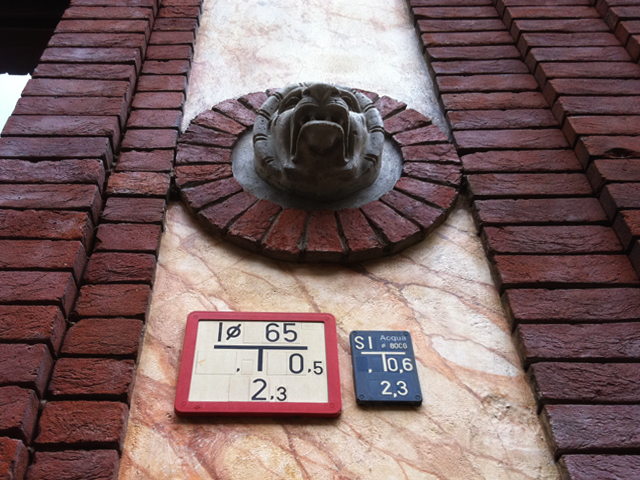
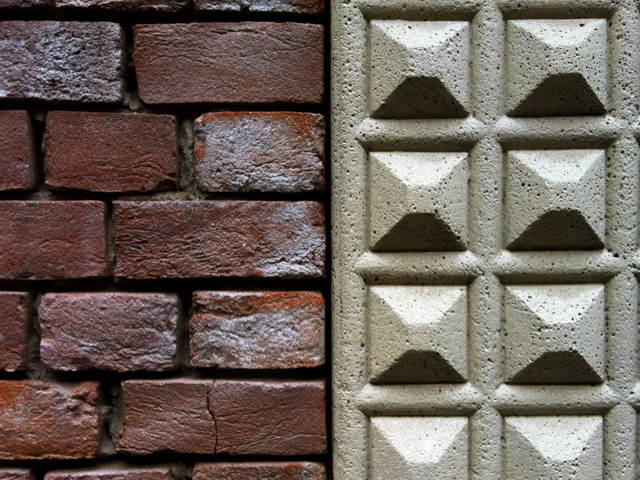
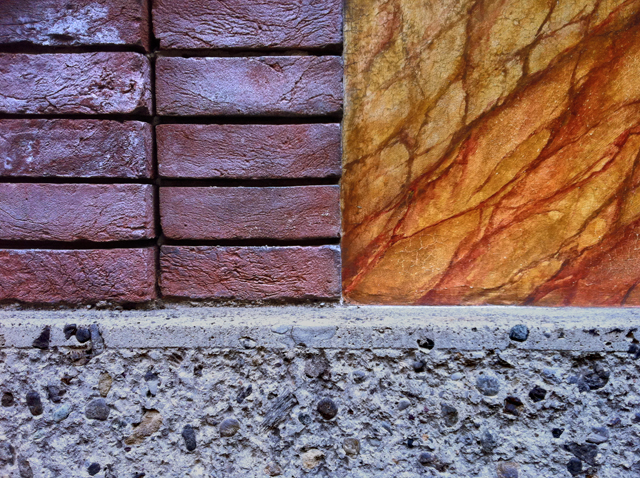
I spotted this one the other day while ambulating in a neighborhood far outside my beaten path. It was impossible not to stare at its various textures—real and faux—and to marvel at the mix of materials. I suppose what holds it all together is the color palette, which grows out of those earthly prime materials: argilla (clay, as in brick), limestone (cement), and marble (both real and trompe l’oeil).

It’s a building to touch, to read in braille with outstretched fingers—who can resist those pyramid shaped bricks? The tiles in the entry way? The lion’s head perched above the necessary bureaucratic signage? The rough, gravelly stone cladding the building’s base? The bricks set in the traditional offset pattern but also in a gridded formation, outlining the iron-clad symmetry of the structure? And even the horizontal ridges of the closed taparelle (exterior window blinds)?

What story would these walls tell? I wonder. You can only imagine that the lives lived inside them contain some of the same conflicting elements, no? Intrigue, art and artifice, discipline and chaos, exuberance and sobriety, harmony and the lack thereof, and above all the desperate Milanese need to maintain appearances at all costs.

Posted in AROUND US, ITALY | Tagged , , , , , | 2 Comments