Harvesting future memories

One day last October, though I was deep in my Italian city routine, my hands smelt of lavender. I was making sachets from the flowers I’d harvested in France over the previous summer. I was missing Burgundy, the country, the simplicity; I needed to remember and re-live. And working with the pungent husks met my needs. Perfume sets the brain’s wheels in motion like a well-fueled time machine.
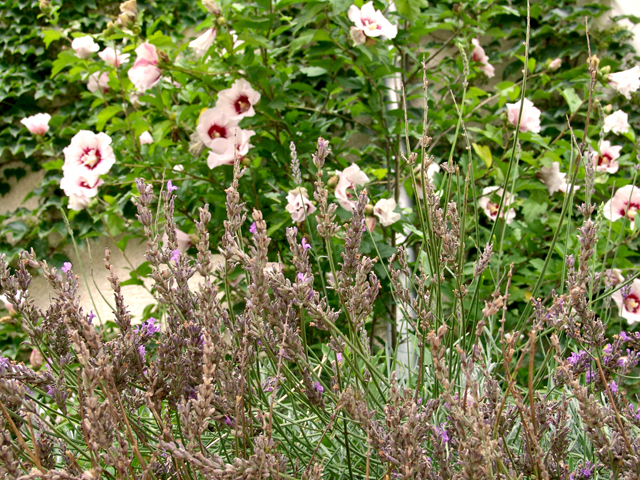

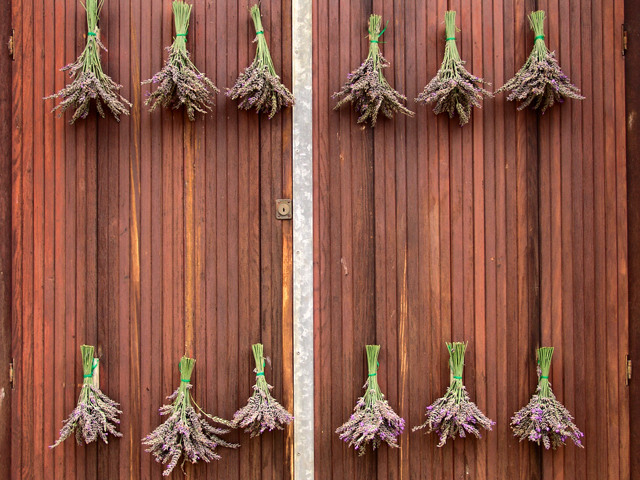
This morning, coffee cup in hand, I gave the tiny garden it’s ritual once-over, surveying it for any changes during the night. I realized that the lavender is once again ready for harvesting. It’s well past its floral prime. The bees are hard-pressed to find pollen. And the brilliant violet has faded in most cases to a lovely mauve-gray. The stems bow down, tired of carrying their weight. It’s time.

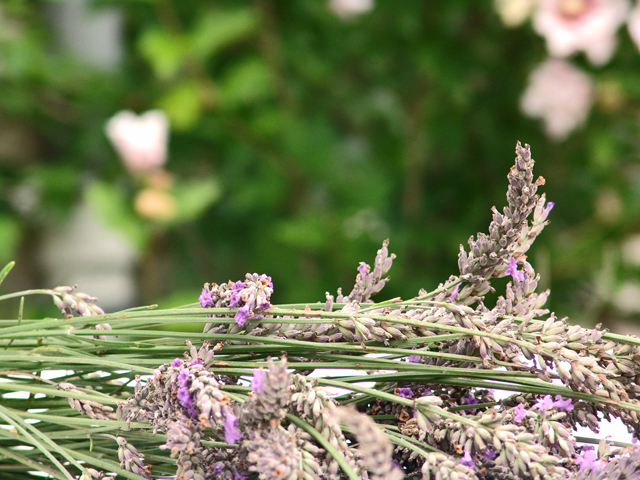
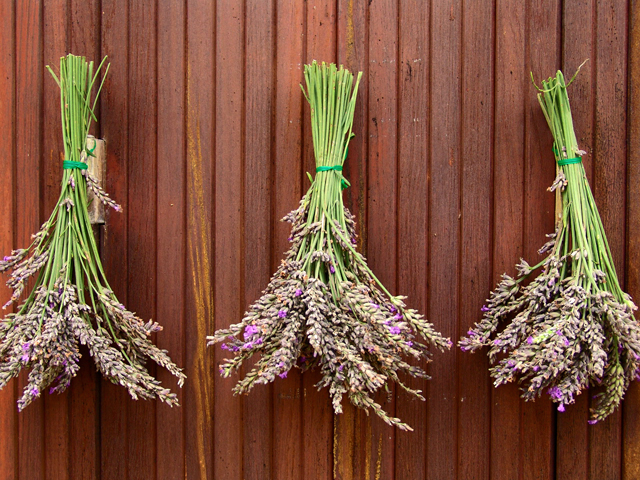
It’s a simple task. I trim them back with scissors, removing the flower-bearing stalks from the rosemary-like plant. Then I bundle them, trim them, and hang them upside-down for further drying. Before the summer ends, I’ll hold them in my hands, pinch the desiccated blossom, and rubbing against the grain, remove the husks from the stem onto a linen cloth. I will carry this aromatic bundle back to Milan with me and repeat last year’s ritual on a day when I’d rather be here than there. These repeated tasks become sacraments—moments full of meaning and grace. And this is a good thing.
Posted in FRANCE, WHAT TO DO | Tagged , , , , , , | 5 Comments

The beauty of boredom*

With the city and all its built-in toys and distractions far behind, we spend more time wondering what to do with ourselves. Twiddling our thumbs. Sitting. The To Do list is shorter here** and so one has time to grow bored. I remember my mother talking about how important it was for children to be bored, about the link between boredom and creativity…and I think she was right. So, here in the country, after you’ve exhausted the possibilities that present themselves, weather permitting—fishing, wine-tasting, bicycle-riding, gardening, cloud-gazing, snail-hunting, walking—your mind turns to what you can make with what’s around you.


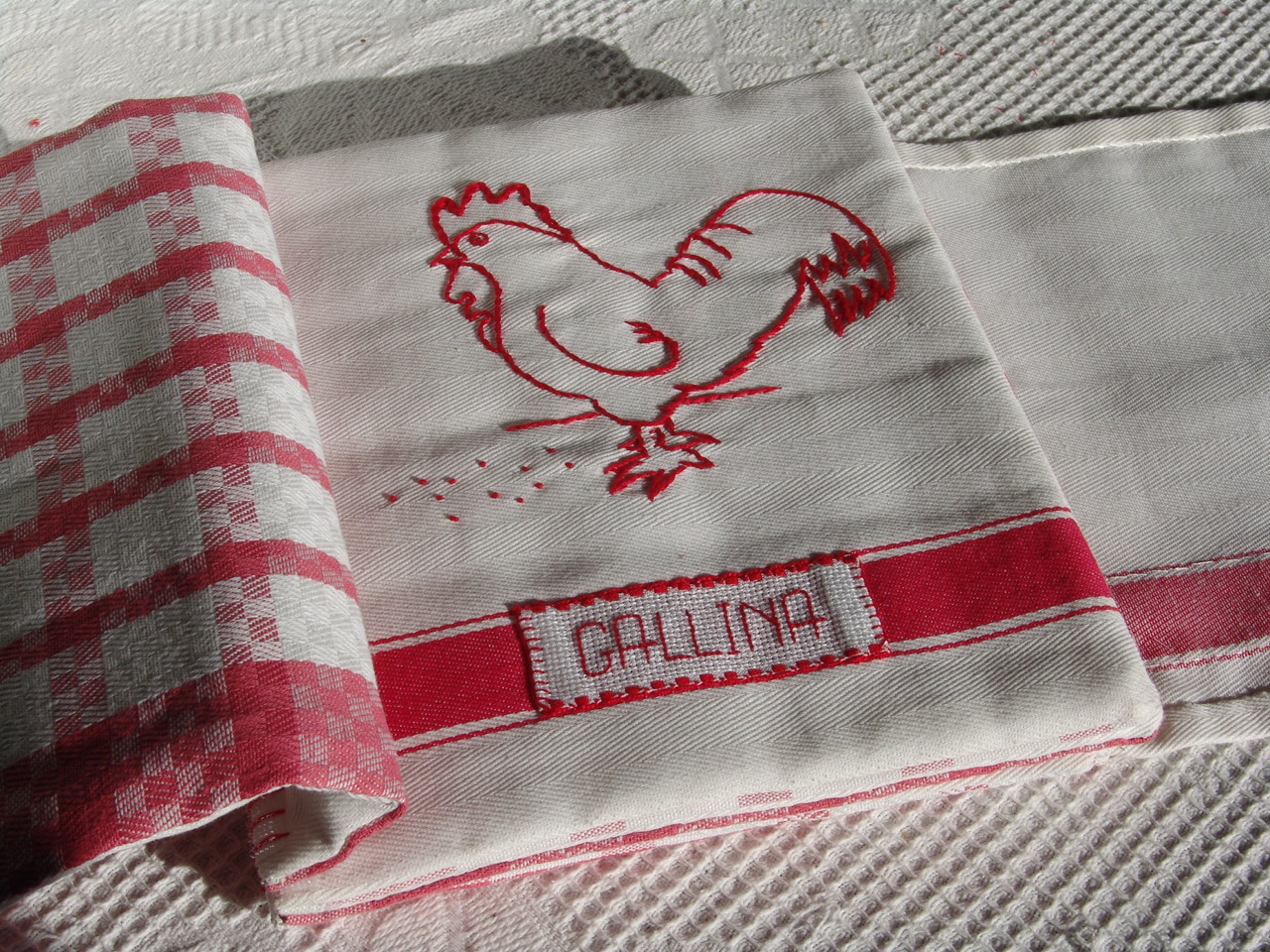
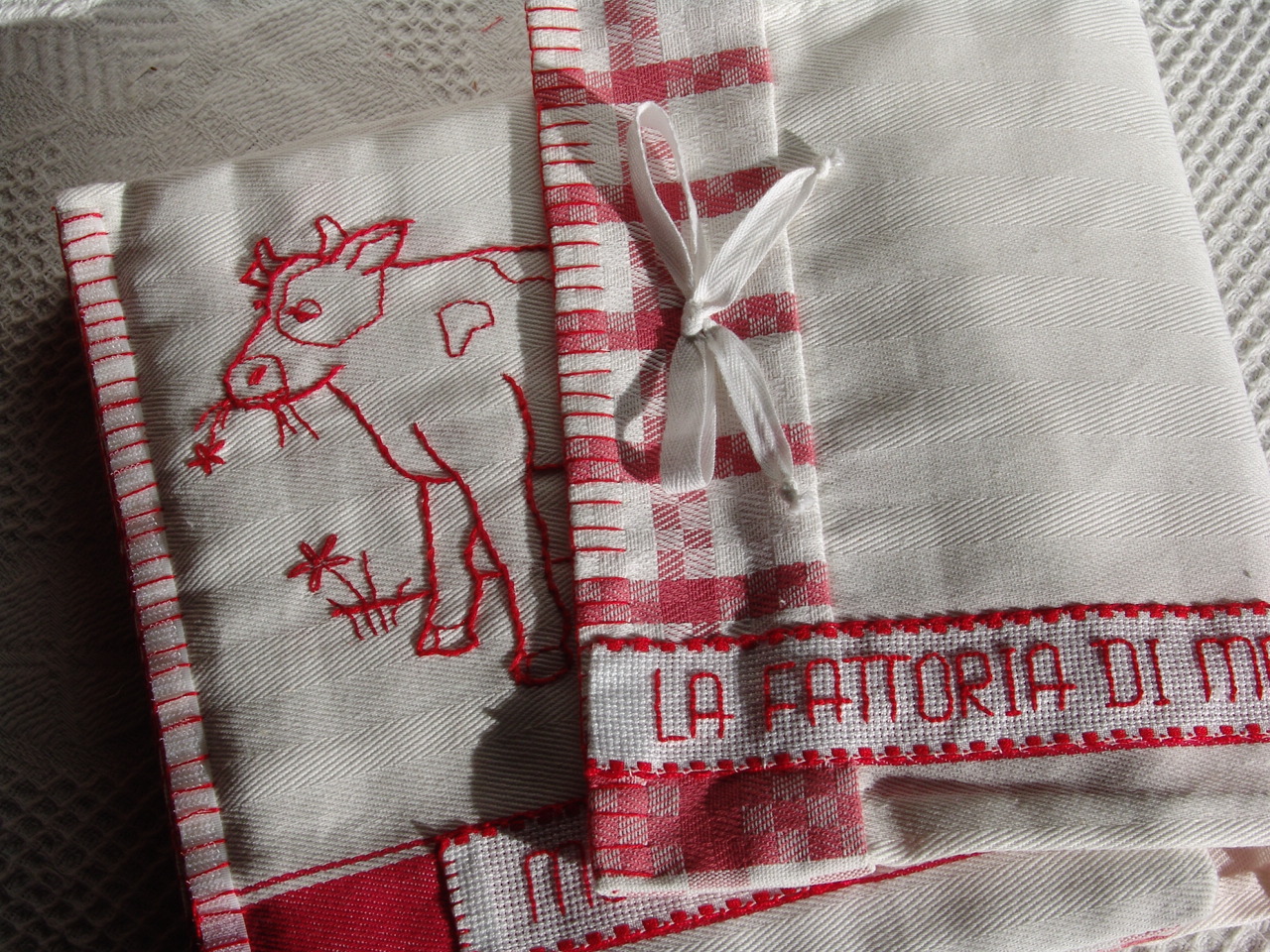
I’m not a great seamstress or embroiderer, but I love making things by hand. And it feels different here, somehow, to engage myself in this way. A couple years ago, with the patient help of my mother who was visiting, I made a cloth book for a two-year old niece out of dish clothes. The book was bound together with velcro so that she could pull it apart and stick it back together again. Her mother, knowing I liked to work with my hands, had been given me a French book about red embroidery, and so the entire piece was stitched in red and the figures (all farm animals) were modeled on old illustrations I found in the original Mother Goose.


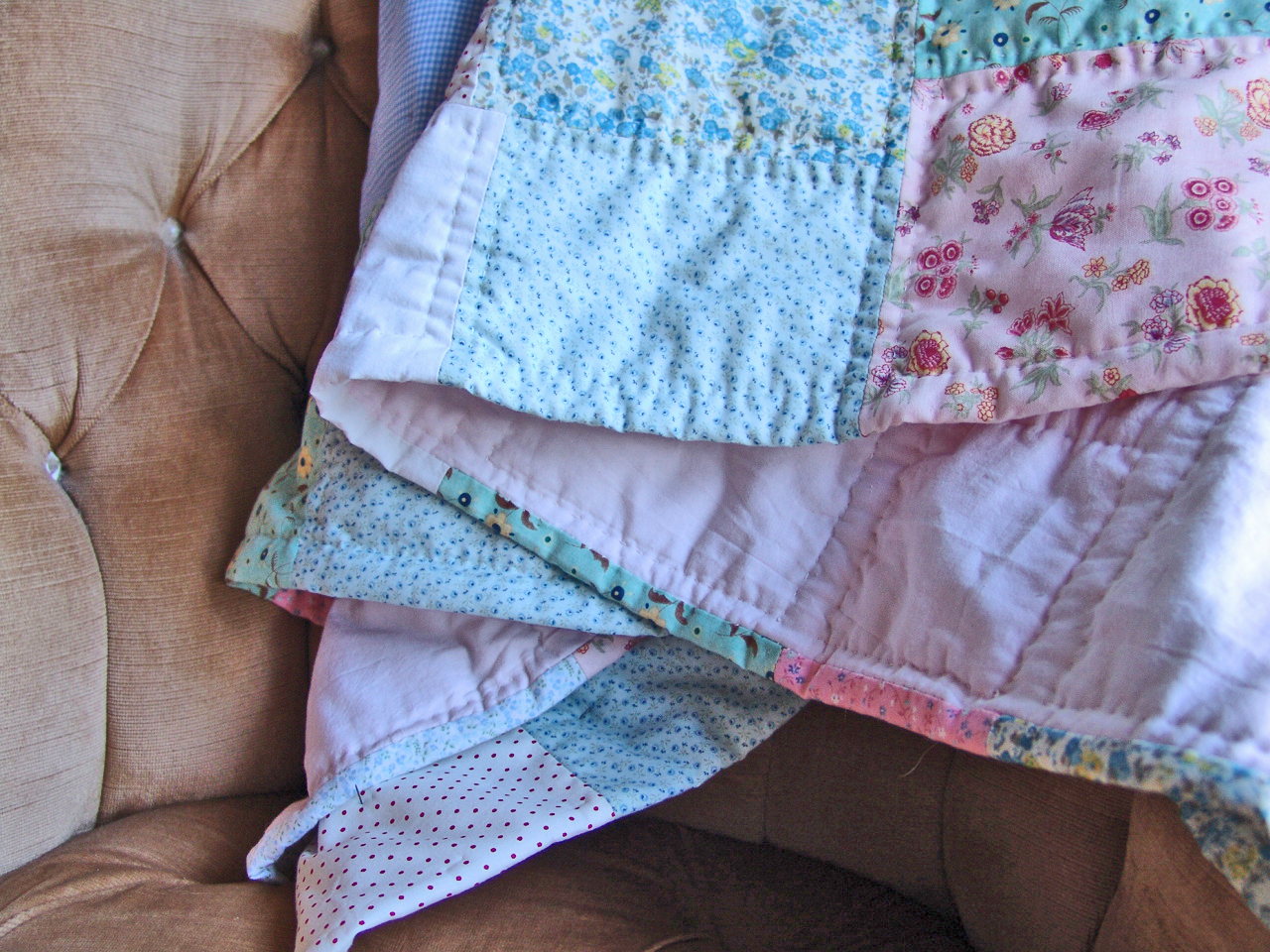
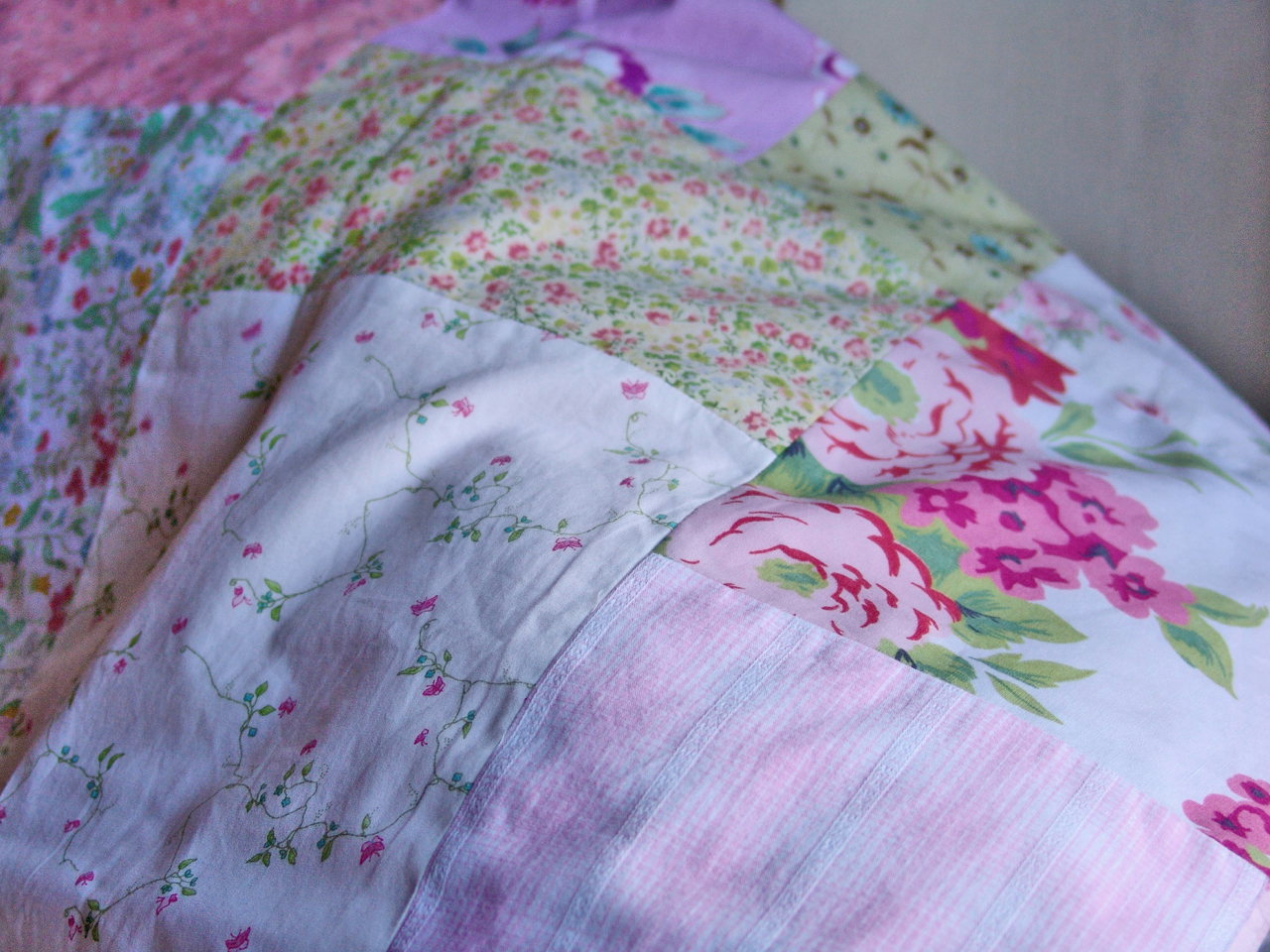
This year, I am “quilting,” if you can call it that. I don’t have the patience to make those tiny stitches you read about in the Laura Ingalls Wilder books, but I’m doing the best I can. One for each child, made out of discarded clothes, bed linens and scraps of fabric, with some new bits added in to create the desired effect according to their tastes. In the end, they will be reminders of this summer, monuments to the rainy days, the moments in between, and the hours we sat together watching the chilling news of Norway and the on-going American debt crisis. Or maybe those specifics—as vivid as they seem now—will fall away, and the quilts will just be reminders of how we feel about each other. Time will tell. Needle in, needle out, needle in, needle out. Time will certainly tell.

*This title refers not the beauty of what I’ve made, but to the beauty of having the time to make anything at all. If you’d like to see some really beautiful quilting, please visit this site, Mooshkette.
**For various reasons, this summer has not been as “boring” as others. I’m hoping that next summer bores me to tears, and there will be more time for thumb-twiddling, knitting, and, yes, blogging. For more on the beauty of empty hours, please see: “The all important far niente.”
Posted in FRANCE, WHAT TO DO | Tagged , , , | 2 Comments

How much is that doggy in the arm chair?

Last Sunday, despite inhospitable weather conditions (the kind you grow to expect here in July), we repeated one of our favorite summer rituals: the antique market at Noyers-sur-Serein. This isn’t your typical vide-grenier. It’s a much more elegant affair with actual “antiques” hand-picked by actual “antique” “collectors” and “dealers.” That undisciplined array of quotation marks is my way of saying: I don’t know much about antiques or so-called experts; I just know if an old object speaks to my heart or not. And that being the case, I’d rather pay less for it than more. With luck and a keen eye, you might find the same 75-euro “truc” you’ve seen at Noyers for 10 euros at a vide-grenier in a less noteworthy location. But then again, you’d be missing out on the place itself.

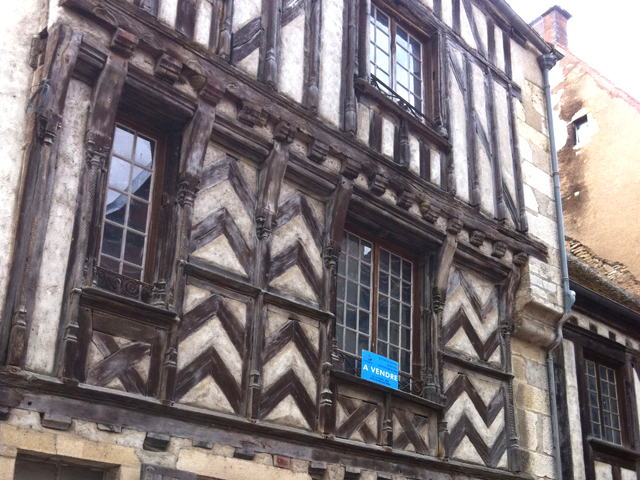
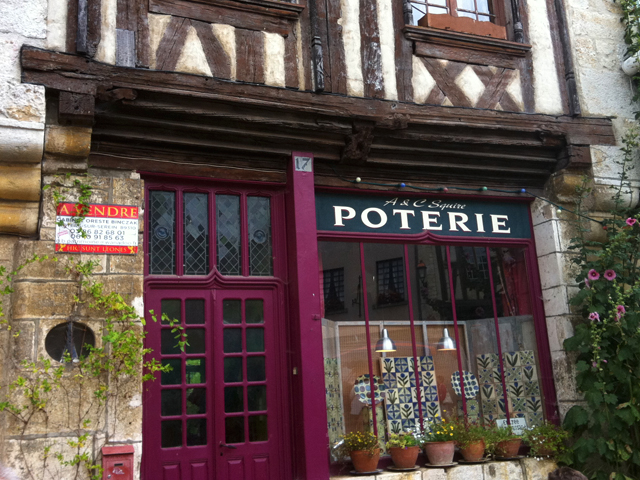
Noyers-sur-Serein is right out of a fairy tale. It’s old, extremely old, with ancient buildings that list and lean, diamond-shaped panes of glass that warp more than they reveal, and lacy half-timbering that boggles the mind. And the most beautiful part, I suppose, is that modern life goes on inside these centuries old walls. Paté is sliced. Diapers are changed. Arguments are had. Transactions are completed. And faces look out and down, as you browse the cobbled streets beneath in search of a find that’s worth your money.

This year, prices at the antique market seemed higher than ever, and other than some small porcelain boxes I bought for the children to keep their secrets in, I observed without buying any of the things that wanted to come home with me. And what I observed was that perhaps the most stunning items for sale weren’t the antique toys or the wrought-iron beds or the art nouveau silverware, but the buildings themselves. Many of the aforementioned structures are up for grabs—to whoever has the patience and the bottomless pockets to put them into shape again.

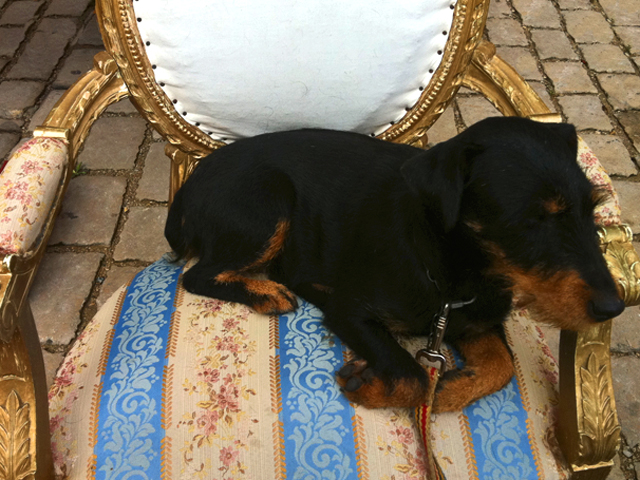
The last thing, well, being, that caught my eye before exiting the walls of the city was a dog sitting regally in a partially reupholstered arm-chair. The price of the chair might have been reasonable had it included him, but his bored gaze said one thing in the universal language of dogs: The chair’s not really for sale (it’s mine), and neither am I.

Posted in AROUND US, FRANCE | Tagged , | 2 Comments

Let the games begin

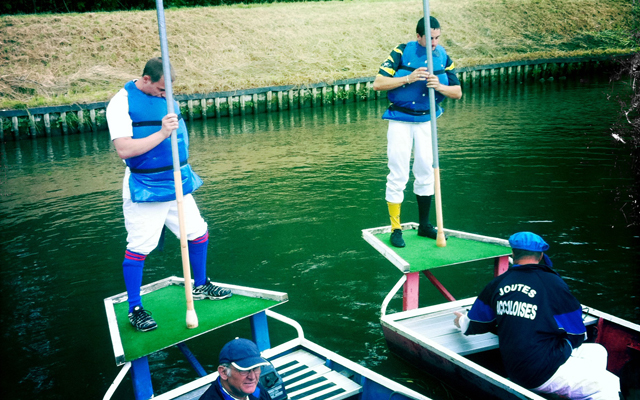
Year round, moored in the river, mostly unused and waiting, are two small punts—one blue, one red—each with a raised platform at one end. On one side of the prow is written: “You will go.” Tu iras. On the other side is written: “So will you.” Toi aussi. These are the fighting words of la joute nautique—acquatic jousting, and these are the jousting boats. Yesterday was the day they’d been waiting for.

It was the day for the French national championship. A small crowd was amassed on the bank of the canal. There was wine aplenty. Grilled meats. Unruly children. Contenders—women, men, children and seniors—accompanied by supportive families and onlookers. Yelling is de rigueur. So is disappointment and/or elation.

2 rival jousters stand at the ready.


This one pounded his chest in preparation.

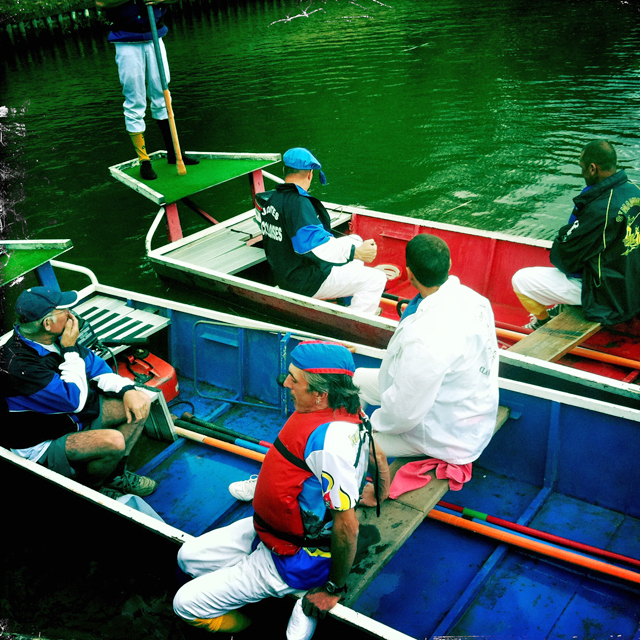
The sport is a bi-polar mixture of slow-moving boats and endless minutes of preparation punctuated by the bizarrely thrilling instant of impact followed by a brief above-board struggle and the inevitable splash of one-man-down. Each contender dons a thick pad to protect chest and guts. He (or she) then stands on the platform of his boat preparing mentally for the coming confrontation. As the boats approach each other (here they are propelled by motor, in other towns by rowers) the jousters assume the elegant lunge of a fencer. The lance arcs out over the water, planted firmly against the hip of the jouster and supported by one hand only. Faces are stern. This is a time for concentration.

Teammates await their challenges.


The moment of impact.

The weather yesterday was unseasonably cold, and I felt for every man, woman and child that fell into the wash. But that is the price allotted to the loser. Victory is dry and warm. I don’t know when the jousting finished, but last night as the northern sun paid its last, weak respects, the party by the canal raged on. The fires of the grill glowed, and wine sloshed, ruby-red, in the unsteady hands of revelers with hours still to go.

Posted in FRANCE, WHAT TO DO | Tagged , | 5 Comments

Byrrh, not beer

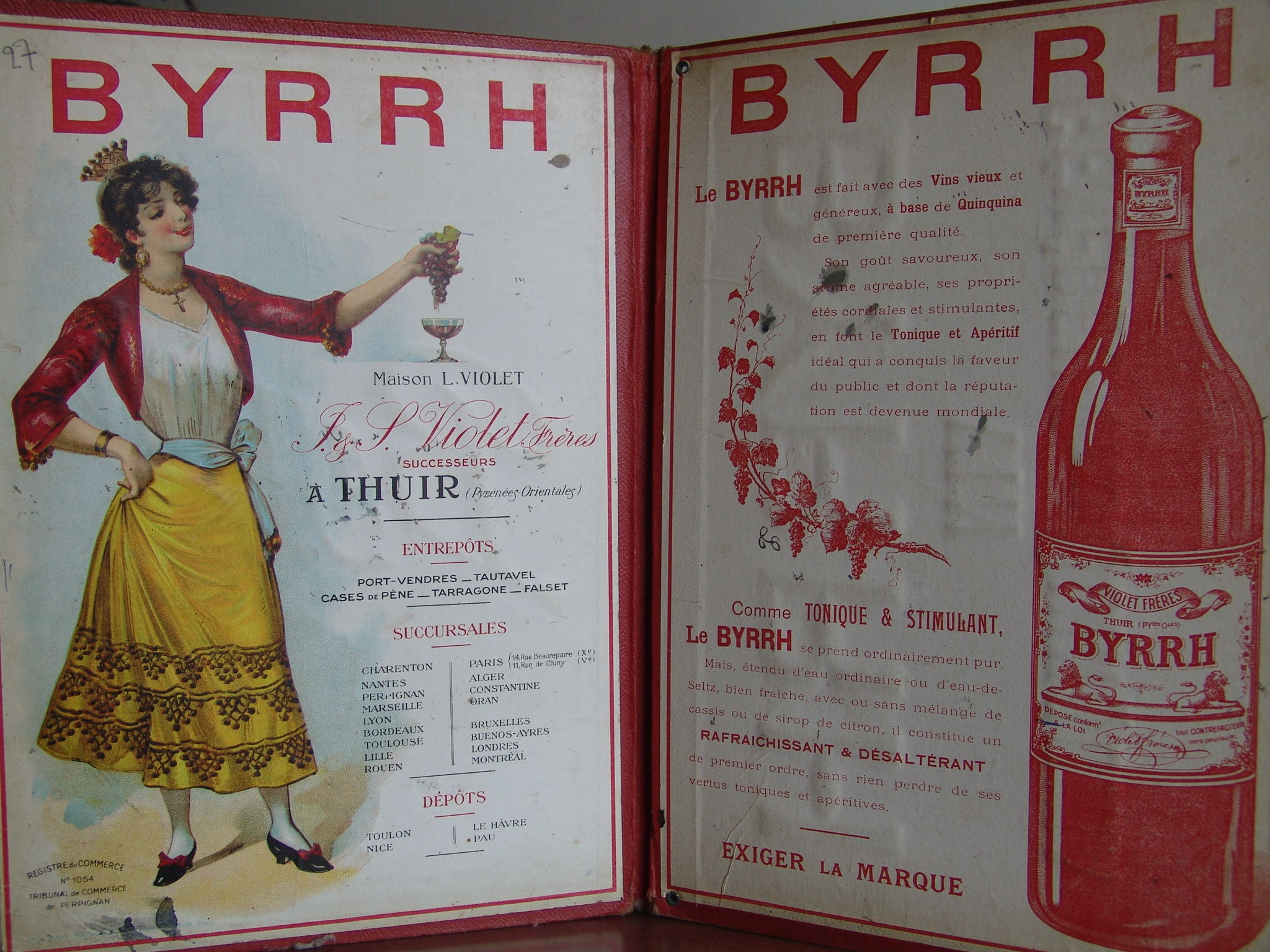
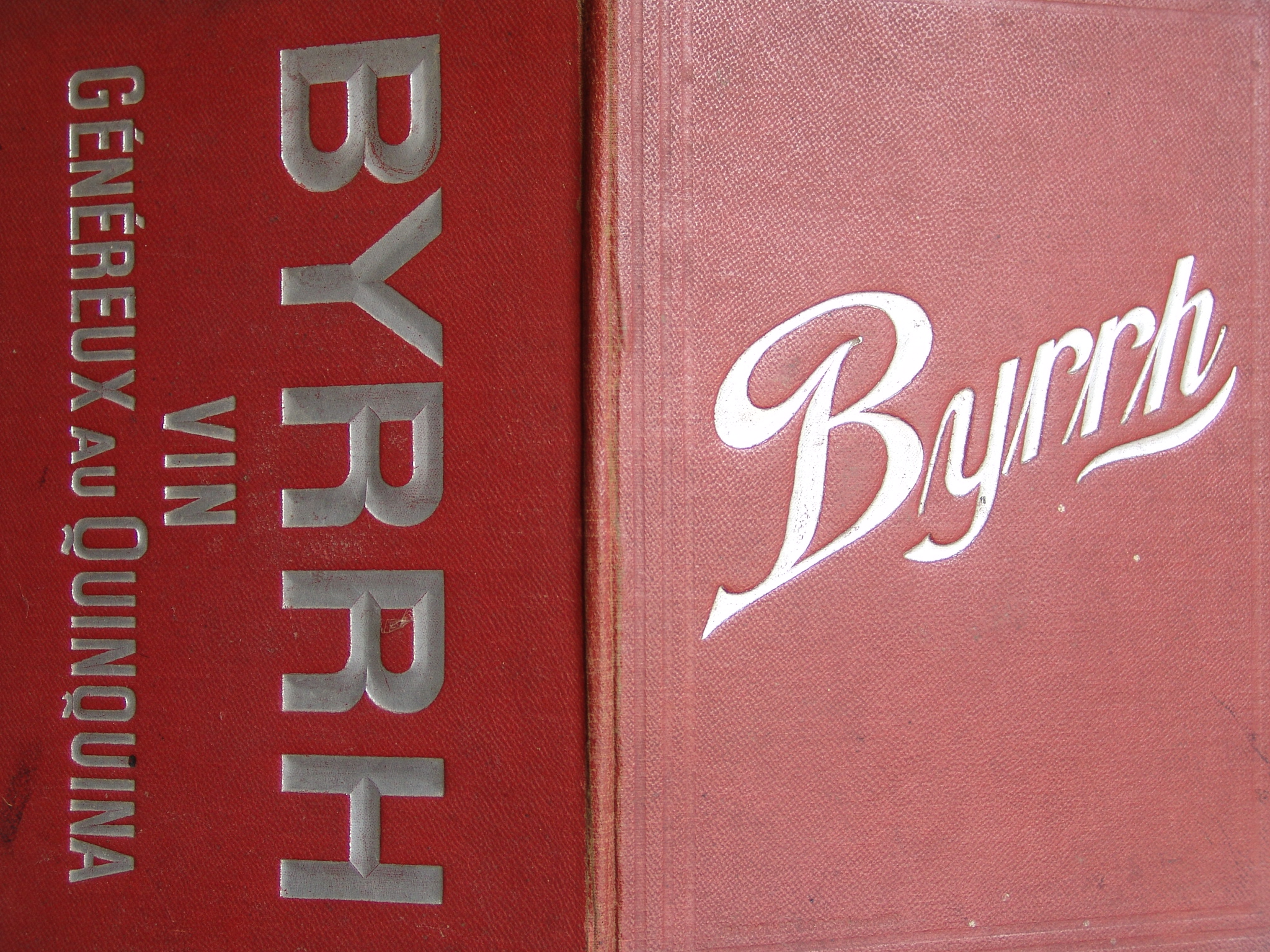
Browse around the houses up and down the street here—this one included—and you might run into one of these: an old publicity card for Byrrh apéritif. I’ve been looking at this one propped behind our telephone for 10 years, without ever really knowing what it was. Today, I decided to find out.

A blend of red wine, quinine and spices, Byrrh was developed in 1866 and introduced by two itinerant drapers, the brothers Pallade and Violet Simon, who marketed it as a health tonic so as not to offend established winemakers. More specifically, the claim was that it aided the digestive tract making it acceptable for women to drink in public. (Ah, liberation!)

Although it fell out of favor around the time of WWII, it is still being produced today by Pernod-Ricard. Should you be in France and should you care to try it, take it chilled with a lemon or orange twist. Or so I understand. I intend to get my hands on some, put my digestive tract in working order, and get back to you with a first-hand report of its real and/or perceived benefits.

Credit goes to Wikipedia, l’Affichiste, and WiseGeek for information on this curious beverage.

Posted in FRANCE, IN THE HOUSE | Tagged | 6 Comments

A late happy 4th of July: Amber waves of blé

Like many of you, I grew up singing a national anthem about something I’d never seen: amber waves of grain. Not only had I never experienced them first hand; I certainly had no idea why one would sing an impossible melody to praise them. But I “get it” now. They are beautiful. They are necessary. They are the link between our survival and the earth we consider to be our domain.

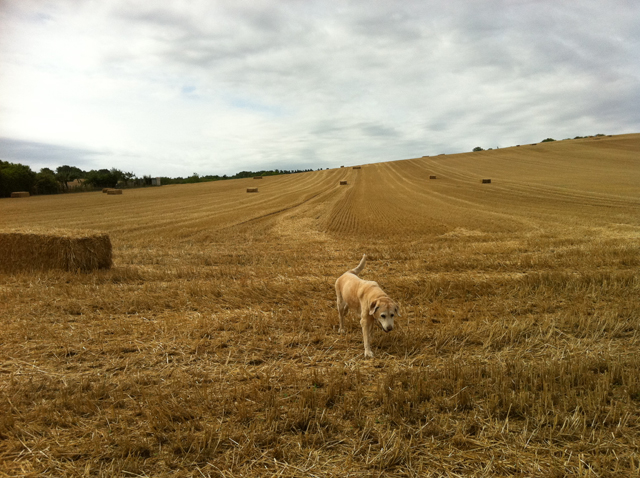
Here, behind our little Burgundian town, I collect the wheat stalks that are left after harvesting and put them in flower arrangements. I’m not the only one. I see them in other people’s curtained windows when I walk past with the dog. It’s funny how you can be so far away from home and yet find so much to remind you of it—an ex-patriot’s unconscious compulsion, perhaps. I am happy here, but every day that passes confirms my Americanness. It’s a strange, strange thing…

Not every day, but as often as possible, we walk by this field. Every time, it’s a little different. The shadows fall just so. The colors shift toward warm or cool. The clouds are low, thick or non-existent. The gold is a little more golden. The ground a little harder. It’s worth it to revisit it again and again and again, no matter whose home soil it’s on. And so we do.

Posted in AROUND US, FRANCE | 11 Comments

Clafoutis

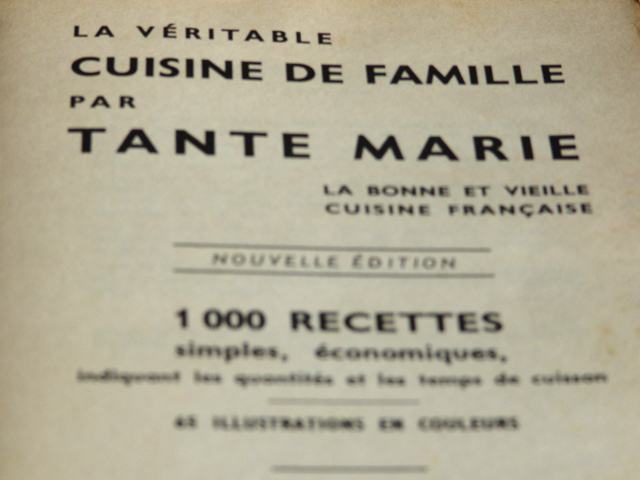
When I come to France, it is one of my small (and great) pleasures to browse the crumbling cookbooks that have been in this house for generations. My favorite is entitled La Véritable Cuisine de Famille par Tante Marie—”the good, old French cuisine,” “1000 economical and simple recipes indicating quantities and cooking times” (as if that’s a novelty), “65 color illustrations,” “new edition” etc.

The title page of the "house" cookbook.

The graphic designer in me has to add that the typography and the sparse, out-dated photography only contribute to the book’s appeal. In my favorite of Julian Barnes’ books, A Pedant in the Kitchen, he argues in favor of cookbooks without slick photography, claiming that the perfection of a food stylist’s images or the even more intimidating reality of photo-journalistic shots of the chef’s hands at work only inhibit the culinary efforts of a lay-cook struggling valiantly in an unexceptionally equipped kitchen. (It’s a good read: “Picture Perfect.”)

This book does no such intimidating. Recipe follows recipe, plunk plunk plunk, interrupted only occasionally by an amateurish (by modern standards) image. One feels certain these dishes straight from the heart of France and its people are well within reach. And so they seem to be. Case in point: the clafoutis recipe on page 297.

I first tried this recipe several years ago because the house was full of those black cherries that are almost worth a trip to France in and of themselves, and which are the raison d’être of this dish. The ingredients required were basic—we had them all—and no pitting was required, as the original recipe is based on the belief that the cherrystones, during baking, lend a deep and necessary nuance to the final flavor. The resulting clafoutis was, despite my slapdash manner of throwing it together, impeccable.

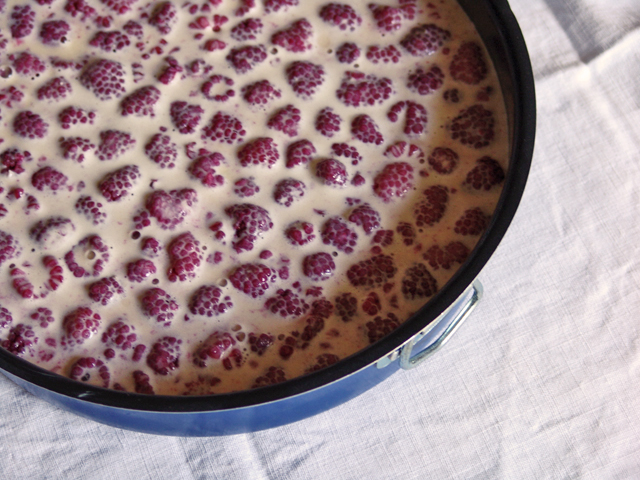
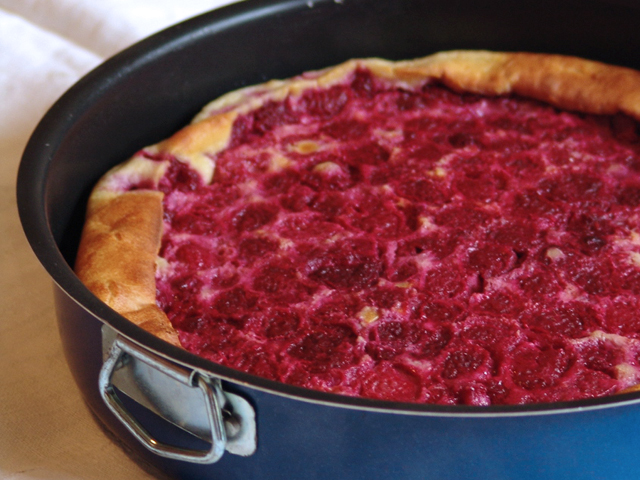
The thing is this: clafoutis is another of those simple dishes in which good, pure, basic ingredients come together humbly in the service of making one of them stand out brilliantly. In this case, the fruit. Yesterday, once again, I found myself with a larder full of all the necessaries except cherries, so I set about making a raspberry version. It did not disappoint.

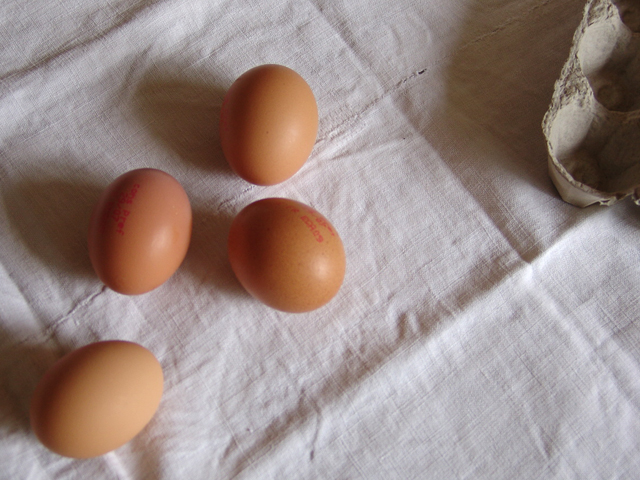
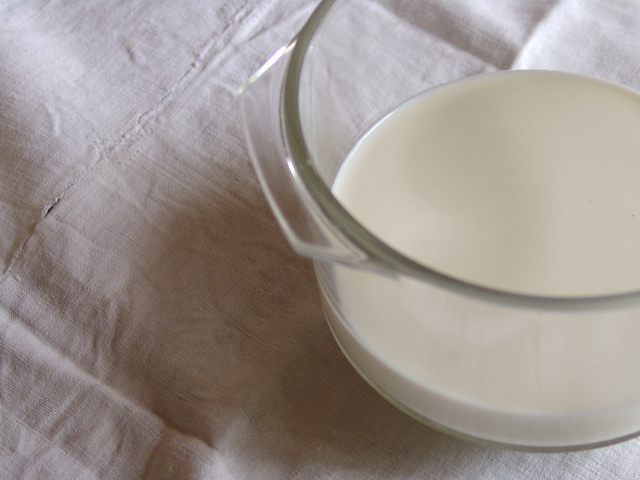
Blend 4 eggs with...


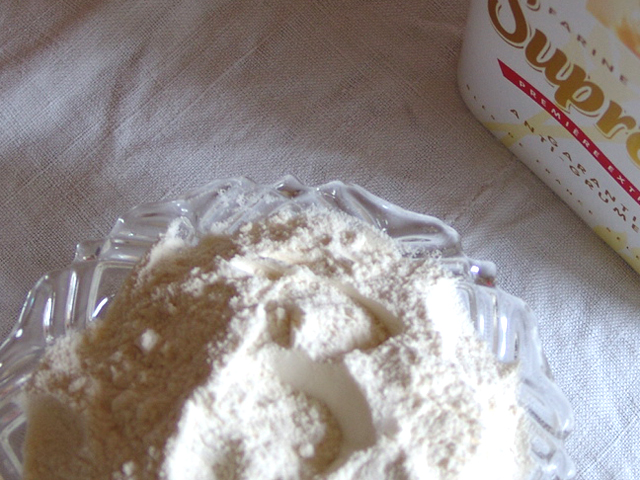
100 grams of flour, a pinch of salt...


80 grams of sugar and a glass of cognac or kirsch...


Dilute with 1/2 liter of milk and mix until smooth...


Pour batter in a buttered cake or tart pan over evenly arranged fruit.


Bake in a moderate oven* for 45-50 minutes. Voila!

*NOTE: Despite all its claims of simplicity, the cookbook does not tell you at what temperature to bake the clafoutis. I believe Gas Mark 5 / 190 degrees C / 375 degrees F would be about right.

5 Comments

Corrections

In my just-published post, I referred to David Lynch’s movie as True Story. It should read (and now does): The Straight Story. I also referred yesterday to Remembrance of Things Past as Memory of Things Past. My remembrance of things past is taking too many liberties; I humbly apologize.

Leave a comment

My kind of truck

Traffic—charmingly—doesn’t flow the way it’s supposed to. A tractor turns onto the road in front of you laden with logs that hang far off the back brandishing a red hanky. Your speedometer, accordingly, takes a nose dive. Or another, headed from one farm road to another, moseys down the state route (ever seen David Lynch’s The Straight Story? If so, you know what I mean) at a speed far below the norm, followed by a long cue of restless drivers, ready to risk their necks passing in the lane of oncoming traffic.

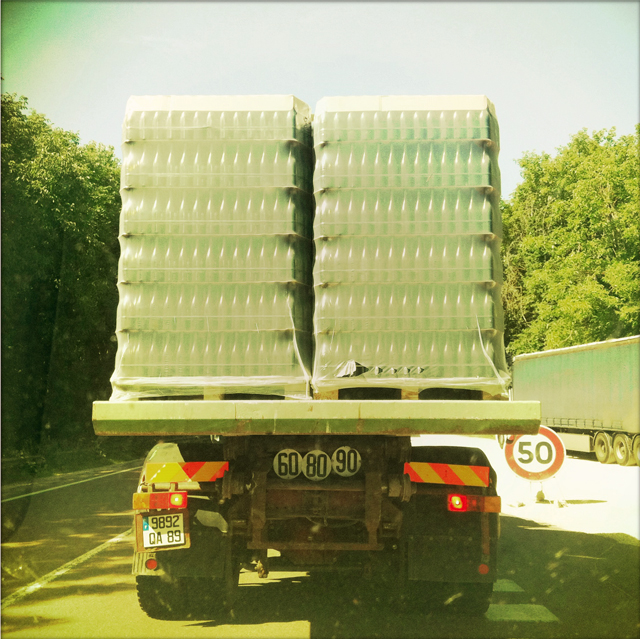
Yesterday we ran up against this fellow, last in a long line behind a tractor stacked Empire-State-style with bales of hay. While I was initially charmed by the toy-car aspect of this vehicle—its neat rectilinear shape with the line-up of round speed labels tucked just above the tag and above the right rear tire, I soon realized what he was carrying: enormous pallets of shrink-wrapped wine bottles. Yes, this is a truck after my own heart (which, by the way, may be better reached through a wine-glass than through my stomach. I haven’t decided yet.)

This is wine country, and you don’t ever forget it (thank heavens, because you don’t have any desire to). Vines grow to the right and to the left. Up in the hills and down in the clefts between them. And as many times as I’ve been to the Cave de Bailly to stock up on Cremant, Ratafia or crème de cassis or to Irancy to sample the year’s offerings, I’ve never encountered a wine bottle truck.

So this is a first. I think I’ll drink to that.

A NOTE FOR THE WINE ENTHUSIAST: Due to sustained heat, there is talk this year of a very early harvest. Some vintners are preparing to begin gathering grapes perhaps as early as August 15 according to the local paper, l’Yonne Républicaine.

Avec une fleur très précoce en mai, les vignes pourraient battre les records de 2003. Cette fois-ci les vignerons ne se laisseront pas surprendre.

I’ll keep you posted.

Posted in AROUND US, FRANCE | Tagged , , , | 2 Comments

Aromatic in three languages

French dirt inspires me. I get here, and I have to plant something, sink my fingers into the layers of spent or rich soil, finding a way to give life to another color another leaf-shape another perfume another future memory. Proustian gardening by a woman who never made her way cover-to-cover through Remembrance of Things Past.

I am not an accomplished gardener; in fact, all my fingers and thumbs are decidedly flesh-colored. But I never stop trying, never stop getting drunk on the beauty of watching things grow. What loveliness there is in our modest garden is there because Nature finds her way artfully around my not-knowing. She’s a relentless teacher, is she not? If there’s chlorophyl lying dormant in my opposable appendages, she will find it and bring it radiantly to the surface. One of these days, it just might happen.


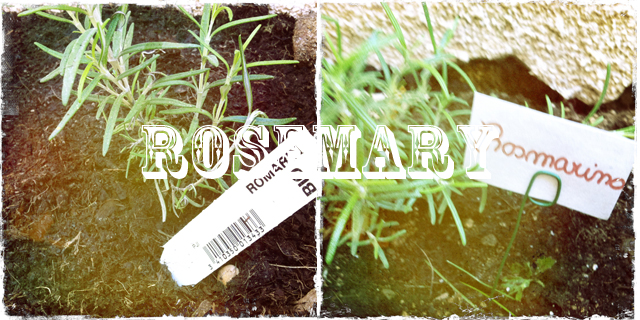
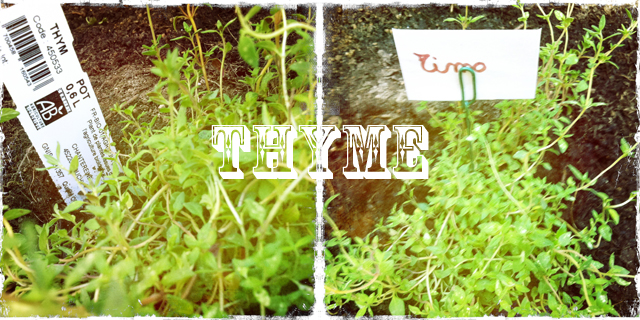
I’ve written about the lavender we have in France, which has flourished over the years, growing old and gnarled and ever-more fragrant. This year, we’ve added herbs under the kitchen window. Today, in fact. They went in with their French labels fresh from the store and were promptly re-assigned their Italian names by my artful child. I rub their leaves to release their scent and have only one song spring to mind, and it’s decidedly in English: “Are you going to Scarborough Fair? Parsley, sage, rosemary and thyme…” (though I seem to remember that the version I learned as a young girl said “Savory sage, rosemary and thyme”).


The language doesn’t matter. All the words—all the names—are beautiful and perfect and irrelevant. What matters is that the burgeoning bits of green taking root in our strip of soil will embellish soups and salads and…the air as we walk by. Even as I type, the scent of thyme escapes from my fingernails and the keyboard.


Basilic = basilico = basil
Thym = timo = thyme
Persil = prezzemolo = parsley
Sauge = salvia = sage
Romarin = rosmarino = rosemary
Ciboulette = erba cipollina = chive

Posted in FRANCE, WHAT TO DO | Tagged , , , , , , , , | 6 Comments